Natural Rattan Outdoors: How It Handles UK Weather
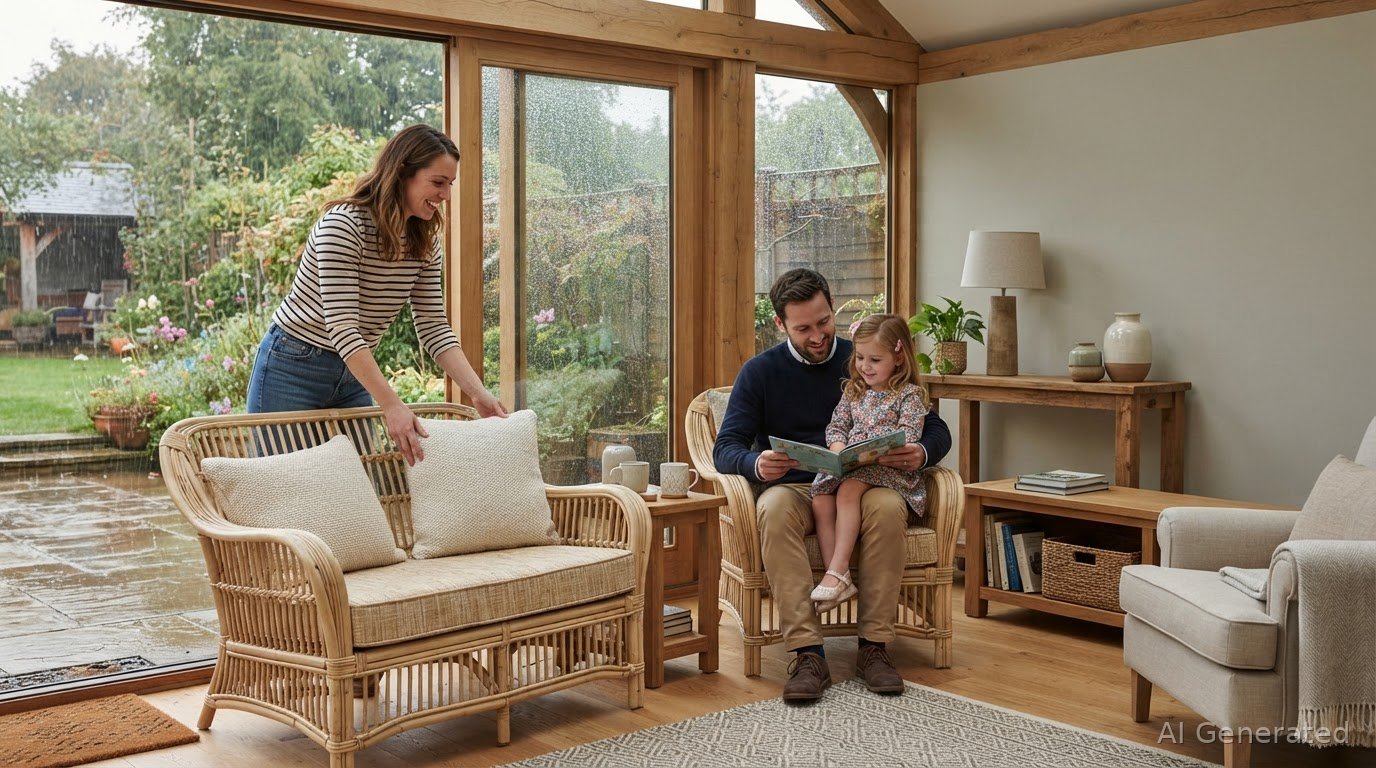
Natural rattan is best kept in a sheltered, covered space, rather than left exposed to UK weather year-round. If you’re wondering whether natural rattan is suitable for outdoors, it can work on a protected porch or covered patio, but rain, frost and prolonged sun can damage it. If it stays damp or exposed for long periods, it may crack, rot or fade.
Its woven texture brings warmth and natural character to a garden setting, so the appeal is clear. The key is understanding the care it needs: natural rattan must stay dry and protected. A covered position should also shield it from wind-driven rain and harsh sun.
This guide explains how natural rattan responds to rain, cold and sunshine in the UK, when a sheltered outdoor space may suit it, and how to care for it between uses. It also compares natural rattan with rattan-effect furniture, which is designed for outdoor conditions and is generally more practical in an exposed garden or patio.
Key Takeaways
- Assess how much wind-driven rain, lingering damp and direct sun reach your chosen spot before placing natural rattan there.
- Understand why synthetic rattan is generally the more practical option for furniture exposed to the UK’s changing weather.
- Learn how rain, frost and prolonged sunshine can affect natural rattan’s appearance and structure.
- Find out how careful cleaning, drying and winter storage can help protect natural rattan between uses.
- Explore how furniture accessories and dining pieces can help complete a considered outdoor living space.
Can rattan furniture be left outside all year?
Natural rattan is not weatherproof, so leaving it exposed all year risks cracking and rot. A sheltered position, such as a covered patio, changes the level of exposure, whilst a 3m x 3m garden space can help illustrate how much room furniture needs.
Rattan Furniture Durability
Rattan furniture durability describes how well its woven material withstands everyday use and exposure to weather. Natural rattan can offer lasting use indoors or under shelter, but wet conditions place its fibres under strain. Rattan furniture sets can last up to 10 years with appropriate care. For a garden, consider not only how often chairs are used, but also whether rain reaches the weave and how quickly the area dries.
Sheltered Places for Natural Rattan
A suitable sheltered place limits direct exposure to rain, wind and prolonged sun. A conservatory, orangery, covered porch or roofed patio can protect natural rattan; screened rooms can help too. Before placing furniture outside, look beyond the roof: wind-driven rain may reach chairs near an open edge, and humid spaces can stay damp after a storm. Shelter only helps if the furniture can dry.
Year-Round Outdoor Placement
Year-round placement means leaving furniture outdoors through changing seasons, not simply using it in dry weather. Keep natural rattan in a conservatory or covered outdoor space with limited exposure, then move it to a ventilated, dry place for winter. Rattan-effect furniture is designed for outdoor conditions and can stay outside year-round, particularly during the main outdoor season. This distinction helps you choose furniture that suits your garden and storage options.
Space also shapes the choice. In a compact 3m x 3m patio, a small arrangement of rattan chairs can preserve room to move, while a larger garden can accommodate a more expansive seating group. Measure the usable area, including paths and access around tables, before choosing furniture. A roofed terrace may suit natural rattan better than an open lawn, where rain and changing weather reach every side.
UK conditions can shift from heavy rain to intense sun, so plan for seasonal changes as well as daily use. The Met Office recorded temperatures reaching 40°C in the UK during the summer of 2022. In exposed gardens, prolonged heat can dry and fade natural fibres; during wet periods, saturation raises the risk of damage. Covers can help protect furniture when it is dry, but natural rattan still needs a sheltered position and winter storage.
Is Rattan Furniture suitable for the UK climate?
Natural and synthetic rattan can look similar, but their materials respond differently to British weather. Natural rattan is woven from plant-based fibres, with individual variations in colour and texture. Synthetic rattan is designed to imitate the look of natural rattan. That difference matters on a patio exposed to rain, sun and seasonal cold.
Natural rattan is best suited to sheltered settings, where its fibres stay dry and protected. Repeated dampness in an exposed garden can weaken the weave, making it less practical for everyday dining or seating. Synthetic rattan is designed for outdoor conditions, so it is a more suitable choice for open patios and gardens. Choose based on where the furniture will sit, not just how it looks.
PE synthetic rattan is described as weatherproof, mould resistant and recyclable. Its moisture resistance helps reduce the conditions that encourage mould and mildew, while UV resistance helps limit fading in direct sunlight. Synthetic rattan is also designed to withstand heat and cold without losing its form or texture. These qualities suit changing UK seasons, though the furniture still benefits from sensible cleaning and care.
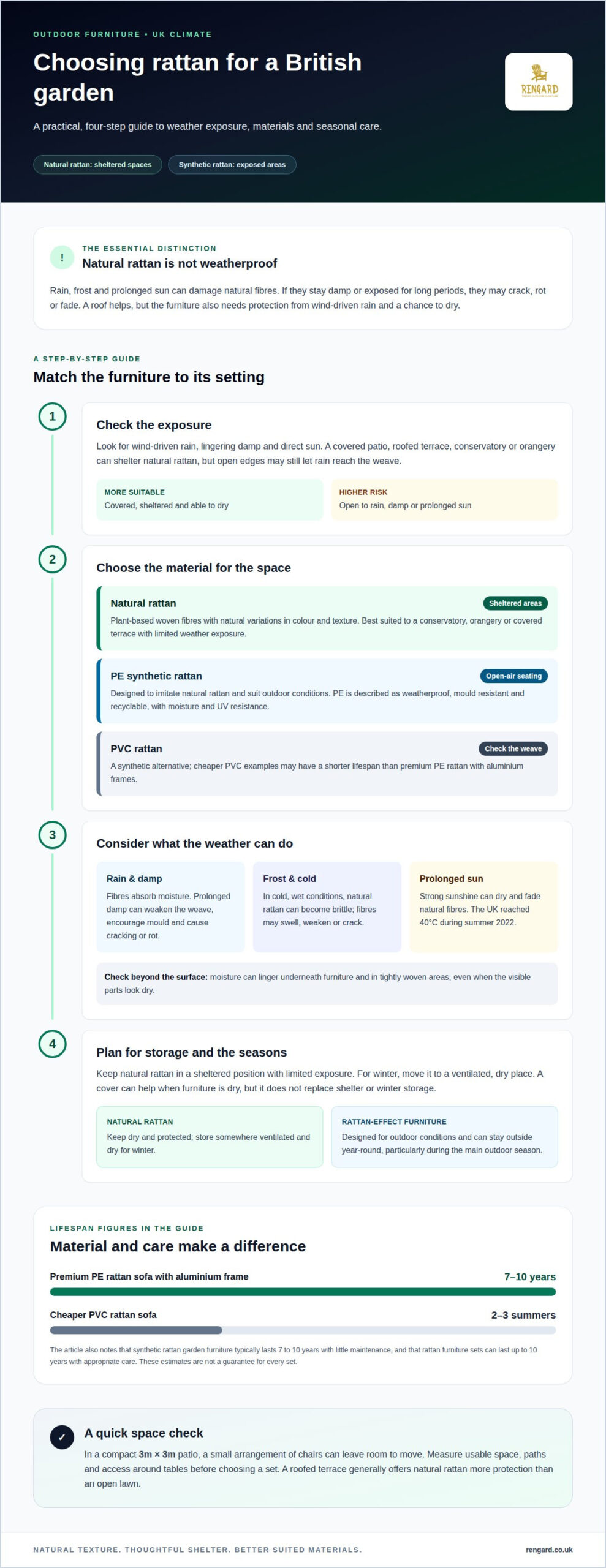
Material quality affects how long rattan-effect furniture remains presentable. Synthetic rattan garden furniture typically lasts 7 to 10 years with little maintenance. Premium PE rattan sofas with aluminium frames are estimated to last 7-10 years, whilst cheaper PVC rattan sofas may last 2-3 summers. These are different material and product categories, so the figures shouldn’t be treated as a guarantee for every set.
For a quick comparison, consider where each material works best:
- Natural rattan: suits a conservatory, orangery or covered terrace with limited exposure to weather.
- PE synthetic rattan: suits open-air seating where rain and sun are harder to avoid.
- PVC rattan: offers a synthetic alternative, but cheaper examples may have a shorter lifespan.
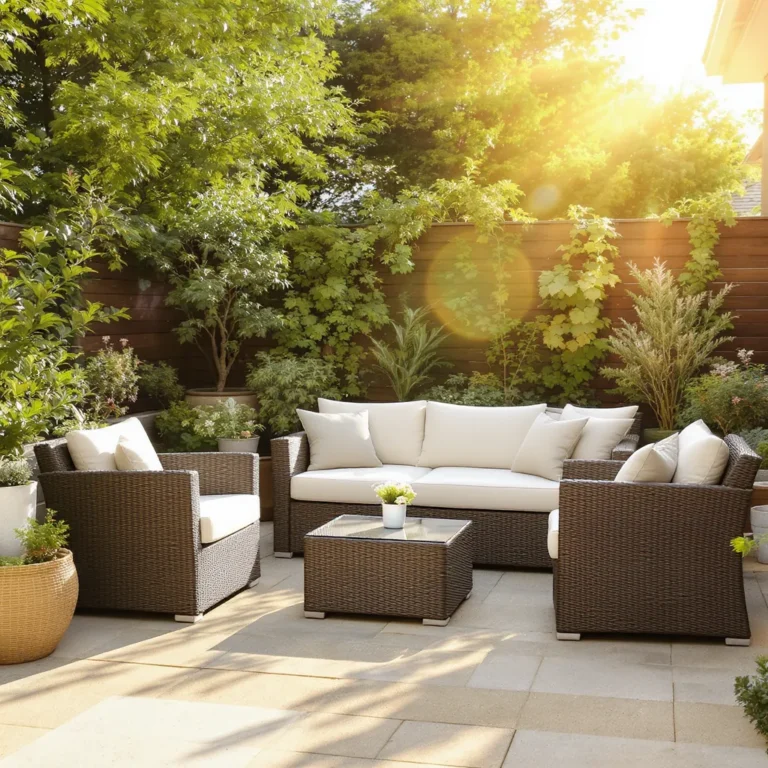
A garden dining set made from synthetic rattan can keep a consistent woven look across chairs and a table, without relying on a fully sheltered position. Check whether the weave is PE or PVC when comparing options, then consider how much direct weather reaches the furniture. For a dining-led patio, browse outdoor dining sets suited to your layout and outdoor routine.
Moisture, frost and sun exposure effects on natural rattan
Natural rattan fibres respond to damp, cold and strong sunlight differently from synthetic weaves. Understanding these effects helps you judge exposure in a rattan garden or on an open terrace.
Moisture and Frost Effects
Moisture and frost can make natural rattan swell, weaken and crack, affecting its appearance and structure. The fibres absorb dampness, and moisture reaching the inner core can cause them to fracture or bend. In cold, wet weather, rattan can also become brittle. This matters for lightweight garden furniture, as the weave may be damaged even when the frame remains intact.
Rain affects more than the surface: soaked fibres can encourage mould, particularly if a piece stays damp after a shower. Check the underside and tightly woven areas, where moisture may linger, rather than judging dryness by the visible surface alone. After damp weather, move the furniture somewhere ventilated and let it dry thoroughly before covering or using it again.
Frost can crack or weaken natural rattan, so avoid leaving it exposed through cold, wet spells. A covered position reduces direct rain, but wind can still drive water onto the weave. If a chair or table gets wet, don’t trap moisture beneath a cover. Keep it sheltered and allow air to circulate around the whole piece.
Sunlight Fading and Brittleness
Prolonged sunlight can fade natural rattan’s colour and dry its fibres, leaving the weave more brittle. This is a concern on a south-facing patio, where chairs may receive strong direct sun for much of the day. Natural variations in the weave can make colour changes more noticeable across a matching set, especially when some pieces are in shade.
UV exposure and heat affect the material differently from rain, but both can reduce its attractive appearance. During prolonged hot weather, move unused rattan furniture into the shade. This reduces direct exposure while keeping the seating close at hand. A parasol can shade a dining area while in use, but moving furniture remains useful if it will sit unused for an extended period.
Consider the garden’s exposure before choosing a position: note where direct sunlight falls and whether the shade shifts during the day. A sheltered corner may protect the weave, but avoid places where damp air stays trapped. Check the colour and texture periodically, including woven joins and frame edges. Fading, dry fibres or cracks indicate that the piece needs more protection from sun and weather.
Is natural rattan suitable for outdoor use in the UK?
Natural rattan can suit a carefully sheltered outdoor space if you keep it dry, clean and protected between uses. In the UK, its practical lifespan depends on exposure: a covered summer seating area is easier to manage than an open garden through winter.
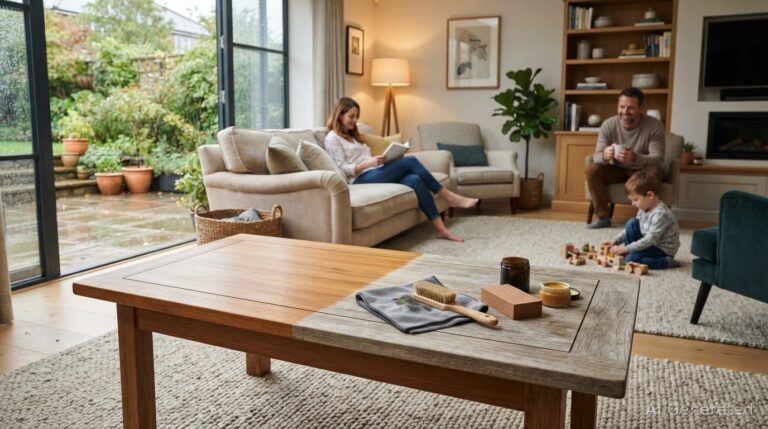
To clean natural rattan, remove dust with a soft brush or a vacuum on a low setting, then wipe it with a cloth dampened in mild, dilute soapy water. Don’t soak the weave; dry the furniture thoroughly in a well-ventilated place. For repairs, inspect split strands and loose weaving promptly, as surface cleaning won’t restore damaged fibres.
Set a maintenance routine around how you use the furniture and the weather. Before summer, check the weave for dry or brittle areas, loose strands and trapped debris. After rain, make sure the furniture is dry before covering it. A water-resistant, breathable cover can help protect it, but covering damp rattan may trap moisture against the fibres.
For routine cleaning, use a lightly damp cloth to remove dust and dirt. Treat stubborn marks with foam from mild, soapy water, rather than wetting the furniture directly. Work gently across the weave, including the underside and joins, where debris can collect. Then let each piece dry completely in a ventilated area.
Natural rattan needs protection between seasons. When it’s no longer in regular use, move it indoors to a dry, ventilated space for winter, rather than leaving it on an exposed patio. A garage or garden room can work if it stays dry and air can circulate. Keep furniture away from persistent damp, which can encourage mould and weaken the fibres.
Protective treatments can help limit moisture penetration, but they don’t make natural rattan suitable for constant rain. Common recommendations include boiled linseed oil at least once a year, or a suitable varnish such as yacht varnish. Follow the product directions and apply it only to clean, dry rattan; a coating on damp fibres can trap moisture.
Check the furniture’s frame and weave separately. If a set combines rattan with an aluminium frame, inspect the joints and woven sections after wet weather, as each material needs different care. Tighten or repair loose structural connections using suitable parts, and avoid using a chair with a weakened frame until it is secure.
In practice, natural rattan needs more attention than weather-resistant outdoor furniture. Keep it under shelter while in use, move it indoors during prolonged wet or cold spells, and store it dry through winter. If your outdoor space can’t accommodate that routine, natural rattan is better reserved for a conservatory or another protected setting.
Natural rattan’s suitability for outdoor use
Natural rattan suits outdoor living only in a protected position with attentive care. Its woven plant fibres bring a warm, stylish finish, but they’re vulnerable to prolonged dampness and heat. For an open garden exposed to rain, frost and strong sun, synthetic rattan is generally more practical. The deciding factor is how much weather reaches the furniture, not just how attractive the weave looks.
Natural rattan works best in conservatories, orangeries and covered spaces where wind-driven rain cannot soak the weave. A covered patio may suit it too, provided the area dries well after showers. Assess the position at furniture height: an overhanging roof may shelter the table but leave chairs exposed to rain from the side. Persistent humidity can also make an apparently sheltered spot unsuitable.
Rattan-effect furniture offers a different balance. It is usually made from polyethylene strands shaped to resemble natural rattan, giving a similar woven appearance in a plastic material designed for outdoor use. Synthetic rattan is moisture resistant, and PE rattan is described as weatherproof and mould resistant. These properties make it more suitable for an exposed terrace or garden dining area used throughout the season.
Consider the whole furniture arrangement, not just its weave. Cushions add comfort and colour, but bring them into a dry place after use rather than leaving them exposed to rain. Keep covers breathable and put them over dry furniture. A synthetic weave may handle outdoor conditions better, but damp cushions or trapped moisture can still make the seating area less comfortable.
Use these checks to decide which material suits your space:
- Choose natural rattan for a covered setting, if you can keep it dry and store it indoors during winter.
- Choose a polyethylene rattan effect for open patios where furniture faces rain and direct sunlight.
- Reconsider natural rattan if there’s no dry storage or the sheltered area stays humid after showers.
Natural rattan can be a considered choice for a protected outdoor space, but it isn’t a durable, all-weather material for an exposed garden. Synthetic polyethylene offers the more weather-resistant balance of woven style and outdoor practicality. Match the material to the exposure, available storage and care you can provide. For help planning a garden furniture arrangement around your space, discuss your outdoor furniture needs.
Rengard: Furniture Accessories
Rengard offers Furniture Accessories to complement a considered garden setting. When planning outdoor furniture, think about how finishing touches will work with the arrangement and support the way you use your patio or garden. A cohesive scheme can bring balance to the space without crowding it.
Choose details that sit comfortably alongside your garden furniture and suit the look you want outdoors. For help exploring options for your outdoor space, contact Rengard.
Plan an outdoor space that suits your lifestyle
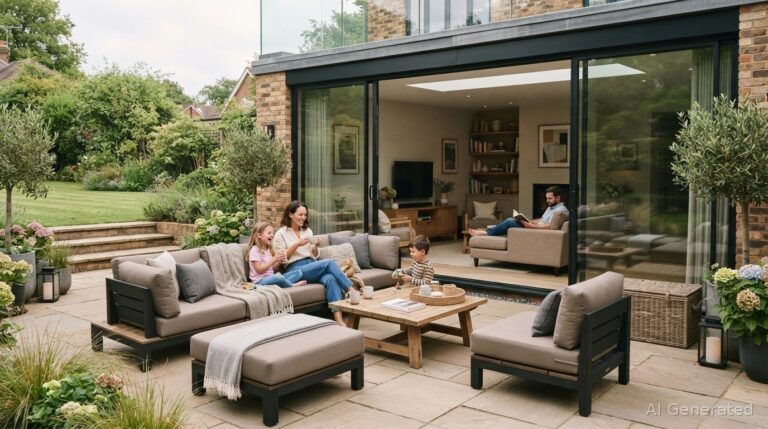
Let the way you spend time outdoors shape your garden furniture choices. A quiet reading corner, an inviting dining area or flexible seating for guests each calls for a different layout. Consider how people will move through the space and which pieces will make it comfortable to use.
If you’re still deciding whether natural rattan is suitable for outdoors, let your garden’s layout and exposure guide your choice. Rengard’s garden furniture can help you create a practical, considered setting for your patio or terrace, with pieces to suit how you like to spend time outside.
For help choosing furniture for your outdoor space, contact Rengard about outdoor furniture. A thoughtful layout can make your garden more welcoming and ready for the moments you want to enjoy there.
Frequently Asked Questions
How long do rattan furniture sets last?
Rattan furniture sets can last up to 10 years with appropriate care. That figure applies to rattan furniture generally, not a guaranteed lifespan for every material or setting. A set kept dry, cleaned gently and stored away from winter weather has different demands from one left exposed. Check the weave, joints and frame separately, since wear in one part can affect how securely the whole set functions.
What exactly is rattan?
Rattan is a natural material made from the fibres of climbing palms native to tropical regions. More than 600 species of rattan exist, and natural fibres have individual variations in texture and appearance. Garden furniture described as rattan-effect is different: its woven strands are synthetic, usually polyethylene, made to imitate the look of natural rattan. Knowing which material you have helps you choose suitable care and storage.
How does natural rattan cope with rain, damp and humidity?
Natural rattan copes poorly with repeated saturation because its fibres absorb moisture. Dampness can cause swelling, and moisture reaching the inner core may make strands bend or fracture. Humid conditions also slow drying, particularly in enclosed corners or beneath cushions left on a chair. After a shower, inspect the underside and woven joins. Air the furniture until it is dry rather than trapping moisture beneath a cover.
Does sunlight or UV exposure damage natural rattan furniture?
Yes. Prolonged direct sunlight can fade natural rattan’s colour and dry its fibres, making them more brittle over time. On a sunny patio, the upper surface may change faster than shaded areas underneath, creating uneven tones across a furniture set. Move unused pieces into shade during extended hot spells. If cushions are part of the arrangement, store them separately when they’re not needed.
Can natural rattan furniture be left outside all year in the UK?
Whether natural rattan is suitable for outdoors depends on how exposed the position is. It shouldn’t remain in an open garden through every season, where rain, snow and frost can damage the weave. A covered porch or screened room offers more protection, but wind-driven rain and lingering humidity still matter. If the space can’t keep the furniture dry, bring it indoors during wet or cold periods.
How should natural rattan furniture be weatherproofed and maintained?
Keep the weave clean and dry, and use a suitable natural varnish, yacht varnish or tung oil to help limit moisture penetration. Apply any treatment only to clean, dry furniture and follow the product directions. Use a soft brush for dust and foam from mild soapy water on a cloth for marks. Don’t soak the fibres. Dry each piece thoroughly in a ventilated area before storing it.
What are the risks of mould, mildew and rot in natural rattan?
Persistent damp creates conditions where mould and mildew can develop, while prolonged exposure to rain can cause natural rattan to rot. Look for a musty smell, visible growth, darkened patches or fibres that feel soft and weakened. Check beneath seat cushions and around tightly woven areas, where moisture may linger. Drying the furniture promptly and storing it in a ventilated, dry place helps reduce these risks.
How long does natural rattan furniture last outdoors?
Natural cane has a very short lifespan outdoors, but there isn’t a reliable fixed number of years for exposed furniture. The result depends on how often the weave gets wet, how quickly it dries, and how much sun and frost it faces. A sheltered, well-maintained piece has better conditions than one left on an open patio. General rattan lifespan estimates should be distinguished from natural rattan used outdoors.