How Long Should Rattan Furniture Last? The Complete UK Longevity Guide (2026)
Most garden furniture doesn’t fail because the weave gives out; it fails from the inside out. When asking how long should rattan furniture last in the UK, many homeowners expect their sets to endure for a decade, only to find brittle strands or telltale rust staining their stone patios after just two wet summers. Whether you are curating a sprawling country terrace or a compact urban courtyard, persistent damp and freezing winter cycles ruthlessly expose the hidden corners of outdoor construction.
It’s deeply frustrating to watch an inviting sanctuary lose its charm so quickly, especially when outdoor living should offer effortless comfort rather than annual replacement cycles. In this guide, you will discover the genuine lifespan distinctions between all-weather synthetic weaves and natural cane, uncover the crucial frame features that prevent premature failure, and master straightforward seasonal care tailored to the British climate. Here is how thoughtful design and resilient engineering from Rengard can keep your garden furniture pristine for years to come.
Key Takeaways
- Discover why answering how long should rattan furniture last depends far more on internal rust-free aluminium substructures than the exterior weave alone.
- Understand the vital distinction between all-weather synthetic polyethene, which shrugs off wet British winters, and organic rattan that degrades outside.
- Learn how to identify telltale craftsmanship details before purchasing to prevent structural joint fatigue and orange rust marks across your patio slabs.
- Master straightforward seasonal cleaning and care habits that keep performance weaves and quick-dry cushions looking immaculate year after year.
- Recognise the clear diagnostic signs of irreparable frame failure so you know precisely when to upgrade your garden lounge or dining space.
What Is the Typical Lifespan of Outdoor Rattan Furniture?
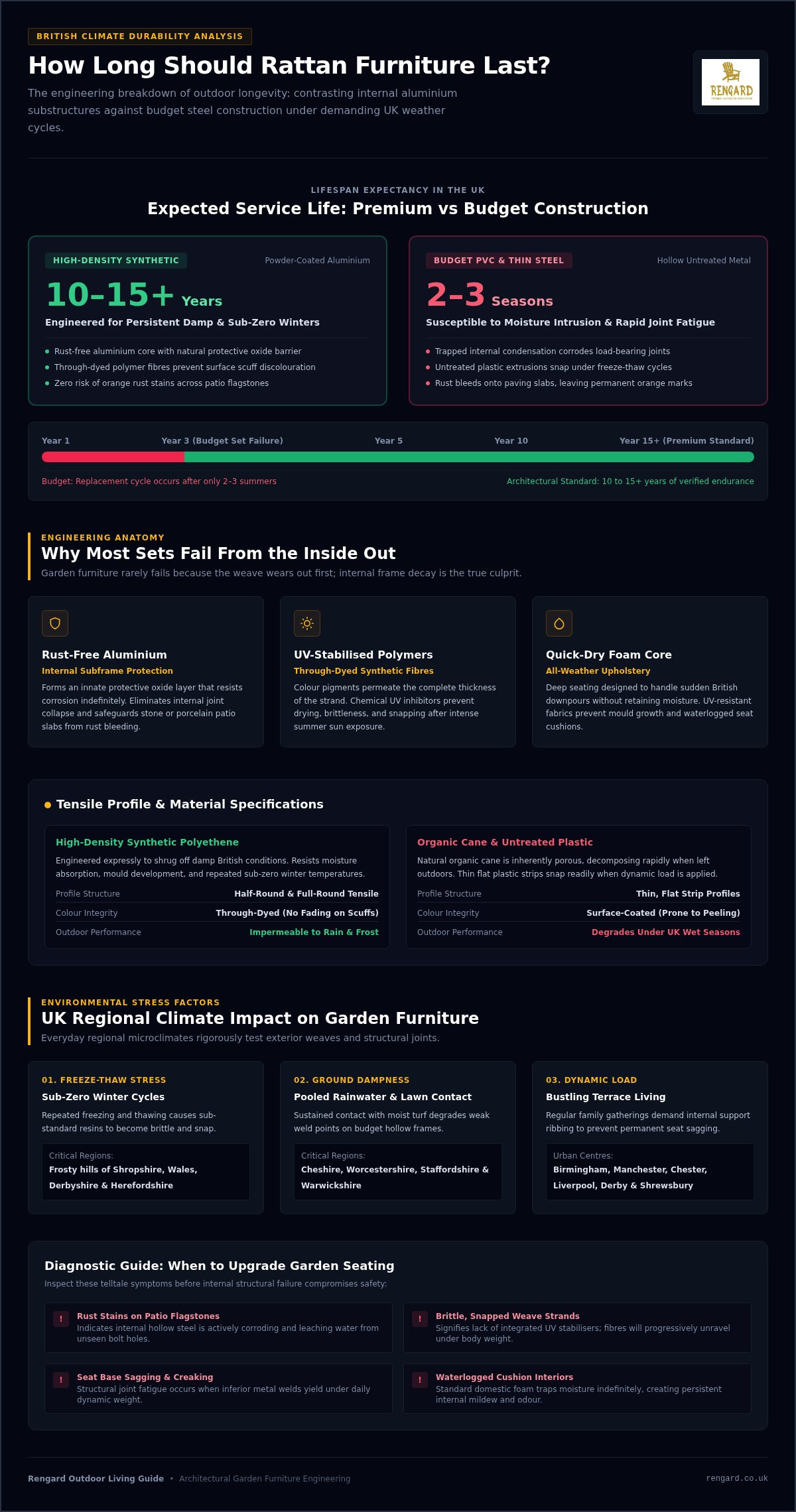
In British gardens, high-density synthetic polyethene weave built over powder-coated aluminium frames reliably lasts between 10 and 15 years or more. Budget alternatives constructed with thin steel tubing and untreated plastic frequently fail within two or three seasons. The true answer to how long should rattan furniture last hinges on how well internal engineering and exterior fibres withstand persistent damp, driving rain, and sub-zero winter temperatures.
To see how proactive preservation and surface care can protect woven textures from the elements, watch this helpful demonstration:
Expected Lifespans: Budget vs Premium Garden Furniture
Cheap consumer sets often seem appealing initially, but they rely on hollow steel tubes and brittle PVC extrusions. Once moisture penetrates unseen bolt holes, internal rust quickly eats through load-bearing joints. This rust eventually bleeds onto stone flagstones and decking, leaving permanent orange rings behind. By contrast, premium suites utilise thick-gauge, rust-free aluminium subframes and through-dyed polymer strands that never rot. While entry-level garden dining set options might require complete replacement every few years, an architectural, weather-resistant build delivers effortless comfort season after season. You can discover more on identifying durable weave grades in Rattan Garden Furniture: The Ultimate Buyer’s Guide for 2026.
Key Factors That Accelerate Everyday Wear and Tear
Regional microclimates across the UK test outdoor furniture rigorously. From the frosty hills of Shropshire and Wales to damp valleys in Derbyshire and Herefordshire, intense freeze-thaw cycles cause sub-standard resins to crack. Sustained contact with wet lawn edges or pooled rainwater degrades weak welded points on budget frames. Additionally, bustling family gatherings on terraces in Birmingham, Chester, and Manchester apply regular dynamic weight. Without strong support ribbing and UV-stabilised fibres, inferior seating rapidly sags and snaps under daily use.
The Anatomy of Durability: What Makes Rattan Last?
True garden furniture resilience starts long before the weave takes shape. While an attractive surface catch your eye, answering how long should rattan furniture last requires looking underneath the styling to the internal framework and fibre chemistry. When engineered with precision, high-end outdoor sofa sets seamlessly marry architectural refinement with structural endurance.
Internal Framing: Rust-Free Aluminium vs Inferior Steel
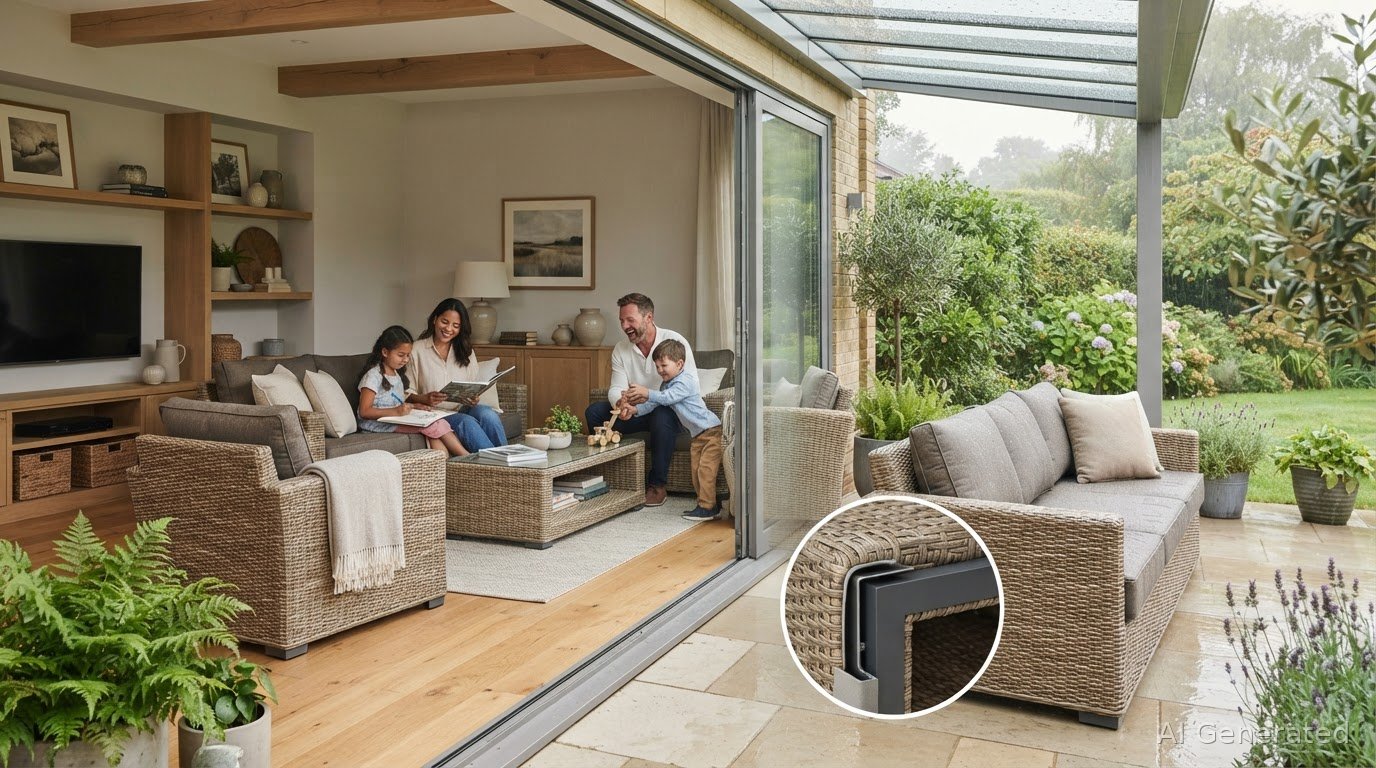
The core framework determines whether a garden chair stands firm or collapses. Thin hollow steel frames frequently harbour trapped condensation behind external powder coatings. Over damp autumns, this internal water collection causes rapid interior corrosion that weakens load-bearing joints without warning. Rust-free aluminium eliminates this threat entirely. It forms a natural protective oxide layer that resists corrosion, preventing structural sagging and keeping your porcelain paving slabs free from ugly orange stains.
Synthetic Weave Composition and UV Protection
Surface integrity relies heavily on the raw polymers used during production. High-density synthetic weaves resist environmental wear through deliberate chemical engineering:
- Through-dyed colour pigments: Colour runs through the entire thickness of the strand, meaning scuffs and prolonged sun exposure won’t cause patchy fading.
- Integrated UV stabilisers: Specialized compounds blended into the polymer prevent synthetic rattan from drying out, snapping, or becoming brittle after intense sunny intervals.
- Tensile weave profiles: Heavyweight half-round and full-round weaves offer superior tensile strength over thin, flat strips, easily maintaining their tension across years of use.
All-Weather Cushions: Quick-Dry and UV-Resistant Fabrics
Deep seating comfort shouldn’t turn into a waterlogged headache after a sudden British downpour. Resilient garden seating features quick-dry foam cores with open-cell structures that let rainwater drain straight through rather than holding it like a kitchen sponge. When paired with UV-resistant, breathable outer textiles, these cushions dry rapidly in open breezes and resist unsightly mildew growth. If you are curating a new terrace layout and need guidance on weather-proof materials, feel free to get in touch with our design team.
Natural Rattan vs Synthetic Polyethene: The British Climate Test
One common source of confusion among UK homeowners is the difference between organic rattan and synthetic all-weather wicker. While both share an artisanal woven look, their physical properties could not be more divergent. Anyone questioning how long should rattan furniture last must first establish whether a piece consists of natural plant vines or engineered synthetic resin.
Why Natural Cane Belongs Indoors or Under Cover
Natural rattan originates from climbing palm vines harvested in tropical regions. Because these fibres are porous and organic, they readily absorb moisture from damp British air. When natural cane stays outdoors through wet autumn spells and freezing winter snaps, moisture trapped inside cellular walls expands, leading to splintering, structural rotting, and dark mould spores within one to three seasons.
Save organic rattan and woven cane exclusively for sheltered, indoor environments:
- Glazed sunrooms with controlled ambient humidity.
- Traditional conservatories warmed by natural light.
- Covered garden verandas protected completely from blowing rainfall.
How Synthetic All-Weather Weave Conquers the Elements
Synthetic polyethene wicker was created specifically to conquer the UK climate. Because high-density polymers are entirely non-porous, moisture simply runs off the surface rather than penetrating the weave. It won’t absorb rain during heavy downpours in Cheshire, nor will it crack during freezing winter nights in Staffordshire or Derby. This structural durability gives synthetic weave the capacity to deliver 10 to 15 years or more of outdoor service when maintained well.
Engineered weaves bring practical ease to garden entertaining. Sticky spills, bird droppings, and accumulated winter grime wash away with plain warm water, leaving fibres unharmed. Choosing high-specification outdoor dining sets woven from all-weather polyethene lets you host alfresco lunches on open terraces across Wrexham or Liverpool without worrying about unexpected showers. To discover more about selecting weather-ready configurations for your terrace, explore our comprehensive Garden Furniture: The Ultimate UK Buyer’s Guide for 2026.
How to Maximise the Lifespan of Your Garden Rattan
High-grade synthetic weave is inherently resilient, but a few mindful habits protect your investment against unnecessary wear. When considering how long should rattan furniture last, routine surface care and sensible seasonal storage make all the difference. Simple maintenance preserves tensile strength, keeping woven textures rich and seating comfortable across every season.
Routine Cleaning and Surface Maintenance Steps
Debris naturally settles into textured weaves over time. Left unaddressed, fallen leaves and garden dust trap surface damp that encourages organic matter to collect between strands. Keep your furniture looking sharp with this quick cleaning routine:
- Dusting: Sweep a soft-bristled handheld brush or upholstery vacuum attachment along the crevices to lift loose grit without scuffing the polymer.
- Washing: Mix lukewarm water with a mild, non-detergent soap. Wipe the surfaces down with a soft microfibre cloth to remove bird droppings and sap.
- Rinsing: Splash the frame with clean water from a low-pressure garden hose or watering can, then allow it to air-dry naturally in the breeze.
Never clean woven sets with pressure washers. High-powered water jets strip protective top finishes, dislodge delicate end-clips, and force water behind joint seams. Likewise, steer well clear of abrasive bleach and chemical solvents, which can degrade resin elasticity and lead to hairline fissures.
Winterising Furniture Across British Gardens and Patios
Winter conditions test exterior furniture differently across the UK. Terraces across exposed hills in Herefordshire, Shropshire, or rural Wales face fierce gusts and persistent rainfall, while urban patios in Birmingham and Derby endure frequent damp chill. Selecting the right breathable garden accessories and tailored covers prevents internal condensation from pooling under protective sheets.
Always secure heavy-duty covers with drawstring toggles or buckle straps so high winds don’t whip the fabric against patio edges. While rust-free aluminium frames and synthetic weaves can remain outside year-round, store all seat cushions indoors. Placing dry cushions inside a garage, utility room, or sealed cushion box through prolonged winter frosts prevents nesting rodents and keeps the foam pristine for spring. If you want tailored advice on choosing the best covers and outdoor protection for your garden setup, speak with our outdoor living specialists today.
Signs Your Rattan Furniture Needs Upgrading (And How to Choose)
Every outdoor piece eventually reaches the end of its useful life. While routine maintenance prolongs performance, physical wear eventually compromises comfort and safety. Evaluating how long should rattan furniture last in your personal space comes down to distinguishing between superficial scuffs and dangerous structural exhaustion.
Critical Indicators of Structural Failure and Degradation
Cosmetic blemishes, such as minor surface marks or slight water spots, can usually be refreshed with gentle cleaning. Structural breakdowns, however, cannot be reversed. Look out for these three major warning signs:
- Snapping, brittle weave strands: When polymers degrade from severe UV exposure or prolonged damp, the strips turn dry and brittle. If weave bands snap upon contact or unwind completely from the frame, tensile strength has been permanently lost.
- Persistent rust bleed: If orange streaks appear at welded corners or stain stone flags beneath dining tables and garden chairs, hollow steel tubes have corroded through. This internal rot leaves framing dangerously brittle.
- Deeply sunken seating decks: When you sit down, your body should feel evenly supported. Severe sagging indicates that internal support webbing has perished or subframe crossbars have bent under dynamic weight.
Selecting Contemporary, Weather-Resistant Replacements
Upgrading your patio layout provides the ideal opportunity to introduce modern, architectural forms built to conquer the UK climate. When selecting a replacement setup, focus on materials engineered to handle heavy British rainfall and seasonal temperature swings without compromise.
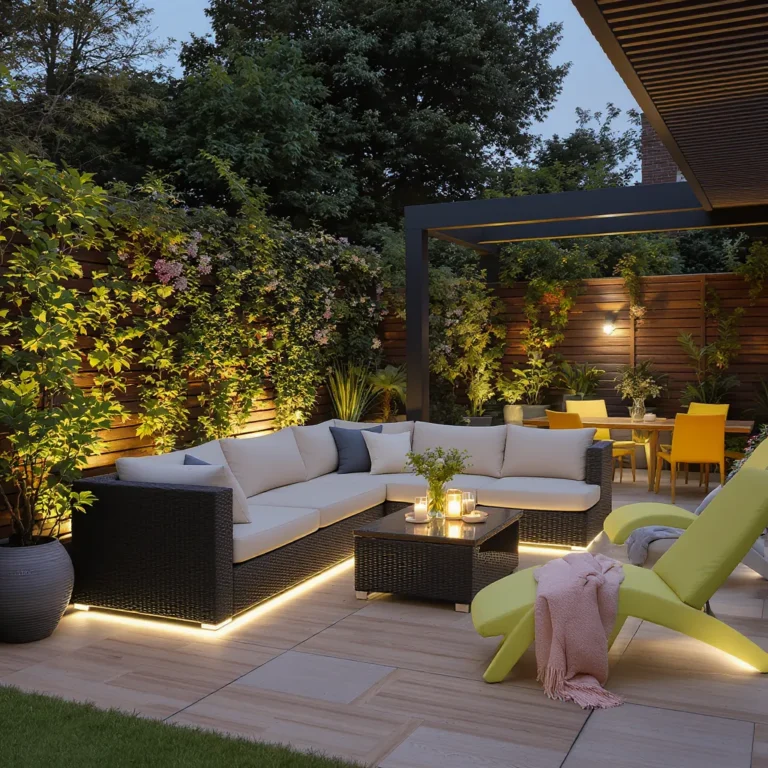
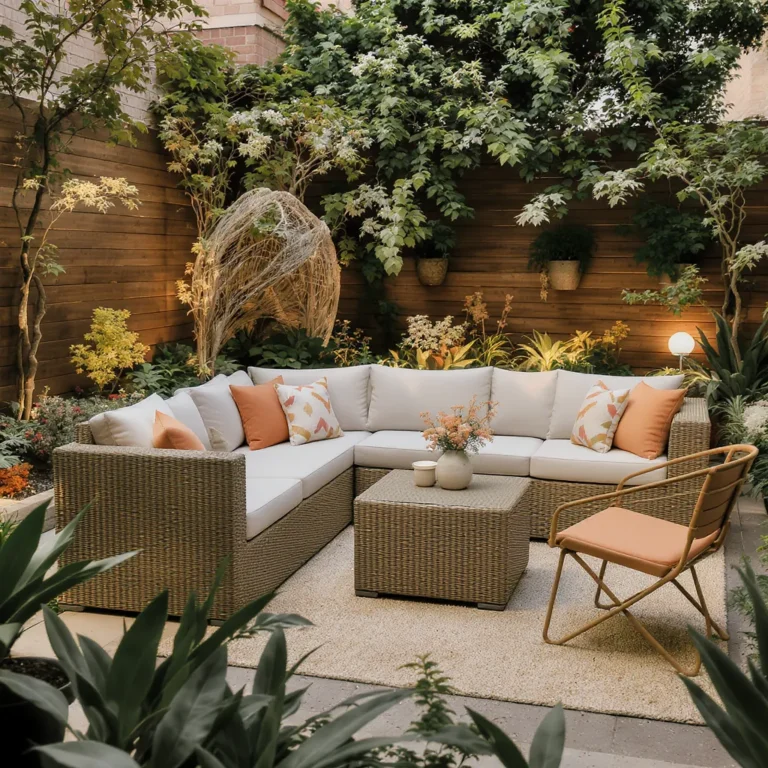
Prioritise garden sofa sets and corner lounges built around fully welded, powder-coated aluminium understructures. Because aluminium never rusts, your patio slabs in Chester, Shrewsbury, or Stafford remain completely free from corrosive staining. Look for textured combinations that blend high-density synthetic rattan with contemporary rope-weave accents or durable teak finishes, bringing tailored warmth to your garden terrace.
Pair these robust frames with premium outdoor cushions featuring UV-resistant fabrics and open-cell foam. These textiles stay fresh under the midday sun and shed excess shower water quickly, giving you complete peace of mind. Whether you are outfitting an expansive rural lawn in Worcestershire or a modern courtyard in Telford, speak with the Rengard team for personalised outdoor living advice suited to your garden space.
Create an Enduring British Garden Retreat
Investing in your outdoor living space should bring lasting comfort, not recurring maintenance chores. Understanding how long should rattan furniture last ultimately comes down to recognising structural integrity before you buy. While cheap alternatives succumb to moisture and frost within a couple of seasons, thoughtful design choices ensure your garden sanctuary remains inviting across many years of family life.
True exterior durability relies on rust-free aluminium frames engineered specifically for wet British weather. When paired with high-quality, hard-wearing rattan or rope weaves and quick-dry, UV-resistant fabrics, your dining tables and lounge seating will comfortably weather unexpected summer downpours and cold winter chills. Combined with simple routine cleaning and dry cushion storage, premium materials deliver an outdoor living experience that stays effortlessly pristine.
Ready to transform your patio or terrace with refined craftsmanship? Contact our outdoor living team today for personal styling advice and tailored recommendations that make long-lasting outdoor comfort a reality.
Frequently Asked Questions
Can high-quality synthetic rattan furniture be left outside all winter in the UK?
Yes, premium synthetic polyethene weave built over rust-free aluminium frames can remain outdoors year-round. These non-porous materials naturally resist freezing temperatures, driving rain, and seasonal damp without cracking or rotting. While the main structures endure winter weather effortlessly, using breathable, secure furniture covers shields the weave from falling leaves and prevents dirt from accumulating in tight crevices.
Why did my previous rattan garden set unravel and crack after only two summers?
Early breakdown typically stems from cheap, recycled plastic weaves lacking embedded UV stabilisers. When exposed to alternating summer sunshine and winter frosts, low-grade PVC loses its natural elasticity and turns brittle. Thin, untreated steel understructures also corrode internally, expanding at structural joint points and causing surface strands to split, loosen, and unwind under everyday family use.
What is the main difference between natural wicker and all-weather synthetic rattan?
Natural wicker is crafted from organic plant vines, whilst synthetic rattan uses engineered polyethene strands. Organic fibres absorb water rapidly in damp British conditions, causing mould growth, swelling, and decay outdoors. Synthetic weave is entirely non-porous and engineered for wet weather. It maintains a timeless hand-woven texture outdoors, while organic cane belongs strictly inside conservatories or covered spaces.
Do aluminium-framed rattan garden sets rust when exposed to persistent rain?
No, aluminium frames will never rust, even when subjected to prolonged British downpours. Aluminium naturally forms a protective surface oxide layer that shields the metal from wet conditions. Choosing rust-free aluminium substructures keeps patio flags clean and preserves the frame’s tensile strength, proving critical when determining how long should rattan furniture last in exposed garden environments.
How should I clean bird droppings and garden debris from intricate rattan weave?
Start by brushing away loose dry grit using a soft-bristled hand brush. To tackle stubborn marks or bird droppings, wash the woven weave using warm water blended with gentle, non-detergent household soap and a soft cloth. Rinse the surface clean with a gentle splash from a garden hose or watering can, allowing it to dry naturally in an open breeze.
Should outdoor rattan furniture cushions be kept outside during wet weather?
Quick-dry, UV-resistant exterior cushions tolerate passing summer showers, but you shouldn’t leave them outdoors through prolonged wet spells or winter. Water can collect inside seams during heavy downpours, leading to damp build-up if airflow is restricted. Store cushions indoors inside a dry garage, utility room, or sealed storage box during off-season months to keep fabrics immaculate.
Is it worth repairing broken strands on an older rattan garden sofa set?
Minor isolated snags can sometimes be secured with heat-bonding or discreet ties, but widespread snapping usually signals irreversible polymer fatigue. Once synthetic weave turns brittle across seating areas, the material has lost its elasticity throughout. Re-weaving an entire piece is rarely economical, especially if internal steel tubing has begun corroding, making a weather-ready aluminium replacement the safer, more durable choice.