
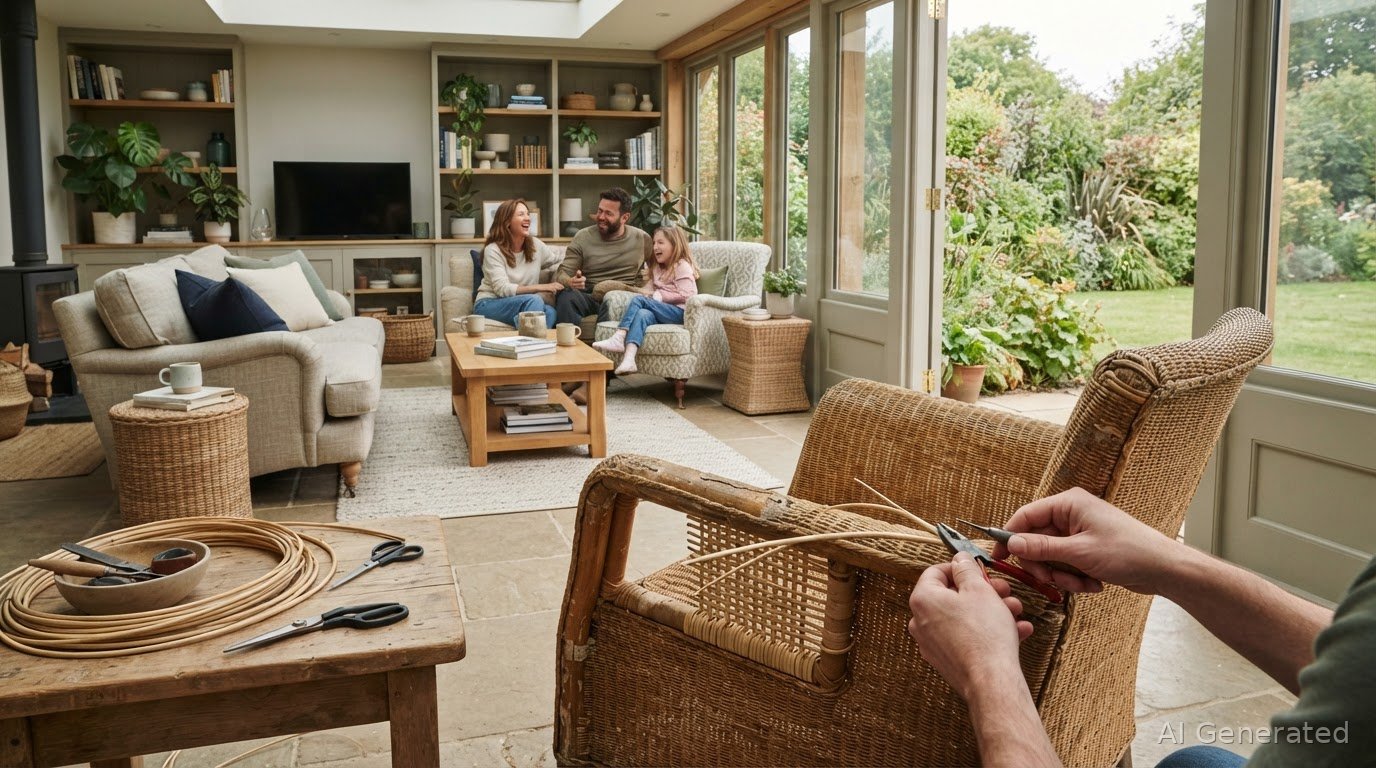
How to Repair Faded Rattan Furniture and Replace Broken Strands
Faded or damaged rattan garden furniture can often be refreshed rather than replaced. Repairing faded rattan furniture starts with identifying whether the weave is natural or synthetic: natural rattan can be cleaned, dried and finished with oil, stain or clear varnish, while synthetic rattan can be cleaned and refreshed with UV-resistant paint. To replace a broken strand, trim its frayed ends and weave a closely matched replacement over and under the surrounding strands.
It’s frustrating to see a favourite garden chair or sofa lose its colour or develop a gap in the weave, especially when the frame is still in good condition. Small repairs are manageable with patience and the right materials. For natural rattan, soak a loose strand in warm water for 10-15 minutes to make it more flexible, then secure glued repairs in place while the adhesive dries for 24 hours.
This guide explains how to assess damage, restore faded natural and synthetic rattan, replace a snapped strand and care for furniture through the British seasons. You’ll also learn when a repair is practical and how to help protect the finish from further weathering.
Key Takeaways
- Identify whether the weave is natural or synthetic before choosing a cleaning, colour-restoring or repair method.
- Make loose natural strands more flexible with a brief warm-water soak, then secure adhesive repairs while they dry.
- Protect rattan from British winter weather with a cover or sheltered storage, and clean synthetic weave after it gets wet.
- Refresh faded synthetic rattan with suitable UV-resistant paint, applying it to a thoroughly cleaned surface.
- For snapped strands, trim frayed ends and weave in a replacement that closely matches the original width and colour.
Can You Repair Rattan Garden Furniture?
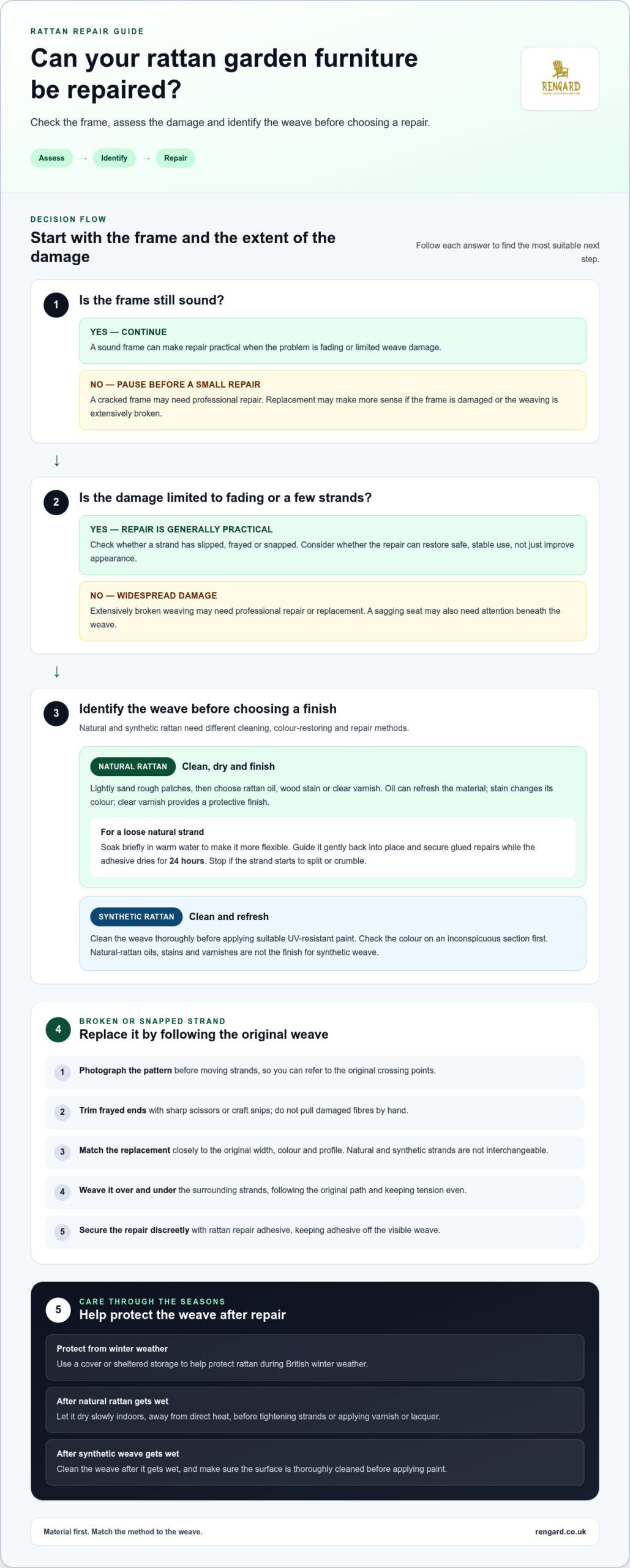
Repairing faded rattan furniture is often practical when the frame remains sound. First identify the weave, then match the repair method to its material and condition.
Assess loose strands
Inspect each loose strand before pulling or trimming it. Check whether the weave has slipped, frayed or snapped, and look underneath the seat for damage. A single displaced strand needs a different repair from a cracked frame or widespread broken weaving. For natural rattan, a warm-water soak can make loose strands more flexible. Avoid forcing a brittle strand back into place.
Compare repair and replacement
Compare the damaged area with the furniture’s overall condition. Repair is generally the more practical option when the frame is sound and damage is limited to fading or a few strands. Replacement may make more sense when the frame is cracked or the weaving is extensively broken. Consider whether the repair can restore safe, stable use, not simply improve appearance. A sagging seat may need attention beneath the weave, too.
Consider natural rattan restoration options
Clean and dry natural rattan before choosing its finish. Lightly sand rough patches, then consider rattan oil, wood stain or clear varnish. Oil can refresh the material, while stain changes its colour; clear varnish provides a protective finish. Don’t treat natural rattan like synthetic plastic. Paint is more suitable for refreshing faded synthetic weave than for finishing natural rattan.
- Photograph the weave before moving strands. This gives you a reference for the original pattern and crossing points.
- Support the furniture on a stable surface. Turn a chair carefully to inspect its underside without putting pressure on loose weaving.
- Soak a loose natural strand briefly in warm water. Flex it gently, and stop if it begins to split or crumble.
- Guide the strand back through its original path. Follow the neighbouring over-and-under pattern, keeping tension even across the repair.
- Secure a repaired strand with rattan repair adhesive. Hold it in place as the adhesive dries, so it cannot spring loose.
- For a sagging seat, inspect the underside first. Tighten loose screws or fittings, replace worn support straps if needed, then reweave loose sections.
- Let moisture-affected natural rattan dry slowly indoors. Keep it away from direct heat before tightening strands or applying varnish or lacquer.
- Assess the frame and weave again after repairs. A cracked frame or extensive broken weaving calls for more than a small strand fix.
If natural rattan has been exposed to moisture, let it dry indoors without direct heat before tightening the weave or applying protective varnish or lacquer. A cracked frame or extensively broken weaving may need professional repair.
Materials and tools for rattan repairs
Gather your tools once you’ve identified the weave and repair needed. Matching materials and careful application help keep the finish tidy.
- Examine the damaged area and note the material. Separate natural rattan from synthetic strands before choosing finishes or replacement weave. Check the strand’s width, colour and profile against nearby sections. A close match helps a small repair blend into a chair, table or garden sofa.
- Choose replacement material that follows the existing pattern. Keep a loose strand or clear photograph as a reference when comparing widths and colours. Natural and synthetic rattan aren’t interchangeable. A strand that looks similar may still sit unevenly if its profile differs from the surrounding weave.
- Set out small cutting tools for frayed ends. Sharp scissors or craft snips give more control than pulling damaged fibres by hand. Use tweezers to guide a replacement through tight crossings. A blunt weaving tool can help lift neighbouring strands without piercing the frame.
- Prepare rattan repair adhesive for loose or replacement ends. Use a small applicator, such as a fine brush or narrow nozzle, to place adhesive discreetly beneath the frame. Keep a clean cloth nearby for accidental smears. Avoid coating visible strands, where dried adhesive can interrupt the weave’s finish.
- Assemble a cleaning kit before applying any finish. A soft cloth, a small brush and a bowl make it easier to reach dirt between strands. According to the NHS, routine cleaning uses a fresh detergent solution in warm water. Remove residue and allow the weave to dry before finishing.
- For natural rattan, keep a fine sanding block for rough patches. Set out rattan oil, wood stain or clear varnish according to the finish you want. Use a clean cloth or suitable brush for controlled application. Keep each finish separate, and don’t apply natural-rattan products to synthetic weave.
- For synthetic rattan, prepare suitable UV-resistant spray paint or colour-matched rattan paint. Clean the weave first and have a protected work surface ready. Choose colour against an inconspicuous section before treating the whole piece. This helps you assess the match without changing a prominent area first.
- Arrange the tools within reach before starting. Place replacement strands, adhesive, tweezers and cutting tools together on a tray. Keep cleaning and finishing materials separate from repair supplies. This prevents wet cloths or open finishes from getting tangled in strands during detailed work.
- Check the furniture’s underside and frame before beginning. Keep screws or fittings that need tightening accessible, and set aside any worn support straps for replacement. A strand repair kit won’t correct a cracked frame or failed seat support. Match each tool to the damage, not just the visible surface.
Preventive care and storage
Build a simple care routine around the weave material, its exposure and your storage space. A few consistent habits can help limit dirt, moisture and fading outdoors.
- Clean rattan regularly with a fresh solution of detergent in warm water. The NHS recommends this mixture for routine cleaning. Use a soft cloth across exposed strands, then a small brush between crossings. Lift cushions first, so trapped leaves and grit don’t remain beneath seats.
- Rinse away detergent residue with a clean, damp cloth. Work along the weave rather than scrubbing across it. This helps prevent loose strands catching or shifting during cleaning. Dry the surface with a towel, then leave the furniture uncovered until moisture has evaporated.
- Clean synthetic rattan after rain or other water exposure. Use warm, soapy water and a soft cloth to remove surface dirt. Synthetic weave doesn’t absorb moisture like organic rattan. Still, wipe pooled water from seat creases and table edges, where it can collect.
- Keep natural rattan sheltered from repeated damp conditions. Move it beneath a covered area during prolonged wet weather, and avoid leaving it against a damp wall. Check joints and weave crossings as you clean. Early signs of loosening are easier to address than strands neglected through a season.
- Use a protective cover when outdoor furniture isn’t in use. Choose one that sits securely without pulling against the weave. Remove leaves and standing water before covering a chair or garden sofa. This keeps debris from rubbing against the surface and helps limit exposure to rain.
- Store rattan furniture under cover during winter. A shed, conservatory or dry covered area can reduce direct exposure to cold, wet weather. Clean and dry each piece before moving it into storage. Leave enough room to avoid crushing woven arms or trapping furniture against other items.
- Position furniture thoughtfully through the warmer months. A sheltered patio corner can reduce exposure to rain and strong sunlight. Move chairs out from beneath dripping branches, and clear fallen leaves from woven seats. Rotate pieces occasionally if one side receives more sun than the other.
- Check the weave and frame during routine cleaning. Look for loose ends, sagging sections, cracks and fittings that have shifted. Remove surface dirt before inspecting closely, since debris can hide small changes. Record the affected area with a photograph, so you can track whether it changes.
Synthetic rattan can be cleaned with warm, soapy water after exposure to water because it does not absorb moisture like natural rattan. Use a soft cloth over the whole surface, paying attention to corners and joins where water or dirt can collect. Keep the process gentle and avoid pulling at the weave. After wiping, remove visible residue with a clean, damp cloth, then dry the surface before replacing cushions or other items. Careful, consistent cleaning makes it easier to notice dirt, pooled water or changes in the weave during routine upkeep.
Refreshing faded synthetic rattan
To refresh synthetic weave, clean it thoroughly before applying a suitable colour finish. Work methodically to preserve the texture and avoid coating nearby surfaces.
Clean faded rattan before repairs
Wash synthetic weave with warm, soapy water before painting. Use a soft cloth on broad surfaces and a small brush between crossings. Rinse away residue, then let the furniture dry completely. Don’t paint over dirt, damp patches or loose strands: they can leave an uneven finish or conceal damage that needs attention.
Choose suitable paints and sealants
Choose UV-resistant spray paint or colour-matched rattan paint for synthetic weave. These options can refresh its colour. A separate sealant isn’t needed for this method; follow the paint maker’s directions rather than adding another coating. Spray painting can leave overspray nearby, while applying too much paint may cause pooling and obscure the woven texture.
- Check that the weave is synthetic before choosing paint. Natural rattan needs a different finish, so don’t assume the same product suits both materials. Inspect a hidden section and compare its surface with exposed strands before preparing the whole piece.
- Brush away loose dirt from between the strands. Clean creases, undersides and the junctions around the frame, where grime can remain hidden. Warm, soapy water helps remove surface marks. Use a soft cloth, and avoid pulling strands out of alignment as you work.
- Rinse the weave with clean water after washing. Remove soap from crossings and around the frame, where residue can affect the finish. Dry the furniture thoroughly before continuing. Painting over wet synthetic rattan can make coverage less even and trap visible marks beneath the new colour.
- Repair or secure loose strands before applying paint. Check the seat, arms and edges, where hands and cushions can catch the weave. Paint won’t restore a broken strand or correct a sagging seat. Complete those repairs first so the finish follows a stable surface.
- Choose a paint colour that suits the furniture and its setting. Compare it with cushions, paving and nearby garden pieces. A close colour match can preserve a coordinated look, while a deliberate new shade changes the furniture’s presence on a patio.
- Test the paint on a discreet section first. Check the colour and texture after it dries, then decide whether it suits the surrounding weave. This small trial helps reveal an obvious mismatch before you treat prominent areas, such as a chair back or sofa arm.
- Protect nearby paving, walls and fabrics from spray. Apply the paint in controlled, even passes across the weave. Keep the spray moving, and avoid concentrating it at crossings, where paint can collect and hide the rattan pattern.
- Let the finish dry according to the paint directions. Keep cushions and other items away during drying, so they don’t mark the fresh surface. Once dry, inspect the seat, arms and frame edges for missed patches or areas needing a lighter touch-up.
Replacing broken or snapped strands
Replace a snapped strand with one that matches its material, width and colour. Follow the surrounding weave closely, then secure the ends discreetly beneath the frame.
- Inspect the break before cutting anything away. Follow the strand’s path through the weave and note where it enters and exits. Check whether the frame or neighbouring strands are damaged. A clean break in one strand calls for a different repair from widespread broken weaving.
- Photograph the area from above and below. Capture the crossings and the strand’s route around the frame. Keep the image beside you as a pattern reference. It helps you follow the original over-and-under sequence, especially where the weave turns around an arm or seat edge.
- Choose replacement rattan that closely matches the original width and colour. Compare it against an intact strand beside the break. Check its shape, too, because a noticeably different profile can sit proud of the weave. For synthetic furniture, match synthetic replacement material rather than natural rattan.
- Cut away the frayed ends with sharp scissors or snips. Trim only damaged material, keeping the cut close to the sound weave. Avoid pulling a snapped strand free by force. That can loosen neighbouring crossings or damage the woven edge around the frame.
- Prepare the replacement strand to follow the existing route. Set its starting end beneath the frame, where the finish can remain discreet. Leave enough material to weave through the damaged section without stretching it tight. Excessive tension can pull nearby strands out of position.
- Weave the replacement over and under the surrounding strands. Follow the photographed pattern and compare each crossing with the intact section. Use tweezers or a blunt tool to guide the strand through narrow gaps. Don’t pierce, twist or flatten neighbouring strands as you work.
- Keep the new strand aligned with the original weave. Check its height against strands on either side, then adjust crossings before securing it. An even route helps the repair blend visually. It also avoids a raised section catching clothing, cushions or hands during everyday use.
- Secure both replacement ends discreetly beneath the frame with adhesive. Apply a small amount at the concealed ends, not across the visible weave. Hold the strand in position while the adhesive dries. Keep the repair undisturbed for 24 hours, allowing the bond to set.
- Inspect the finished section from above and underneath. Compare its crossings with the neighbouring pattern and check that both ends remain tucked away. Press gently around the repair to find movement. Don’t pull the strand sharply, since force can disturb the adhesive or loosen its crossings.
- Assess the whole seat or panel after replacing the strand. Look for sagging, worn support straps, loose fittings or further breaks. A single strand repair won’t correct a cracked frame or extensive weaving damage. Those wider problems may call for professional repair rather than isolated patching.
- Choose replacement furniture if extensive damage makes the piece impractical to restore. Compare the frame footprint and seating layout with your available patio space, then discuss garden furniture options with Rengard.
Rengard: Furniture Accessories
Rengard offers garden furniture, including rattan garden furniture, for refreshing your outdoor setting beyond strand repairs. If a piece no longer suits your patio or garden, consider how a replacement could work with your existing seating and layout. Rengard’s garden furniture includes options for dining and lounging, as well as compact bistro sets for smaller spaces. Explore the range to find a piece that suits your outdoor space.
Make your outdoor space work beautifully
A considered approach to repairing faded rattan furniture can help you decide whether the piece still belongs in your garden. Look beyond the damaged area: consider how you use the seating, what would make the patio more comfortable, and whether the furniture still suits the space. A refreshed piece can sit comfortably alongside new cushions, planting and a well-planned dining area.
Use the repair as a chance to create an outdoor setting that feels cohesive and practical. On a compact terrace, clear pathways and flexible seating can make the area easier to enjoy. In a larger garden, think about how separate seating and dining zones connect. Let the furniture’s condition and your preferred style guide your next step.
If you’d like to discuss the next step for your outdoor space, contact Rengard about your furniture plans. With a clear idea of what you want to keep, refresh or change, you can move towards a garden that feels considered, comfortable and ready to enjoy.
Frequently Asked Questions
How to repair cracked or loose natural rattan strands?
If a strand has cracked on a seat, stop using that seat until the weave is stable. Repeated weight can widen a split, particularly where strands cross. Inspect the damaged area in daylight and check whether the crack reaches a frame joint. If it does, treat the issue as structural rather than cosmetic. This distinction helps you decide whether a small weave repair is suitable.
How to protect restored rattan furniture from UV, rain and mould?
Limit direct sun exposure by placing furniture where a wall, pergola or parasol provides shade. For synthetic weave, UV-resistant paint can refresh the surface; on natural rattan, clear varnish or lacquer can help protect against moisture. To discourage mould, remove leaves and other organic debris from the weave, and avoid leaving damp cushions on seats. These material-specific steps help protect the finish and keep the furniture comfortable to use.