10 seater outdoor dining sets for family homes
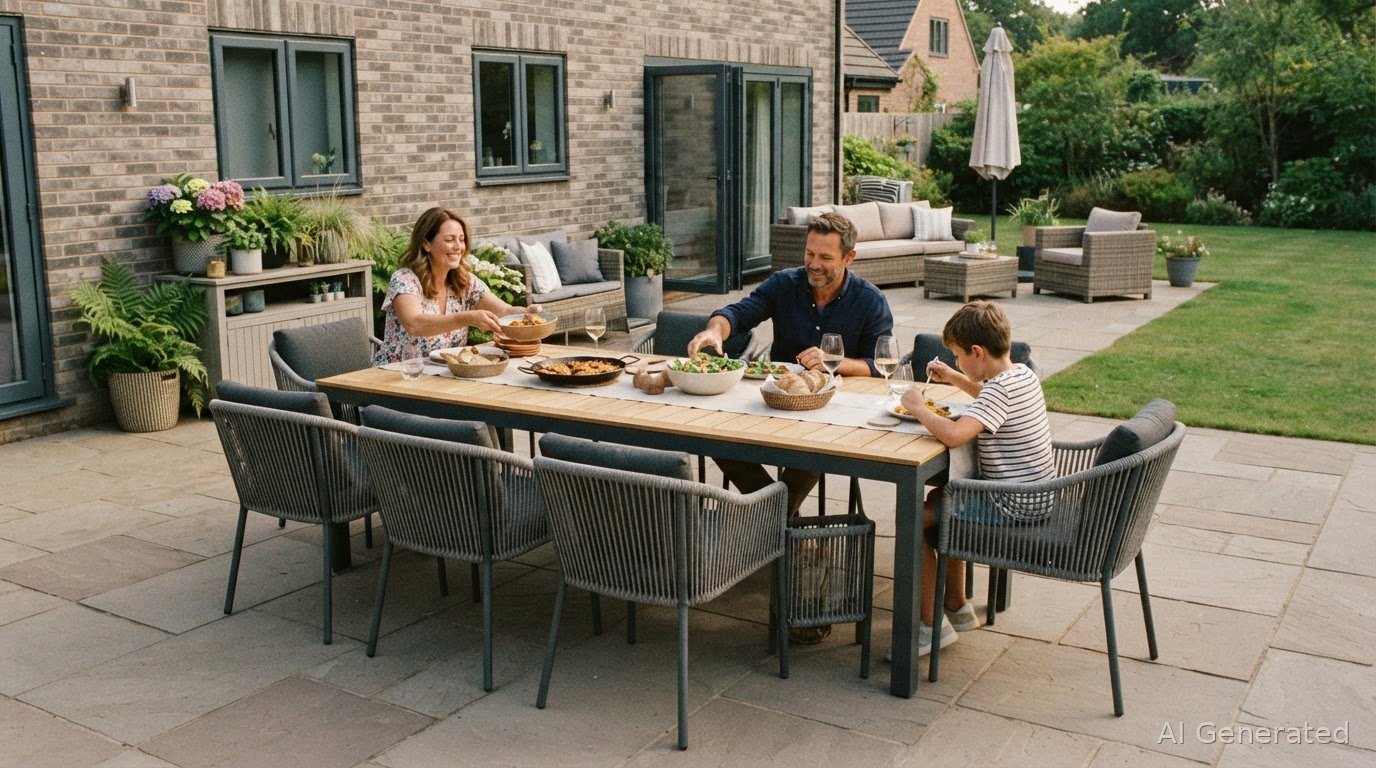
A ten-seat garden dining set isn’t just for commercial spaces. A 10 seater outdoor dining set for large family gatherings can suit a family home, provided there’s room for the table, chairs and space to move around; a 10+ seater set typically needs an area of at least 6 x 4 metres. The right layout makes a difference to everyday comfort as well as larger occasions.
It’s understandable to wonder whether a set this large will overwhelm a garden or patio. The answer depends on the space available, how often you host and the layout you choose. Rattan, rope-weave and outdoor-fabric seating each bring a distinct look to the setting.
This guide explains how to assess your space, choose a table and seating materials, and plan for delivery and care. It also covers practical considerations for British weather, helping you choose a setting for family meals and celebrations.
Key Takeaways
- A ten-seat dining set can work in a family garden, but plan for the table, pulled-out chairs and clear walking routes, not just the table footprint.
- Compare fixed and extending table shapes to find a layout that suits everyday meals as well as celebrations.
- Choose materials and chair finishes with British weather, comfort and the care you’re happy to provide in mind.
- Before buying, assess how the table and chairs sit on your outdoor surface and look for a stable, practical arrangement.
- Plan the outdoor dining space around your home, allowing enough room for the table, chairs and clear routes.
Are 10+ seater sets only for commercial use or for homes?
A 10 seater outdoor dining set for large family gatherings can suit a family home, not just a commercial setting. Its practicality depends on the garden or terrace, how often you host and how the seating is arranged. For a household that regularly welcomes extended family, ten places can make shared meals easier to plan. If larger gatherings are occasional, an extendable table can offer flexibility between events.
Consider the number of seats separately from the table’s footprint. A ten-seat arrangement may have ten matching chairs, or combine chairs with benches. Chairs give each person an individual place; benches create a more shared arrangement. Think about who will use the seats and how easily everyone can sit down and get up.
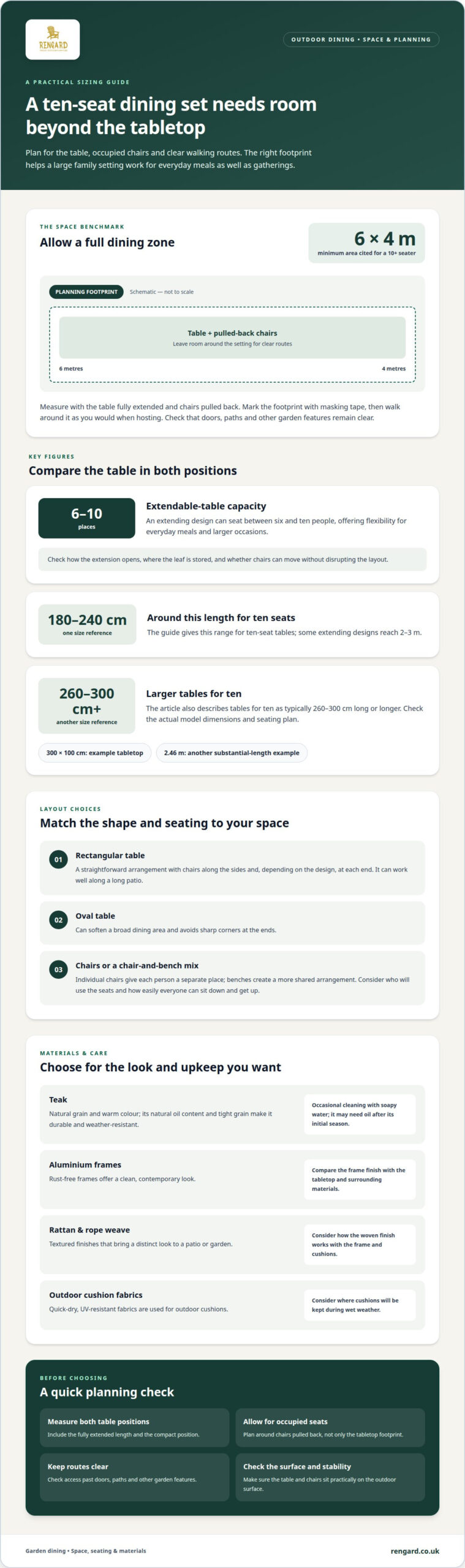
Ten-seat tables are recommended at around 180-240 cm long, with some extending designs reaching 2-3 m. The extension offers extra surface area when you’re hosting a larger group. Check both table lengths before choosing, since the compact position may suit everyday meals whilst the extended version accommodates more guests.
An extendable dining table can seat between six and ten people, making it a practical option for households with changing needs. Check how the extension opens and where its leaf is stored when not in use. Also consider whether the chairs can be moved without disrupting the layout. These details influence how smoothly you can change from a family meal to a celebration.
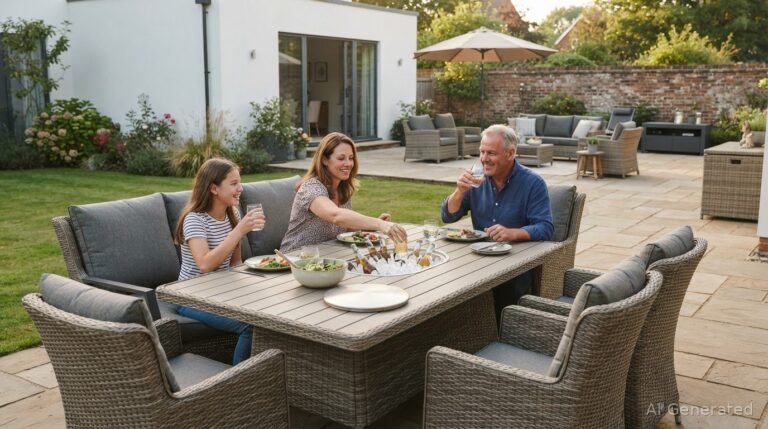
Rectangular tables offer a straightforward layout, with chairs along the sides and, depending on the design, at each end. A chair-and-bench combination uses the space differently, with benches along the long sides and chairs at the ends. Either can work; leave enough room for occupied seats and clear routes across the patio.
Measure the area with the table fully extended and chairs pulled back. A 10+ seater garden dining set typically needs an area of at least 6 x 4 metres. Use masking tape to mark the table and seating footprint, then walk around it as you would during hosting. This shows whether doors, paths or other garden features will interfere.
Choosing a 10 seater outdoor dining set for large family gatherings means balancing capacity with day-to-day comfort. Think about how often you’ll use every seat, whether benches suit your household and whether the extended table fits the available space. A generous setting can work beautifully at home when its layout supports both comfortable dining and easy movement.
10-Seater tables for large family meals and celebrations
A ten-seat garden table should balance generous serving space with comfortable seating and movement around it. Oval and rectangular designs suit larger gardens, while the finish helps set the tone for family meals and celebrations.
Table styles and finishes
Teak brings a natural grain and warm colour to an outdoor dining space. Its natural oil content and tight grain make it durable and weather-resistant; occasional cleaning with soapy water helps keep the surface cared for. A ceramic-tiled top offers a different visual character, with a patterned or smooth surface depending on its design.
A darker table frame can create a clear outline against paving, planting or a pale terrace. Compare the tabletop finish with existing materials, such as timber decking or stone paving. For a cohesive setting, echo a tone in the chair frames or cushions without making every piece identical.
Choosing a table size
Tables for ten are typically 260-300 cm long or longer. A rectangular 300 x 100 cm top gives a clear example of the footprint involved, while some extendable designs offer a shorter setting between larger gatherings. Check the dimensions in both positions and account for chairs around the entire table.
For entertaining, match the table’s shape to the garden’s proportions. Rectangular tables work well along long patios, while oval tables soften a broad seating area and avoid sharp corners at the ends. In a generous garden, centre the table within the dining zone; on a terrace, align its long edge with the paving to preserve a clear route past the seats.
Think about the way you serve food, too. A longer tabletop can give dishes space between place settings, while a parasol needs to sit above the dining area without obstructing the centre. Check that its base and pole position suit the table design, especially if the table has a central opening.
Before choosing a garden dining set, compare the table’s width with the space needed for place settings and serving dishes. Then consider whether your usual meals need the full surface or whether an extending option better suits occasional hosting. A 2.46 m table is one example of a substantial length for group dining; the best fit depends on how seating and circulation work together in your garden.
Explore table options for your garden dining layout to help shape a considered setting for everyday meals and special occasions.
Garden furniture materials and maintenance
Material choice affects the appearance of a garden furniture set and the care it needs. Compare aluminium frames, rattan, rope weave, teak and outdoor fabrics, and consider where cushions will be kept during wet weather. Choose materials suited to rain, sunlight and the periods when the furniture isn’t in use.
Rust-free aluminium frames offer a clean, contemporary look, while rattan and rope weave bring texture to a patio or garden. Rengard’s outdoor furniture also uses quick-dry, UV-resistant cushion fabrics. Compare the frame and woven finish together, along with the colours of nearby paving, planting and garden furniture.
Natural teak has a distinctive grain and warm tone. Clean it occasionally with soapy water to remove surface dirt, and follow its care instructions. Teak may need oil after its initial season. A breathable waterproof cover can help protect furniture during winter or prolonged wet periods; leave airflow rather than wrapping the furniture tightly.
Plan a separate storage routine for cushions. Keep them in a dry place when they’re not in use, especially during prolonged wet weather, and let them dry before storing or covering them. For example, after an evening meal, bring them indoors if rain is forecast. This shelters the soft furnishings without requiring you to move the table and chairs.
Weather-resistant construction is designed to withstand British conditions, but sensible care still matters. Wipe spills from surfaces and fabrics, and clear away leaves or debris. Follow the care guidance for the frame, woven sections and fittings when cleaning, so the set is ready for the next occasion.
A physical showroom gives you the chance to view furniture and compare materials in person. Notice how a woven chair looks beside a table, and compare finishes in natural light. Seeing pieces together also helps you judge their scale and how a combination might suit your outdoor space.
Before furniture arrives, clear a route to its intended position and prepare the area for assembly. Once the set is in place, keep covers and stored cushions somewhere convenient, so protecting them becomes part of your regular routine. For practical finishing touches, garden furniture accessories can complement the dining area.
Rattan, rope-weave and outdoor-fabric chairs
Chair material shapes the dining area’s character as much as the table does. Rattan brings a woven texture, rope weave adds linear detail, and outdoor fabric introduces colour and softness. For a large family setting, compare each finish with the table frame and garden surroundings before choosing a coordinated look.
Rattan chairs can create a relaxed, familiar look beside a teak or aluminium table. Check whether the weave is designed for outdoor furniture, then follow its care instructions for cleaning and storage. A tightly woven profile gives a more enclosed appearance, while open weaving lets the chair frame remain visually prominent.
Rope-weave seating offers a contemporary alternative, particularly alongside slim aluminium frames. The contrast between cord-like texture and metal creates a lighter visual effect than a solid chair design. Look closely at the joins between rope and frame, and assess whether the seat shape supports a comfortable posture during a long family meal.
Outdoor-fabric chairs bring a softer finish to a garden dining set. Choose colours that work with the paving, planting and table surface. Muted tones can sit quietly among greenery, while a stronger accent can define the dining zone. Check the care guidance and whether cushions are removable for storage.
For a table seating ten, consider how the chairs look and feel as a group. Matching chairs create a consistent outline around a rectangular table, while contrasting end chairs can add definition. Keep chair width and arm shape in mind, since both affect how closely seats can be positioned.
British weather changes across the season, so distinguish weather-resistant materials from furniture that needs protection between uses. Check the frame and weave care instructions, and plan a dry place for cushions during prolonged wet spells. A breathable cover can help protect chairs outdoors while allowing air to circulate.
Before deciding, compare the chair’s seat height, back support and dimensions with the table. If you can try a sample chair, sit in it and move it in and out as you would when hosting. This helps you judge comfort and whether its shape suits the available space.
Explore garden dining chairs in rattan and other finishes to compare styles for your outdoor setting.
What safety and stability features should I check before buying a large outdoor dining set?
With a large dining set, stability depends on the table, chairs and surface working together. Assess the complete arrangement, rather than judging the table alone. A ten-seat layout has more occupied chairs and moving parts, so inspect each connection and consider how people will enter, sit and leave their seats.
Begin with the table base. Check that the legs sit evenly on the patio or terrace and that the table doesn’t rock when the tabletop is gently pressed. Make sure the joints appear secure and the frame doesn’t shift when you move the table. On uneven paving, choose a level position rather than relying on a wobbly table to settle.
For an extending table, operate the extension before use. Follow the assembly instructions, open and close the mechanism as directed, and check that the additional section sits flush with the main tabletop. Make sure any catches or supports engage as intended, since an unsecured extension can affect the surface and seating arrangement during a meal.
Inspect every chair and bench individually. Place each seat on the same surface and check for movement, loose joints or uneven contact with the ground. Sit down and stand up naturally, then repeat the movement at the table. Check that arms, backs and legs clear neighbouring seats when chairs are pulled out.
Allow a clear route around the set. A practical planning guide is to leave 60-90 cm around garden furniture, so people can move past occupied seats. For example, check the route from a patio door to the table, then consider whether a pulled-out chair would block it. Keep paving edges, steps and garden paths in view.
Parasol placement also affects the layout. A central pole can meet the table’s opening, while a separate base needs a stable position outside the main route. Check that the parasol doesn’t obstruct chair movement or create a trip point beside the dining area. Keep the arrangement uncluttered around all ten places.
Assemble furniture on a firm, level surface and tighten fittings as the instructions specify. Recheck the table and chairs after assembly, before guests arrive. If the set moves during ordinary use, stop using it until the cause is addressed. A steady surface, secure connections and clear routes help create a practical outdoor dining setup.
For help choosing a dining layout that suits your garden, contact Rengard.
Rengard
Rengard is a natural next step once you’ve assessed your garden space, preferred seating and material priorities. Its dining tables and furniture accessories offer useful starting points for considering how an outdoor dining area can sit within your wider home style. Think about the table’s proportions, the colours already present in your garden and the pieces you’ll need to complete the setting. This approach keeps the decision focused on how you’ll use the space, rather than choosing a set by appearance alone. If you’d like to discuss your outdoor dining plans, contact Rengard.
Make outdoor dining feel part of home
A 10 seater outdoor dining set for large family gatherings can give your garden a clear focus for shared meals. Consider how you want the space to feel when it’s set for guests, from the arrangement of tableware to the colour accents that complement your outdoor furniture. Small styling choices can make the dining area feel considered without crowding the table.
Rengard offers garden dining furniture and accessories to help you shape an outdoor setting around your preferences. Choose pieces that suit your garden and the way you like to host, keeping the arrangement comfortable and easy to use.
Contact Rengard about your dining set to discuss your outdoor dining plans.
Frequently Asked Questions
Can I leave 10+ seater sets outside all year in the UK?
Yes, choose furniture designed for outdoor use and follow its care instructions. Consider where it will sit: placing it beneath a roof overhang may reduce direct exposure, while an open patio leaves it more exposed to the elements. Keep the area accessible so you can cover or move individual pieces when needed. Plan this before arranging the full dining space.
Can I assess 10+ seater sets in person?
Seeing furniture in person can help you assess details that are difficult to judge on screen, such as finishes in natural light and how colours work together. Note the style and dimensions of your outdoor area, or take a photograph, to help you picture how a design might fit.
What’s included in a 10+ seater dining set?
Contents vary between set configurations, so use the individual product description as your guide. Check that the named pieces suit your intended layout and note whether accessories are included or sold separately. Furniture can also be selected individually, allowing you to mix and match across collections, subject to availability. This can help you adapt an arrangement to your garden.
What types of 10-seater outdoor dining sets are available in the UK?
In the UK, you can choose a coordinated dining set or combine individual outdoor furniture pieces. The right format depends on whether you prefer a unified look or want to select pieces around your garden’s character. Consider the overall silhouette, colours and how the setting relates to nearby planting or paving. These choices can help define a formal dining zone or a more relaxed entertaining area.
What are the dimensions of a 10-seater outdoor dining table and how much space does it need?
There isn’t one standard dimension for every table seating ten, so use the specific product measurements. Compare the tabletop’s length and width with your intended location, then consider how the complete set will reach it. Measure gates, side passages and turns on the route from the delivery point. A table that fits the patio still needs a practical route into position.
How do extendable and fixed 10-seater outdoor dining tables compare?
A fixed table keeps one configuration, while an extending design can adapt its surface to different occasions. Think about how often your household uses the full arrangement and whether changing the table’s configuration suits your routine. Consider how it will look in its everyday position, too, not just when guests arrive.
What chairs are most comfortable and weather-resistant for a 10-person garden table?
Comfort is personal, so consider posture, back support and how a chair feels during a longer meal. If you can try one, sit naturally and check whether its arms and back suit your preferred position. Choose seating made with weather-resistant materials and follow its care guidance. Consider the needs of regular guests as well as the overall look around the table.
How should a 10-seater outdoor dining set be maintained and stored?
Follow the care instructions for each material and plan storage for the parts you remove most often. Cushions, covers and detachable accessories need a convenient place that won’t obstruct everyday garden use. Keep the care guidance with your household records so anyone preparing the set can follow the same routine. Before the season’s first meal, allow time to arrange the full setting.