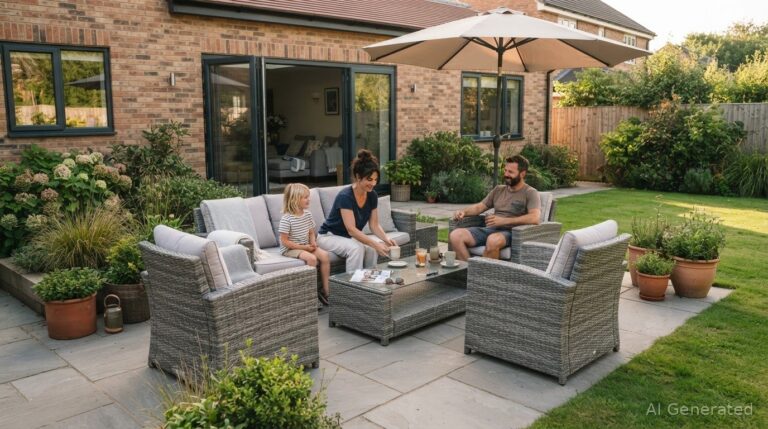
Outdoor fabric for UK weather: compare price and protection
The best outdoor fabric for UK weather depends on how you use and store your garden cushions. Water-repellent fabric suits everyday outdoor upholstery, while water-resistant fabric can handle light showers but may let water through during heavy or prolonged rain. For cushions left outside, look for waterproof fabric, and remember that water can still enter through seams or zips.
It’s easy to focus on a fabric label, but how you use and store cushions matters too. Choose a level of water protection that suits the exposure, while considering comfort, appearance and care.
This guide explains how to compare fabric types and costs, what to consider for year-round outdoor use, and how cleaning and storage can help prevent mould. You’ll also find practical pointers for choosing fabrics for garden sofa sets, dining areas and compact patios, so you can create an inviting space that suits both your furniture and the British climate.
Key Takeaways
- Match the fabric’s water protection to where cushions will be used: light-shower resistance is different from protection for items left outdoors year-round.
- Compare budget polyester with performance fabrics by considering durability and ongoing care, not just the initial material cost.
- For prolonged outdoor use, consider how fabric construction and colour treatment affect resistance to fading.
- Reduce mould risk by keeping cushions clean and completely dry before storage, and avoid trapping moisture beneath covers.
- Build simple care into your garden routine, from brushing away surface dirt to choosing breathable covers for the off-season.
1. What is the difference between waterproof and water-resistant garden cushions?
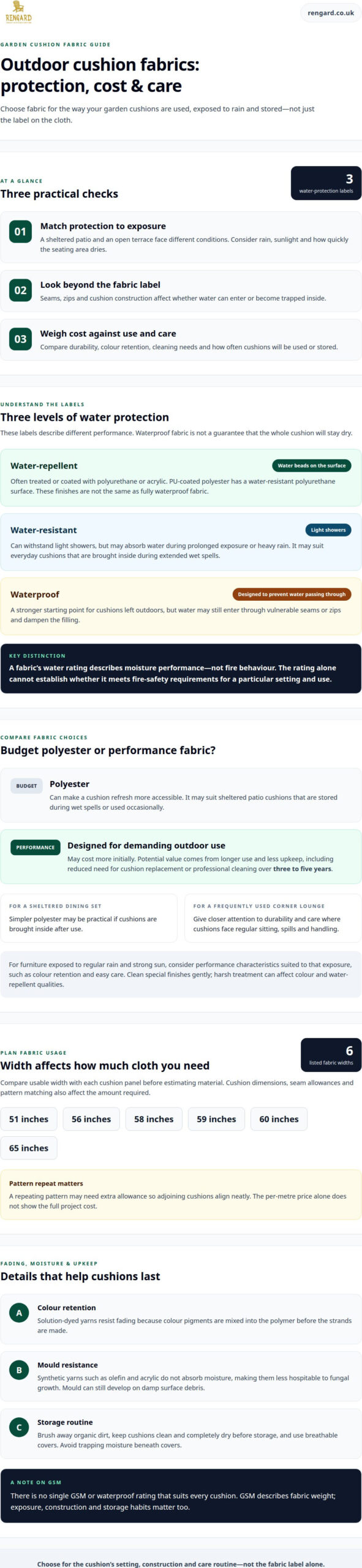
For garden cushions and upholstery, waterproof, water-repellent and water-resistant describe different levels of protection. Waterproof fabric is designed to prevent water passing through. Water-repellent fabric encourages water to bead on its surface, while water-resistant fabric can withstand light showers but may absorb water during prolonged exposure.
That distinction matters in a British garden, where a brief shower can turn into steady rain. Water-repellent fabric is often treated or coated with polyurethane or acrylic, helping water bead on the surface. PU-coated polyester, for example, has a water-resistant polyurethane surface. These finishes suit everyday outdoor cushions, but they are not the same as fully waterproof fabric.
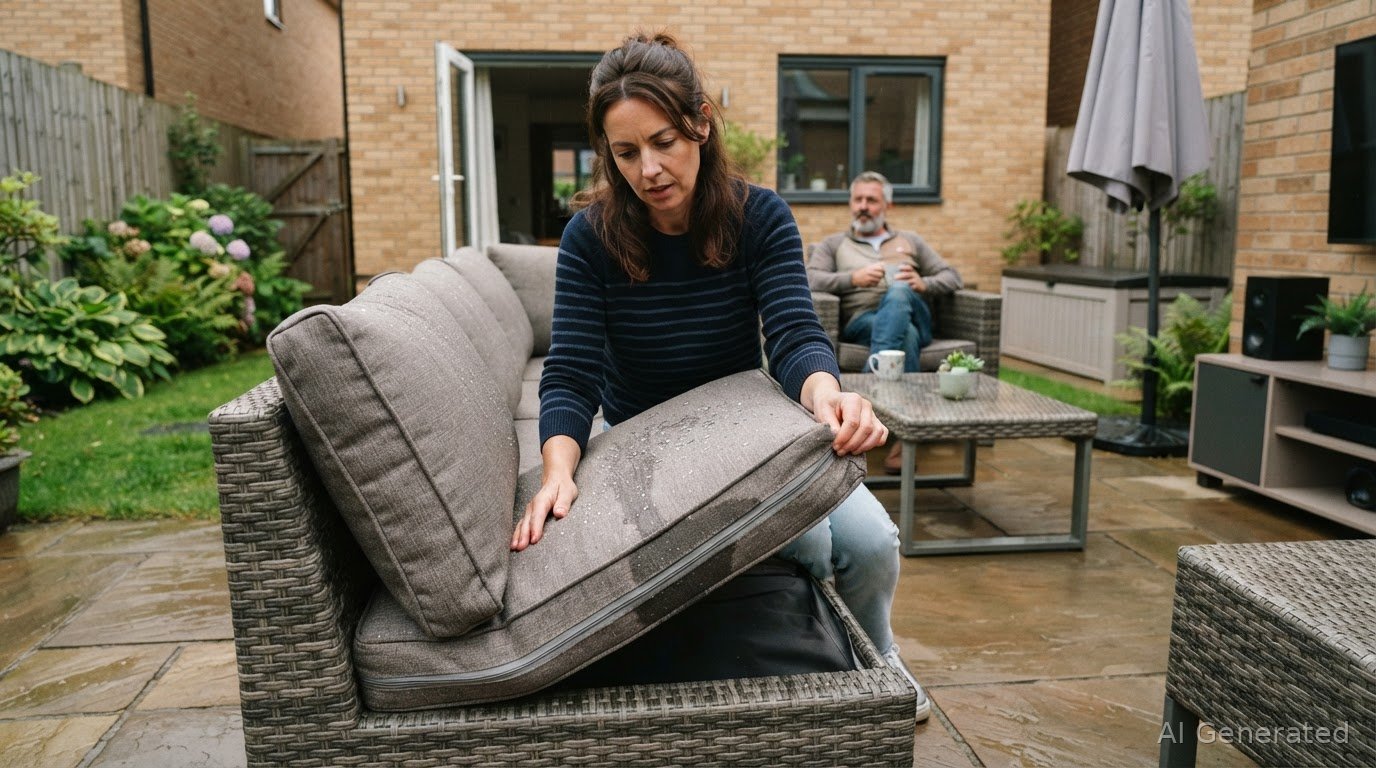
For cushions left outside year-round, waterproof fabric offers stronger protection than water-resistant or water-repellent alternatives. However, the fabric alone cannot make a cushion completely impervious: water may enter through seams or zips and become trapped inside. A waterproof cover with vulnerable seams can still leave the filling damp. For a garden sofa exposed to rain, consider the whole cushion, not just its fabric label.
Which outdoor fabrics resist UV fading and mildew best? Solution-dyed yarns resist fading because colour pigments are mixed into the polymer before the strands are made. Synthetic yarns such as olefin and acrylic do not absorb moisture, making them less hospitable to fungal growth. Mould can still develop on damp surface debris, so brush away organic dirt and keep cushions dry.
Are there UK fire-safety requirements for outdoor upholstery fabric? Water-resistant and waterproof labels describe moisture performance, not fire behaviour. A fabric’s water rating alone cannot establish whether it meets any fire-safety requirements relevant to its setting and use.
What fabric GSM and waterproof rating are suitable for UK garden furniture? There is no single GSM or waterproof rating that suits every cushion. GSM describes fabric weight, but the right choice also depends on exposure, construction and whether cushions are stored between uses. Pay particular attention to seams and zips, which can let water into an otherwise waterproof cushion.
For a sheltered patio, water-repellent upholstery may suit cushions that are brought inside during prolonged rain. For furniture exposed to the elements, waterproof fabric is a more appropriate starting point, alongside construction that limits water entry. The best outdoor fabric for UK weather is the one suited to how cushions are used, not simply the strongest-sounding label.
2. Budget polyester versus performance fabrics
Budget polyester can make a cushion refresh more accessible, while performance fabrics are designed for demanding outdoor use. The difference is not just appearance: construction, surface treatments, colour retention and cleaning needs all affect how fabric performs on a garden sofa. A lower-cost option may suit cushions used on a sheltered patio and stored during wet spells. For furniture exposed to regular rain and strong sun, consider durability and care more closely.
How much do outdoor upholstery fabrics cost in the UK per metre? The amount of material needed depends on fabric width, cushion dimensions, seam allowances and pattern matching, so the per-metre price alone will not show the full project cost.
Width can change how efficiently a fabric is used. Outdoor fabric listings include widths of 51 inches, 56 inches, 58 inches, 59 inches, 60 inches and 65 inches. For a set of seat and back cushions, compare the usable width with each panel’s dimensions before estimating how much cloth the project needs. A repeating pattern may also require extra allowance so adjoining cushions align neatly.
Performance fabrics can cost more initially, but their potential value lies in longer use and less upkeep. They can save money over three to five years by reducing the need for cushion replacement or professional cleaning. That benefit matters for a frequently used corner lounge, where cushions experience regular sitting, spills and handling. It matters less for occasional-use cushions that are stored carefully and see limited exposure.
Compare options by what each cushion needs to do. For a sheltered dining set, simpler polyester may be practical if cushions are brought inside after use. For a garden sofa that stays outdoors more often, prioritise performance characteristics suited to exposure, such as colour retention and easy care. Clean special finishes gently, since harsh treatment can affect colour and water-repellent qualities.
Before choosing a fabric, consider how exposed the furniture is, how often the cushions are used, and whether their covers can be removed for care. Then compare fabric width and pattern repeat with the cushion shapes. This gives you a more realistic material estimate and helps avoid buying fabric that suits the budget but not the setting. A sheltered bistro area and an open terrace may call for different balances of cost and resilience.
For help planning an outdoor furniture scheme around practical materials and everyday use, discuss your garden furniture requirements.
3. Choosing fabric for year-round outdoor use
Leaving cushions outdoors through a British winter places greater demands on fabric than occasional summer use. Consider rain exposure, direct sunlight and how quickly the seating area dries after wet weather. A sheltered patio differs from an open terrace, so assess the position of each garden sofa. Fabric choice matters, but seams, zips and cushion construction also affect how moisture behaves.
Some outdoor fabrics use a water-resistant Teflon layer over a polyester and acrylic blend. This finish can protect the surface, but it does not make every part of a cushion waterproof. Solution-dyed yarns offer a different benefit: colour pigments are mixed into the polymer before the strands are made, helping the fabric resist fading. On a sunlit patio, colour retention can matter as much as rain performance.
How should outdoor fabric be cleaned and maintained in the UK? Brush away surface dirt, then gently sponge non-removable fabric with mild detergent dissolved in warm water. Clean special finishes gently to help preserve colour and water-repellent qualities. Removable covers can be machine-washed on a cool cycle with mild detergent.
Choose according to the furniture’s exposure and your care routine. A covered dining area may need less protection than cushions on an uncovered corner lounge. If cushions stay outside, prioritise a finish suited to rain and UV exposure, and inspect seams and zips as part of routine care. Cushions brought indoors during prolonged wet spells face less continuous exposure.
Construction deserves attention too. Even a water-resistant surface cannot stop moisture entering through a vulnerable seam, and water inside a cushion can take longer to dry in cool, damp conditions. For year-round use, assess the whole cushion rather than choosing by fibre name alone. Match the fabric, closure and storage routine to how the seating will be used.
For example, a fixed outdoor sofa may remain exposed more often than cushions used on a small, sheltered patio. Choose fabrics with useful water resistance and colour retention, then keep them clean and dry between spells of use. This balanced approach helps preserve comfort and appearance without assuming one coating makes every cushion suitable for every setting.
4. Mould and mildew prevention
Moisture encourages mould when it lingers on cushions alongside pollen, dust or other organic debris. Synthetic yarns such as olefin and acrylic do not absorb moisture, making them less hospitable to fungal growth. That does not make a cushion mould-proof: spores can grow on dirt left damp on the surface. Clean fabric and dry storage both matter.
Start with a weekly brush to remove dust, pollen and organic dirt before it becomes embedded in the weave. On a garden sofa beneath a tree, fallen petals and leaves can collect between the seat cushions. Brush those areas too, including seams and corners where debris may linger after rain.
Clean outdoor cushions monthly with mild soapy water, a soft brush and a thorough rinse. Regular washing helps remove grime that can hold moisture against the fabric. Use a gentle approach on treated materials, since harsh cleaning can affect special finishes. Allow cushions to dry completely before putting them away or covering them.
During winter, avoid covering cushions or furniture with heavy PVC or plastic sheets. These can trap moisture and encourage black mould underneath furniture. For off-season protection, breathable furniture covers help shield against winter debris whilst allowing internal condensation to escape. Keep the cover from pressing tightly against damp cushions, and air the seating area when conditions allow.
Storage matters as much as fabric choice. Before moving cushions into a shed or storage space, make sure the fabric and filling are completely dry. A cushion that feels dry outside may still hold moisture around seams or within its filling. Leave it to air fully, particularly after prolonged rain or a thorough rinse.
Inspect the seating area as part of regular garden care. Check the undersides of cushions, seams and the frame beneath them, where trapped leaves and dampness can go unnoticed. Brush away surface dirt promptly. If fabric needs washing, rinse thoroughly and let it dry before storage. These small, consistent steps help prevent damp debris from becoming a mould problem.
For outdoor cushions used through changing British weather, combine these habits rather than relying on one fabric feature. Weekly brushing clears loose debris, monthly washing removes settled grime, and breathable winter covers reduce trapped condensation. Keep cushions clean and fully dry before storage, and avoid leaving damp fabric pressed against furniture for long periods.
5. Outdoor furniture and garden projects
A garden furniture project works best when fabric decisions reflect how each piece will be used. Identify which pieces need soft seating, which stay exposed and which cushions are brought indoors. A corner lounge used for long evenings has different demands from a chair brought out occasionally. This simple inventory helps focus your choices on comfort, upkeep and how each area functions.
Assess the layout before choosing fabric for new cushions or a refresh. In a compact patio, a bistro set may need slim cushions that store easily. A larger seating area might use coordinated fabrics across a sofa and chairs. Keep the colour palette consistent, then use texture or a restrained contrast to distinguish dining from lounging zones.
For a re-covering project, measure each seat and back panel separately, including its depth and shape. A dining chair with a curved back uses fabric differently from a rectangular garden bench. Note seam placement and pattern direction too. These details help estimate material more accurately and avoid mismatched motifs across cushions beside an outdoor table.
A deckchair is a useful small-scale project for learning how fabric fits a frame. One tutorial says a deckchair can be recovered in 30 minutes. Treat that as an example, not a universal timing: frame condition, fabric design and the fitting method all influence the work. The project demonstrates how a single refreshed piece can bring a new colour into an established garden scheme.
Removable covers can make furniture easier to maintain. Outdoor cushion covers, seat covers and tablecloths can be machine-washed on a cool cycle with mild detergent. This is useful in a dining area where spills are more likely, or for cushions used regularly by family and guests. Plan for care by choosing pieces with covers that can be removed without disturbing the filling.
Think beyond the fabric when planning your outdoor space. Arrange cushions so seats remain easy to use, pathways stay clear and tables are accessible. In a narrow terrace, keeping the main route open can matter more than adding another chair. In a larger garden, repeating a fabric colour between a lounge and dining area can create visual continuity.
Give your project a clear direction before selecting fabrics and finishes. Discuss your garden furniture project.
Rengard
Rengard is a natural next step if your fabric choice is part of a wider outdoor furniture plan. After weighing water protection, fading and care, consider how the furniture around your outdoor seating will support the way you use the space. Rengard offers dining tables and furniture accessories for a considered scheme, whether you’re planning a garden dining area or choosing details for your outdoor setting.
Fabric choice still depends on where cushions are placed and how they’re maintained. A well-planned outdoor setting brings practical decisions together with comfort and style. Consider these factors when choosing furniture and fabrics for your garden.
Plan a garden setting that works for you
Choosing the best outdoor fabric for UK weather is part of shaping a garden space you’ll enjoy, not a decision made in isolation. Before your next purchase or refresh, picture a typical day outside: where people sit, how the space connects to dining, and which pieces need to stay inviting between spells of sunshine. That practical picture can guide choices that feel cohesive, not purely functional.
Think about the atmosphere you want to create, too. A calm, tonal scheme can make a compact patio feel composed, while a considered accent colour can bring character to a larger terrace. The right fabric should complement the design and suit the way you use your furniture.
Use those priorities to plan your next step, whether you’re updating one seat or rethinking the whole garden layout. For a considered conversation about outdoor fabric and furniture, contact Rengard about outdoor fabric. A thoughtful choice can bring lasting comfort and style to your outdoor space.
Frequently Asked Questions
Waterproof, water-repellent or water-resistant: which outdoor fabric should you choose?
Choose according to how exposed your cushions are and whether you can store them during wet weather. Water-repellent fabric suits everyday garden seating with some shelter; waterproof fabric is a stronger choice for cushions left outdoors. In a mixed-use space, such as a covered dining area beside an uncovered lounge, choose different protection levels for each set rather than treating the whole garden alike.
How do you prevent mould and mildew on patio cushions?
Keep debris from building up between cushions and the furniture frame, where damp leaves or pollen can stay hidden. After rain or cleaning, stand cushions apart so air can reach their sides and undersides. Store them only when fully dry, and use a breathable cover for off-season protection. This is especially useful for cushions on a shaded patio, where surfaces may take longer to dry.
What are the best outdoor fabrics for patio furniture to withstand UK weather?
Look for fabric that balances water protection, colour retention and ease of care, then match it to the furniture’s exposure. For a garden sofa in an open position, prioritise suitable weather performance and consider how the cushion is constructed. For a sheltered bistro set used occasionally, ease of storage may matter more. A fabric label is only part of the decision; seams and closures also affect performance.
What is the difference between waterproof and water-resistant garden cushions?
Waterproof fabric is designed to prevent water passing through, while water-resistant fabric handles limited exposure and may absorb water during prolonged rain. Cushion construction matters too: stitching and zips can provide entry points even when the main fabric is waterproof. For example, a waterproof cushion on an uncovered terrace still needs sound seams and a plan for drying after wet weather.
Will my outdoor furniture cushions fade in the sun?
Sun exposure can affect outdoor fabric colour over time. Solution-dyed yarns help resist fading because pigment is mixed into the polymer before the strands are made. Positioning cushions where they receive less direct sun can also help preserve their appearance. A parasol can shade a seating area, while removable cushions can be stored when the furniture is not in use.
Which outdoor fabrics are best for UK weather?
The best outdoor fabric for UK weather depends on exposure, use and upkeep. For cushions that face regular rain, prioritise effective water protection and consider how the seams and closures are made. For a sunlit seating area, colour retention matters too. Fabrics with quick-dry, UV-resistant properties can suit outdoor furniture, while sheltered or occasionally used cushions may have different needs.
How do solution-dyed acrylic, polyester, olefin and canvas compare for outdoor use?
Olefin and acrylic synthetic yarns do not absorb moisture, making them less hospitable to fungal growth. Solution-dyed yarns resist fading because pigment is added before the strands are made. Polyester may have a polyurethane surface coating for water resistance. Canvas varies by composition and finish, so assess its stated outdoor properties and construction rather than relying on the fabric name alone.
Which outdoor fabrics are most waterproof and water-resistant?
Waterproof fabric offers the strongest barrier to water, while water-repellent finishes help water bead on the surface and water-resistant fabrics suit lighter exposure. Polyurethane-coated polyester is one example of fabric with a water-resistant surface coating. For cushions in exposed positions, consider fabric alongside stitching, zips and storage habits, as these affect how the complete cushion handles rain.