Garden sofas with removable covers for UK gardens
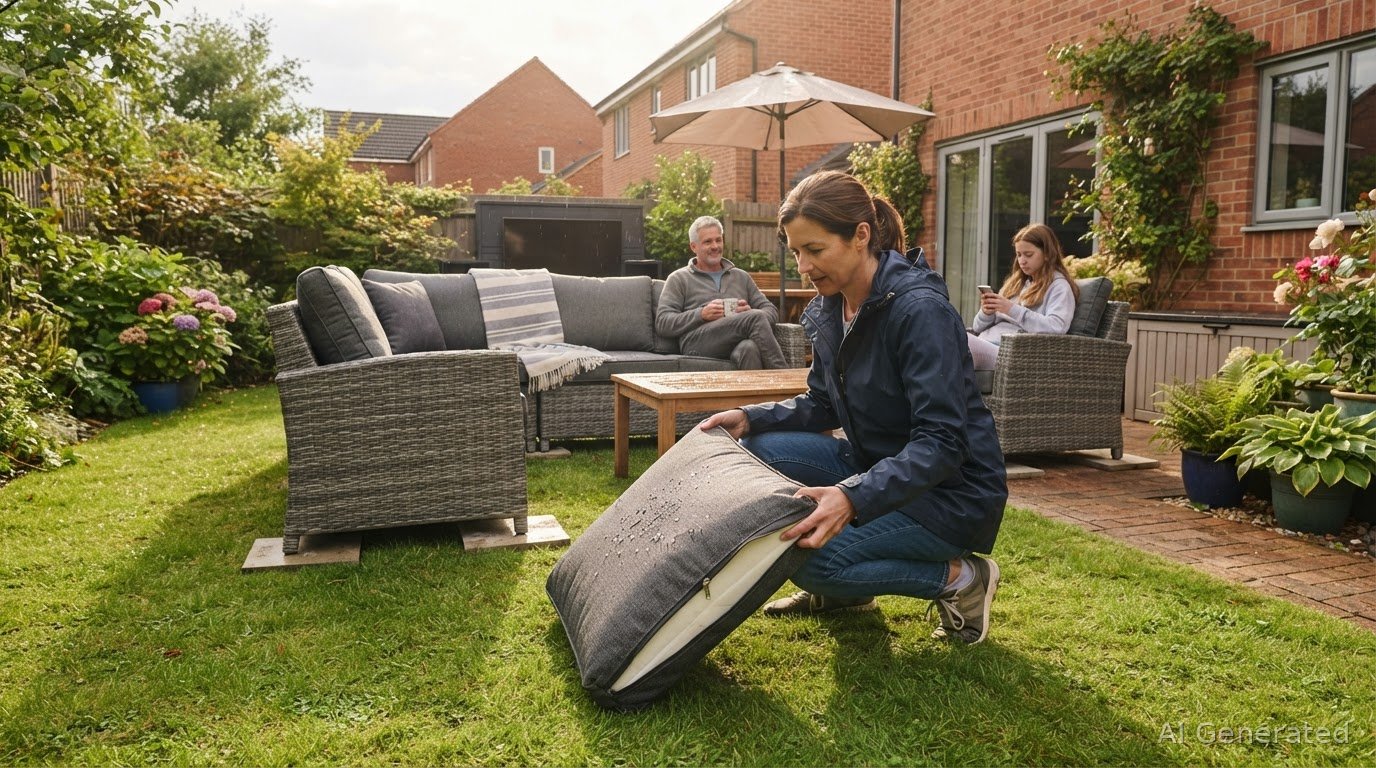
Grass can support a garden sofa when the ground is firm, dry and level. Place a firm paver beneath the feet to help protect the lawn. A garden sofa with water-repellent removable covers can make everyday outdoor care easier, but water-repellent does not mean fully waterproof. Heavy or prolonged exposure to rain can still cause damage.
Outdoor cushions should be comfortable without making cleaning a chore. Removable covers simplify care, but washing instructions depend on the fabric. Check the care label before cleaning, and let covers dry fully before putting them back on.
This guide explains how to assess grass as a sofa base, what removable covers can handle, and how to wash and care for them. It also offers practical advice on choosing a sofa that fits your garden, patio or terrace, with enough room to move around it.
Key Takeaways
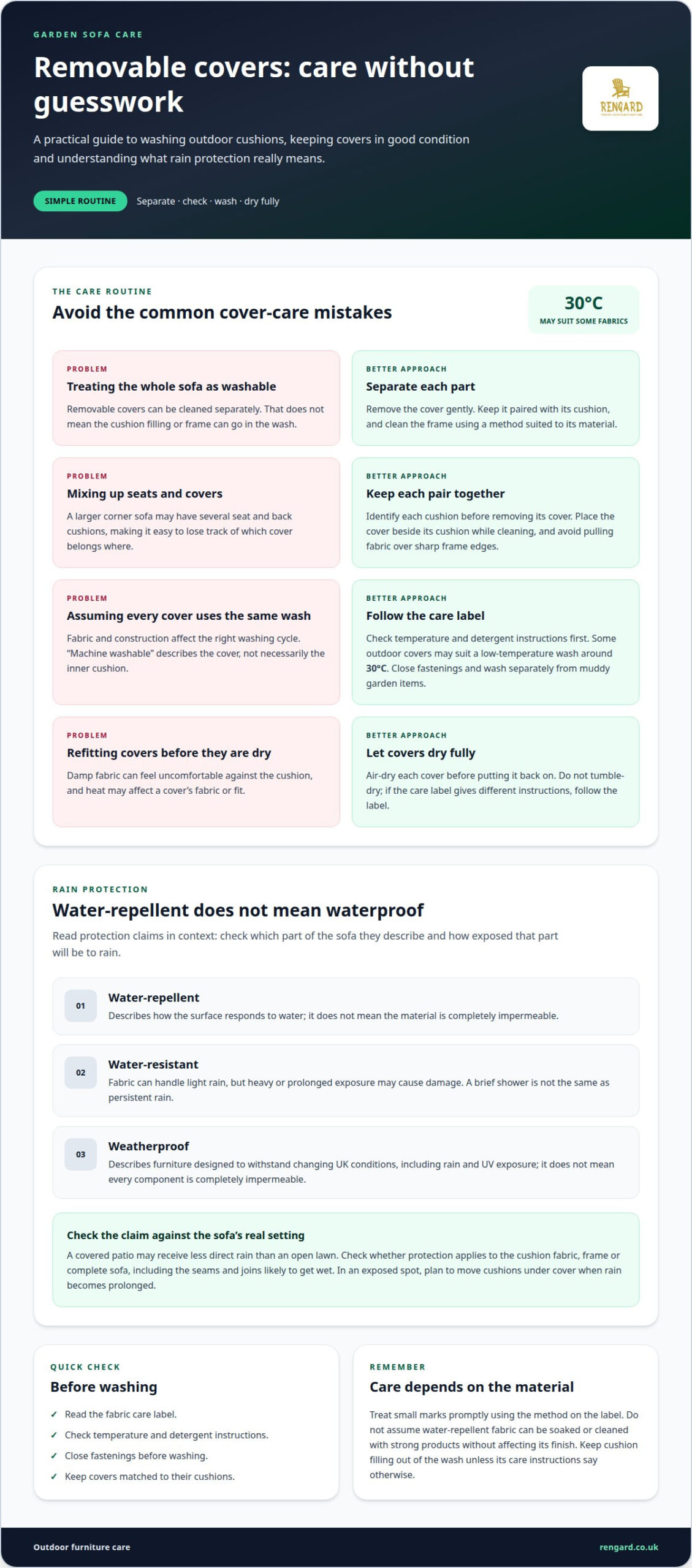
- Removable covers can simplify cleaning; washing at a low temperature around 30°C may suit some fabrics, but follow the care label.
- Distinguish water-resistant fabric from waterproof materials, and choose according to how much exposure to rain your seating area gets.
- Compare cushion fabrics for water resistance, UV resistance and ease of maintenance before choosing a sofa.
- Allow around 75 to 90 cm of walkway space around a sofa to keep the layout practical and easy to move through.
- A typical corner sofa seats four to six people, depending on its size, so match its footprint to your outdoor space.
Removable, machine-washable cushion covers
Removable covers make it easier to clean garden seating after everyday use, whether you’re dealing with pollen on a patio sofa or marks near a coffee table. A garden sofa with water-repellent removable covers still needs fabric-specific care, especially through wet British weather.
Removing cushion covers
Removable covers let you separate the fabric from the cushion filling before cleaning. For a corner sofa, identify each seat and back cushion before removing the covers so you can put them back in the right places. Check the fastenings and care instructions, then remove each cover gently. Avoid pulling fabric across sharp frame edges, which can snag or stretch it.
Keep each cushion paired with its cover to preserve the seating arrangement. Place each cover beside its cushion while cleaning, rather than mixing up pieces from a larger set. Removable covers can be cleaned separately from the frame, but that doesn’t make the whole sofa washable. Clean the frame using a method suited to its material.
Machine-washing cushion covers
“Machine washable” describes the cover, not necessarily the inner cushion. Before washing, read the care label for the permitted temperature and detergent instructions. Some outdoor seat covers can be machine washed at a low temperature of around 30°C, but fabric and construction affect the right cycle. Close fastenings first, and wash covers separately from muddy garden items.
After washing, let each cover dry fully before putting it back on. Don’t tumble-dry covers, as heat may affect the fabric or its fit. If the care label gives different instructions, follow them rather than assuming all removable covers can be washed the same way. Dry, correctly fitted covers help keep a matching sofa and coffee-table setting looking neat.
Care labels matter for another reason: permanent upholstery is treated differently from removable cushion covers. Under regulation 8(1) to (3), furniture supplied with a permanent cover must pass the match test unless the cover is made of a specified material and the furniture has an interliner that passes the Schedule 3 test, according to UK Government, legislation.gov.uk. This distinction concerns permanent covers; it shouldn’t be read as a washing instruction for removable cushions.
For routine care, treat small marks promptly using the method stated on the label. Don’t assume water-repellent fabric can be soaked or cleaned with strong products without affecting its finish. A clean, dry cover is easier to refit smoothly, while damp fabric can feel uncomfortable against the cushion. Keep the filling out of the wash unless its care instructions say otherwise.
Before choosing outdoor seating, consider how the covers will fit into your regular routine. Removable covers are useful when you can take them off, follow the washing instructions and dry them thoroughly before use. That practical detail matters as much as the colour alongside a teak accent or rattan frame: it helps keep a considered garden layout comfortable and presentable through the season.
Waterproof, water-resistant and weatherproof sofa distinctions
These terms describe different levels of protection and matter when choosing seating for a British garden. Consider the fabric, frame and likely exposure together, rather than relying on a single label.
Waterproof sofa distinctions
Water resistance can vary by material and by which parts of a sofa are protected. That level of protection is rare in fabric-based garden sofas, so don’t assume the term applies to every cushion and component. A waterproof surface may protect one part while leaving another exposed.
Check which part a claim describes: the cushion fabric, the frame or the complete sofa. A sofa on a covered patio, for example, may face less direct rain than one beside an open lawn. Check how the stated protection applies to the areas likely to get wet, including seams and joins.
Water-resistant sofa distinctions
Water-resistant fabric can handle light rain, but heavy or prolonged exposure may damage it. This distinction matters in changeable UK weather: a brief shower is not the same as leaving cushions outside through persistent rain. Water-repellent describes how a surface responds to water, not whether it is completely impermeable.
Match the stated protection to the sofa’s position and your routine. A garden sofa beneath a sheltered terrace may get less direct rain than one beside an open lawn. In an exposed spot, plan to move cushions under cover when rain becomes prolonged. This keeps the material’s stated limits in mind.
When reading product descriptions, separate claims about the fabric from claims about the whole seating set. A water-resistant cushion does not mean the frame or other components have the same property. Check whether the description identifies the cushion fabric specifically, rather than applying a broad term to the complete sofa.
Weatherproof sofa distinctions
Weatherproof describes furniture designed to withstand changing UK conditions, including rain and UV exposure. It covers more than water resistance, which refers to a fabric’s response to water. Even so, weatherproof does not mean every component is completely impermeable.
Look for clear descriptions of the materials used across the sofa. Powder-coated aluminium is described as rustproof and weather-resistant, while synthetic rattan is UV- and water-resistant. These properties help explain how specific materials are intended to perform; they don’t make a fabric-covered sofa immune to every condition.
A practical choice starts with the spot where the sofa will sit. Consider direct rain, sunlight and whether cushions can be brought inside during poor weather. For a crafted arrangement beside a coffee table, assess the seating as a complete set, not just its most weather-resistant material. To discuss a suitable outdoor seating arrangement, contact the team.
Cleaning and maintenance of cushions and frames
A simple routine helps outdoor seating stay comfortable through a British summer and winter. Clean cushions, frames and weave separately, using methods suited to each material.
Cleaning cushions
Brush away leaves and loose dirt before cleaning, so debris doesn’t settle into the fabric. For a removable cover, follow its care label: some garden sofa seat covers can be machine washed at a low temperature of around 30°C. Don’t tumble-dry covers. Let them dry fully before refitting, which helps prevent damp fabric from sitting against the cushion filling.
For marks that need extra attention, use the cleaning method specified for the fabric. Don’t assume every cushion can be soaked or treated with the same product. A pale cover beside a dining area, for example, may need more frequent attention to food marks than cushions in a quieter seating corner.
Maintaining cushions
After use, bring cushions indoors during heavy rain and store them somewhere dry over winter. Use breathable bags to keep stored cushions ventilated when they’re not in use. This can help reduce the chance of mildew developing while the filling and covers are packed away.
In summer, put cushions back on the sofa only when they’re dry. If a shower leaves the fabric damp, let it air before use or storage. This helps preserve comfort and prevents moisture from lingering between the cover and filling.
Clean the sofa frame separately from its cushions. Warm, soapy water can remove dirt from garden furniture, while a light jet wash is another cleaning option. Use a gentle approach around joints and woven sections, where leaves and debris can collect. Regularly clearing away leaves, dirt and mildew keeps these deposits from building up across the frame.
Material matters. Aluminium frames and thick rope weaves are low-maintenance and simple to clean. Teak is naturally resistant to moisture, but it isn’t completely waterproof and needs regular treatment to remain weather-resistant. Untreated pine or eucalyptus is prone to rot outdoors, so don’t apply teak-care assumptions to other woods.
Set a repeatable routine around the seasons. During summer, remove loose debris and clean visible marks before they settle. Before winter, wash and dry cushions, then store them indoors in breathable bags. Check the frame for dirt and mildew, and clean it before covering or putting furniture away. For garden sofas kept outdoors, a breathable, waterproof cover can help protect against sun, rain and snow throughout the year.
Keep care material-specific: cushion labels guide fabric care, while the frame material determines how to clean it. Dry cushions, clean joints and care for teak according to its needs. Each step addresses a different part of outdoor maintenance.
Furniture sizes and seat capacities
A sofa should suit both the space and the way you plan to use it. Measure the available area, then leave room for seating, a coffee table and a clear route around the furniture.
Furniture dimensions
Measure the intended position before choosing a sofa, including its full length and depth. For a corner layout, measure both sides of the configuration, not just one section. Mark the footprint on the patio or lawn to see how it fits beside doors, planting and other garden features.
Allow about 75 to 90 cm of walkway space around a garden sofa. This helps people move between the seating and nearby areas without squeezing past the frame. In a compact terrace, position a coffee table within easy reach, but keep the route to the door open.
Check the sofa’s dimensions against the space it will occupy. Deep cushions can extend beyond the frame, and a corner arrangement may project further into the garden than expected. Compare the listed measurements with your marked footprint before deciding. This helps maintain a balanced layout, whether you have a patio or a larger lawn.
Seat capacity
A garden corner sofa’s capacity depends on its size and configuration. Check the stated dimensions and seating arrangement, as seat width, corner placement and cushion layout all affect how comfortably people can sit together.
Think about how you’ll use the sofa. For relaxed family seating, a corner design can bring everyone together around a coffee table. If you mainly host occasional guests, consider whether the sofa leaves room for additional chairs. The right capacity depends on your household’s needs and the space available for other furniture.
A stated seat count describes places, not personal space. Broad cushions may feel generous for lounging, while narrower sections can suit a more upright arrangement. Consider the product dimensions alongside its stated capacity, and picture how everyone will sit. A stylish layout should feel comfortable without crowding the patio or blocking access through the garden.
Quality materials and a considered shape matter, but they can’t make an oversized sofa fit a small terrace. Measure the route into the garden as well as the final position, especially if access passes through a gate or along a narrow path. This helps you assess whether the furniture can reach its intended spot.
Once the footprint and seating needs are clear, compare outdoor sofa sets by configuration and dimensions. A measured plan makes it easier to choose a piece that feels proportionate, leaves useful circulation space and suits the way your garden is used.
Outdoor sofa brands and stated waterproof ratings
Fabric names and protection claims can help you assess an outdoor sofa. Compare the named material, its stated qualities and which parts of the set the description covers.
Don’t assume a fabric name tells you how the whole sofa will perform. Check the product description for the material and its stated qualities, and whether those claims apply to the cushion fabric or other components. Compare that information with the sofa’s intended position and exposure.
Outdoor fabrics are described as breathable, UV-resistant and quick-drying. Those qualities suit garden seating exposed to summer sun and changing weather, but they don’t mean the fabric is completely impermeable. Fabric performance varies, so check the product description for its stated water resistance, UV protection and durability. Treat the fabric name as part of the decision, rather than relying on a broad “weatherproof” label.
Waterproof means completely impermeable to water, so read any stated claim in context. Check whether it applies to the cushion fabric, frame or another component. Don’t assume a claim for one material covers the whole set: a sofa can combine cushion fabric with a frame made from a different material.
Outdoor furniture kept outside still needs practical protection. A breathable, waterproof furniture cover can help shield it from sun, rain and snow. Raise the sofa slightly where water might pool beneath it. Store cushions indoors during heavy rain and over winter, as a protective cover doesn’t remove the need to keep soft furnishings dry.
“All-weather” outdoor fabric garden furniture describes materials intended for outdoor conditions, not furniture that needs no care. Synthetic rattan is described as UV- and water-resistant, while lower-quality weaves may crack over time. Powder-coated aluminium is described as rustproof and weather-resistant. These details help compare construction, but don’t turn each material into a waterproof rating for the complete sofa.
Use a simple comparison: note the named fabric, the specific performance claim and whether the claim concerns cushions or the whole set. Then consider where the sofa will sit and how you’ll protect its cushions through wet spells. To discuss material choices for your garden, contact the team.
Rengard
When choosing garden sofa sets, corner lounges or individual pieces, consider how each item will fit your outdoor space and how you plan to use it. Check whether the arrangement works alongside your existing furniture and suits your patio, terrace or garden. Coordinated furniture can create a comfortable, considered setting for outdoor living.
For enquiries about garden furniture, use the contact page.
Plan a garden setting that works for you
Start with a simple layout plan. Decide where you’ll sit, what you want within reach and how you want the space to feel on an ordinary afternoon. A garden sofa with water-repellent removable covers can be part of that plan, but the surrounding arrangement matters too. Consider the view from indoors, the path through the garden and whether the seating area feels inviting in changing weather.
Bring your priorities together: the space available, the look you enjoy and a care routine that suits your household. A clear idea of how you’ll use the garden makes it easier to choose furniture that feels at home, rather than simply filling an empty spot. Small details can shape the whole setting, from where guests gather to how easily you can move around.
If you’re ready to discuss your outdoor plans, contact Rengard about garden sofas. Take the next step towards a garden that feels comfortable, considered and distinctly yours.
Frequently Asked Questions
What Makes a Good Outdoor Sofa?
A good outdoor sofa suits the space, intended use and furniture around it. For a compact patio in Birmingham, prioritise a layout that leaves room to pass between the seating and the door. In a larger garden in Cheshire, a corner design may create a distinct place to gather. Consider the frame, upholstery and cushion construction together, then assess whether the style works with your existing outdoor table or chairs.
Which outdoor sofas are waterproof in the UK?
Some outdoor sofas use cushion fabrics described as waterproof, but that doesn’t establish that every part of the sofa is waterproof. Check whether the claim applies to the cushion fabric or the complete sofa. For a garden in Wales or a terrace in Manchester, distinguish the cushion’s stated water resistance from the performance of the frame and other components. Read product descriptions as component-specific information, rather than treating one material claim as a rating for the entire set.
What garden sofas have water-repellent removable covers in the UK?
Some garden sofa sets have removable cushion covers. For a patio in Derby or a garden in Worcestershire, check the product details to match the sofa’s construction and appearance to your space. Removable covers are a useful feature for regular care, while the fabric’s stated water performance is a separate consideration. Choose based on both, rather than assuming one feature guarantees the other.
What materials are best for water-repellent garden sofa covers?
Olefin and Sunbrella are useful names to compare when considering outdoor cushion fabric. The best fit depends on the priorities for your setting, such as resistance to water, exposure to sunlight and ease of upkeep. For a bright, open patio in Shropshire, UV performance may matter alongside water resistance. Compare the stated qualities of each fabric and how they suit your preferred colour and style, rather than choosing by material name alone.
Are water-repellent outdoor sofa covers machine washable?
Some removable outdoor covers can be machine-washed, but water repellency alone doesn’t tell you whether they can. Check the care label for the permitted washing method and temperature. A fabric’s water performance is not a washing instruction.
How do you clean and maintain removable garden sofa covers?
Start with the cover’s care instructions, then keep its cleaning separate from care of the frame and cushion filling. Follow the care label for the permitted washing method and temperature. After cleaning, make sure each cover is fully dry before returning it to the seating, and keep matching pieces together during the process. This helps maintain a consistent look across a coordinated sofa arrangement in a patio or garden.
Are water-repellent covers suitable for leaving garden sofas outdoors all year?
They can be part of an outdoor furniture care plan, but a cover’s water-repellent quality doesn’t settle whether the whole sofa should remain outside year-round. Consider how exposed the position is to rain and sunlight, and how the cushions can be protected during long periods of poor weather. A garden in Herefordshire and a sheltered terrace in Chester may have different layouts, so plan protection around the specific position.
How waterproof are water-repellent garden sofa covers?
Water-repellent describes resistance to water, not complete impermeability. It’s therefore not the same as a claim that fabric will remain unaffected by heavy or prolonged exposure. Check whether product wording refers to the cushion cover, another component or the complete sofa. For a seating area in Staffordshire exposed to the elements, interpret the claim alongside the sofa’s position and the care information for its individual materials.