
Teak Oil vs Teak Sealer: Which Finish Suits Outdoor Teak?
Teak can be left untreated outdoors to weather towards a silver-grey patina. That makes the choice of teak oil vs teak sealer less about whether a finish is essential and more about the appearance you want and the care you’re prepared to give. In Britain’s changeable climate, it’s also worth considering how the treatment may look over time.
Teak oil is generally used to enrich the wood’s colour, while teak sealer is intended to create a protective surface layer. Neither is automatically the right choice for every piece. The result depends on the product, the teak’s condition and any finish already on the surface.
This guide compares teak oil and teak sealer for appearance, protection and upkeep. It also explains what to check before treating outdoor teak, including the furniture’s existing finish and whether the surface is clean and completely dry.
Key Takeaways
- In the teak oil vs teak sealer comparison, choose according to the look you want and the maintenance you’re willing to manage.
- Read the product label to understand the finish it creates, its suitability for outdoor teak and how it should be maintained.
- Before applying a new treatment, identify any existing coating and check whether the products are compatible.
- Follow the product’s preparation and application instructions, including guidance on cleaning and drying the teak.
- Consider the finish alongside your choice of outdoor furniture, balancing appearance with the care routine it requires.
Teak Oil vs Teak Sealer: What Is the Difference?
The choice between teak oil and teak sealer comes down to the appearance you want, the product’s intended use and the maintenance you’re comfortable with. Teak oil is generally used to enrich the wood’s colour, while teak sealer is designed to leave a surface layer. Similar care principles apply across garden furniture and marine woodwork, where boat outfitting specialists such as Nautic Haven cater to demanding outdoor exposure. Products vary in ingredients, finish and application, so read the label before deciding.
Teak can also be left untreated to weather towards a silvery-grey appearance. Its natural qualities are part of its appeal outdoors; Wikipedia’s overview of Teak Wood Properties and Uses discusses its uses and how it weathers over time. A finish is therefore a choice about how you want the furniture to look and what care you’re willing to provide, as well as the claims made by a particular product.
For a visual introduction to different teak treatments, watch this video:
What does teak oil do to outdoor furniture?
Teak oil is intended to alter or refresh the wood’s appearance. Some products are described as enhancing teak’s warm, golden-brown tones, but the result depends on the formula and the surface condition. Check the manufacturer’s directions for the expected colour and sheen, and test a discreet area if advised. A richer-looking surface is an appearance change, not proof of a particular level of weather protection.
What does teak sealer do?
Teak sealer is generally intended to leave a surface layer that helps protect the wood. The product’s specific claims and limits matter: some sealers are designed to help maintain the existing colour, while others may change the sheen or tone. Read the label to establish what it is formulated to do, how it should be applied and what maintenance it calls for. Don’t assume all sealers behave alike or offer identical protection.
In short, oil is usually chosen to enrich teak’s appearance, while sealer is intended to protect the surface. The precise result and care depend on the product.
| Point of comparison | Teak oil | Teak sealer |
|---|---|---|
| Intended finish | Often used to refresh or deepen colour. | Typically intended to create a protective surface layer. |
| Appearance | May bring out a warmer tone or alter sheen. | May preserve or change the look, depending on formulation. |
| Maintenance | Follow the product’s reapplication instructions. | Follow the product’s maintenance and renewal guidance. |
| Check the label | Look for colour, finish and outdoor-use directions. | Check protection claims, compatibility and application directions. |
How Teak Oil and Teak Sealer Affect Appearance and Upkeep
The practical difference between teak oil and teak sealer becomes clearer when you picture the furniture in your garden over time. Decide whether you want to change the wood’s tone or keep its appearance closer to how it looks now. Then consider the care involved: the product’s maintenance directions may influence whether the finish suits a garden dining table used regularly or chairs brought out occasionally.
No single appearance or care schedule applies to every product. The formulation, the teak’s surface and any existing coating can all affect the result. The USDA Forest Service’s Wood Finishing Considerations also highlights the importance of wood properties and environmental exposure when choosing a finish.
Which finish suits the look you want?
Start with the manufacturer’s description of the expected colour and sheen. If an oil’s instructions say it enriches the wood’s tone, that may suit furniture you want to look warmer or more defined. A sealer’s appearance also depends on its formula. Check whether the maker describes it as clear, tinted, matt or satin rather than assuming that all sealers look alike.
You may prefer to leave teak untreated and accept the natural changes outdoor exposure can bring. Compare that preference with a treated sample or a discreet test area if the label recommends one. A finish can alter how the grain appears, so consider the whole setting: paving, planting and other furniture can all affect how a wood tone looks outdoors.
What ongoing care should you expect?
Separate routine cleaning from reapplying a finish. Cleaning is part of ordinary furniture care; treatment is an additional step that may be needed according to the product’s directions and the surface condition. Follow the furniture maker’s cleaning advice, and don’t assume that every clean calls for another coat of oil or sealer.
Before choosing, read the label for the stated maintenance interval, signs that renewal is needed and any limits on application. Reapplication timing is product-specific, so avoid relying on a general schedule. Existing coatings matter too: a previous treatment may affect how a new one adheres or what preparation is required. If you don’t know what has been used, pause before adding another finish and check the manufacturer’s compatibility instructions.
- Appearance: Check the stated colour, sheen and whether the finish is clear or tinted.
- Routine care: Use the furniture maker’s guidance for regular cleaning.
- Renewal: Follow the finish label for maintenance and reapplication.
- Existing treatment: Identify it where possible and check compatibility before applying anything new.
The label tells you what appearance to expect and what care the finish requires. For general questions about an outdoor furniture refresh, Rengard’s contact page is available.
Teak Oil or Teak Sealer: Which Is Better for Your Furniture?
Neither teak oil nor teak sealer is automatically the better choice for every piece of outdoor furniture. The right finish depends on the look you want, whether the product is intended for that use, and whether its application and care instructions suit your routine. For a garden dining table, for example, consider the existing surface and how the furniture is used rather than choosing a treatment simply because it is labelled for teak.
Use the broad comparison to narrow your options, then let the specific product label guide your decision. When weighing up teak oil vs teak sealer, the product’s stated purpose matters more than the category name.
When might teak oil suit your priorities?
An oil may suit you if the manufacturer describes it as appropriate for outdoor teak and its stated finish matches the appearance you want. Check whether it is intended to deepen or refresh the wood’s colour and whether its directions call for repeated care. If you’re happy to follow those instructions, it may be a suitable option. Don’t assume every oil has the same effect or offers the same level of protection.
When might teak sealer suit your priorities?
A sealer may be worth considering if its stated purpose and finish suit your furniture. Read the label for the result it describes, whether it is suitable for the surface and what preparation it requires. Maintenance matters too: a product described as a sealer isn’t automatically longer-lasting or lower-maintenance than an oil. Choose according to the written directions, not the name alone.
| Your priority | What to check on the product label |
|---|---|
| A particular colour or sheen | Does the maker describe the finish you want, and could it alter the wood’s appearance? |
| Simple application | What preparation, application method and drying conditions are specified? |
| A manageable care routine | How does the manufacturer say to maintain the finish and when to reapply it? |
| Treating previously finished teak | Is the new product compatible with the existing coating, and what preparation is required? |
| Outdoor use | Does the manufacturer specifically state that the product is suitable for outdoor teak furniture? |
That last check can prevent a mismatch. A finish intended for one surface or setting may not suit another, and an existing coating can affect how a new treatment behaves. If you’re unsure what is already on the furniture, identify the coating before choosing a product rather than layering another finish over it.
Consider how you use the individual item, too. A compact bistro table used occasionally may call for different appearance and care priorities from chairs used every day around a garden dining set. The furniture’s use doesn’t determine which treatment is right, but it can help you decide how much maintenance you’re willing to take on.
Choose the product whose stated finish, outdoor suitability, application requirements and ongoing care fit your priorities. If neither set of instructions feels right, leaving the teak untreated may also be a valid preference.
How to Prepare and Apply a Teak Finish Carefully
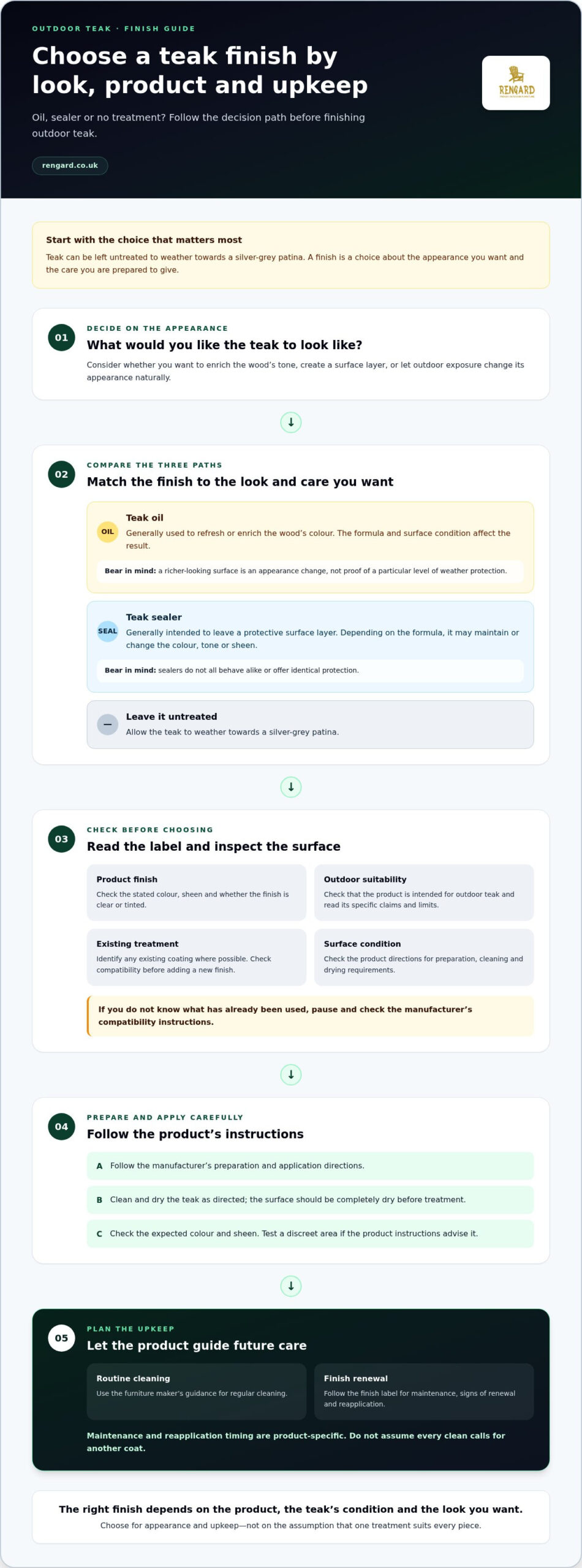
Good preparation starts with the furniture, not the tin. Before deciding between teak oil and teak sealer, find out what the teak has already been treated with and read both the furniture maker’s care advice and the finish manufacturer’s instructions. A new product may not be compatible with an existing coating, and preparation requirements vary between finishes.
What should you check before treating teak?
Look over the surface for signs of an earlier treatment, such as a coating or noticeably different sheen, but don’t rely on appearance alone to identify it. Check any care documents you have, then read the chosen product’s label for compatible surfaces and restrictions. If the existing finish is unknown, avoid applying a new treatment until you’ve established the preparation and compatibility steps specified by the manufacturer.
How should you follow the product instructions?
Use the label as your working plan. The steps below are a cautious framework, not a substitute for the instructions supplied with a particular product. Follow them in order, and stop if the maker’s directions differ.
- Check suitability. Confirm that the product is intended for outdoor teak furniture and appropriate for the furniture’s surface. Follow the furniture maker’s care advice as well.
- Identify existing finishes. Establish what, if anything, has already been applied. Check whether the new finish can go over it and what removal or preparation the product maker requires.
- Prepare the surface as directed. Follow the label’s cleaning and preparation guidance. Where the instructions require clean, dry wood, make sure those conditions are met before proceeding.
- Test only if advised. If the manufacturer recommends a small test area, use one to assess the appearance on your furniture before treating the full piece. Follow the stated method and assess it as directed.
- Apply and allow it to dry as specified. Use only the application method, amount, drying conditions and any recoating steps stated for that product. Don’t transfer directions from an oil to a sealer, or vice versa.
- Follow safety and disposal guidance. Use ventilation, protective equipment and disposal methods as the product label directs. Keep the instructions available for future care.
Teak that has been oiled may need specific preparation before a sealer can bond. Follow the sealer manufacturer’s compatibility guidance rather than assuming a new finish can simply be applied over an old one. Take the same care if the furniture has an unknown treatment or has been maintained with a different product.
Always follow the chosen product’s preparation and safety directions. Drying and recoating times are product-specific, so use the label rather than a general rule or advice intended for another finish. Careful checks help avoid an unwanted change in appearance or an incompatible layer.
Rengard’s contact page is a place to discuss your garden furniture plans and outdoor setting.
Choosing Teak Garden Furniture and the Right Finish for Your Outdoor Space
A finish is one part of choosing teak garden furniture, not a substitute for deciding what suits your space and routine. Consider the furniture’s scale, the look you want outdoors and the maker’s care recommendations before settling on a treatment. The choice between teak oil and teak sealer matters most when you know how you want the surface to look and are prepared to follow the product’s upkeep instructions.
How does your outdoor setting shape the decision?
Think about how the furniture will sit alongside paving, planting and the rest of your outdoor scheme. On a compact patio, a particular wood tone may help the setting feel cohesive; in a larger garden, you might prefer the timber’s appearance to complement other natural textures. Neither oil nor sealer should be assumed to prevent the effects of outdoor exposure. Sun and rain can influence how a finish looks, so consider the maker’s guidance for the conditions where the furniture will be used.
Your space also shapes the furniture choice. A table for outdoor dining needs to fit comfortably with its chairs and leave room to move around it. On a terrace, consider how the table’s footprint works with doors and circulation; in a smaller area, keep the layout open. A garden furniture buying guide can help you weigh dimensions, materials and use alongside the finish.
What should you consider when choosing teak furniture?
Balance three things: the material and design, the appearance you prefer, and the care the furniture maker recommends. Rengard offers outdoor furniture in teak as well as garden dining sets, bistro sets, garden chairs and sun loungers. Not every item is made from teak, so check the details for the specific piece before deciding how to care for it.
Before choosing a treatment, compare the furniture’s care advice with the product instructions. If you prefer a particular finish, make sure it is suitable for the item and that its application and maintenance requirements fit your routine. A treatment’s name alone won’t tell you the exact result or care involved.
For a table-led layout, browse outdoor garden tables and consider how the shape and scale will work in your setting. Then make the finish decision in light of the maker’s guidance, rather than treating every teak surface in the same way. A considered choice brings together practical use and a look that feels at home outdoors.
As you plan your outdoor furniture, bring together the available space, how you’ll use it and the style you want to create.
Make Your Outdoor Setting Your Own
The finish is one considered detail within a larger outdoor setting. Begin with how you want to use the space: relaxed meals around a table, quiet time in a garden chair or flexible seating for friends. From there, choose furniture that feels right in scale and style, then use the maker’s care guidance to inform any treatment decisions.
That order can make the teak oil vs teak sealer choice feel less like a technical dilemma and more like a practical design decision. You’re shaping a space to enjoy, with materials and maintenance that fit the way you live outdoors.
Rengard specialises in premium garden furniture for modern British outdoor living, including teak, rattan and rope-weave designs. Discuss your outdoor furniture plans with Rengard and take the next step towards a garden setting that feels considered and comfortable.
Frequently Asked Questions
Is teak oil or teak sealer better for outdoor furniture?
Neither is automatically better. The right teak oil vs teak sealer choice depends on the appearance you want and the product’s stated suitability for outdoor use. If you want a particular tone for a garden dining set, check whether the label describes that result. Compare the preparation and maintenance directions with the furniture maker’s care advice before treating the whole piece.
Can you apply teak sealer over teak oil?
Don’t assume sealer can be applied directly over an oiled surface. The oil may need to weather away or be removed using the sealer maker’s specified preparation instructions before the new finish can bond. If you’re unsure what treatment is already on a chair or table, identify it before proceeding. Follow the furniture maker’s care advice and the chosen sealer’s compatibility guidance.
Does teak oil change the colour of teak furniture?
It can, but the effect depends on the oil’s formulation and the teak’s existing colour and condition. Some products describe their purpose as enriching or deepening the wood’s tone; others may produce a different sheen or result. Check the label rather than relying on the name “teak oil”. If the maker recommends it, test the finish on a discreet area before treating a visible tabletop.
How often should you apply teak oil or sealer?
Use the reapplication interval stated on the specific product, rather than following a general timetable. Formulations and outdoor conditions differ, and a sheltered table may not show the same changes as chairs exposed to open weather. Check the label for maintenance guidance and signs that renewal is due. Don’t add another coat simply because a season has passed if the manufacturer’s directions don’t call for it.
Can teak furniture be left untreated outdoors?
Yes. Teak can be left untreated outdoors, and its appearance will change as it weathers, often developing a silvery-grey patina. That may suit a garden where you prefer an evolving natural look to maintaining a treated colour. Untreated doesn’t mean no care at all: follow the furniture maker’s cleaning advice and consider your garden’s conditions when deciding how you want the furniture to look over time.
What happens if you use teak oil and teak sealer together?
Applying one over the other without checking compatibility can lead to an unsuitable finish or poor bonding. In particular, don’t apply sealer directly over an oiled surface without following the sealer maker’s preparation instructions. If you want to change treatments, follow the manufacturer’s directions for removing or allowing the oil to weather away first. Don’t mix products or layer them simply to combine their effects; use the instructions for the finish you choose.
Should teak furniture be cleaned before applying oil or sealer?
Yes. Prepare the surface according to the product instructions, which may specify that it must be clean and completely dry before treatment. Dirt or moisture can affect the result, so don’t move straight from cleaning to application if the label requires the wood to dry first. Check the furniture maker’s care advice too, and avoid a cleaning method that could damage the existing finish.