How to Stop Cushions Sliding Off a Rattan Sofa with Straps
A cushion that keeps shifting needs a secure fixing point, not another quick adjustment. To stop cushions sliding off a rattan sofa, sew ties to the cushion and loop them around the frame, or use adjustable straps threaded beneath the seat. Choose a method that holds the cushion firmly but still lets you remove it easily.
It’s frustrating when a comfortable seating area looks untidy after every use, especially when cushions move as you sit down. The best fix depends on the sofa frame and whether you want a discreet, removable hold or a more tailored finish. This guide covers cushion ties, adjustable and elastic straps, clips, hook-and-loop fasteners and non-slip matting. It also explains how to keep fastenings practical outdoors, so you can bring cushions inside when rain arrives.
Key Takeaways
- Choose adjustable straps that can pass through gaps in the sofa frame for a secure, discreet hold beneath the seat.
- Use short elastic or bungee cords to keep cushions in place, with excess cord tucked out of sight.
- For exposed rattan or metal edges, consider clips that grip the cushion without covering the sofa’s finish.
- Cushion ties can create a neat, tailored fixing when looped around suitable parts of the frame.
- Pair cut-to-fit non-slip matting with a fastening method for extra grip, and keep cushions easy to remove in changeable weather.
Adjustable straps anchored beneath sofa seats
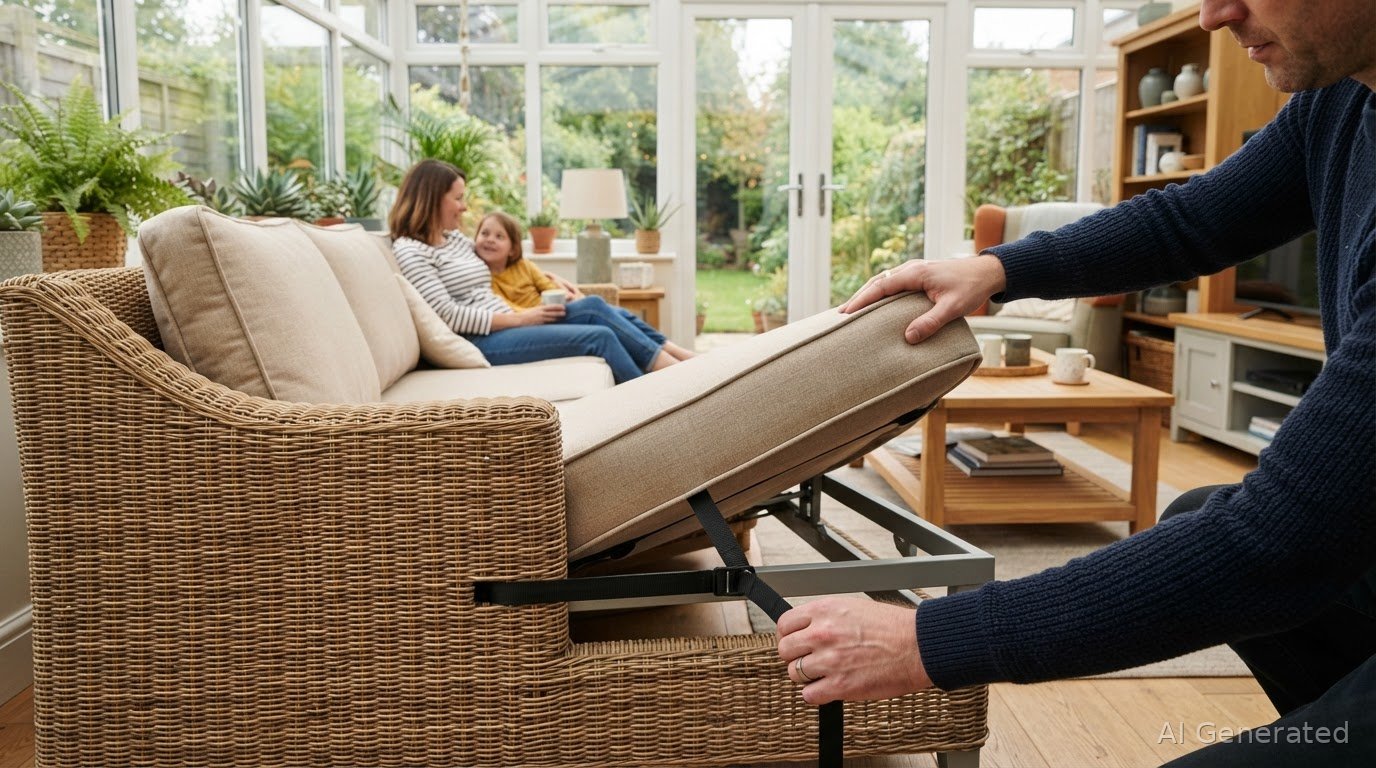
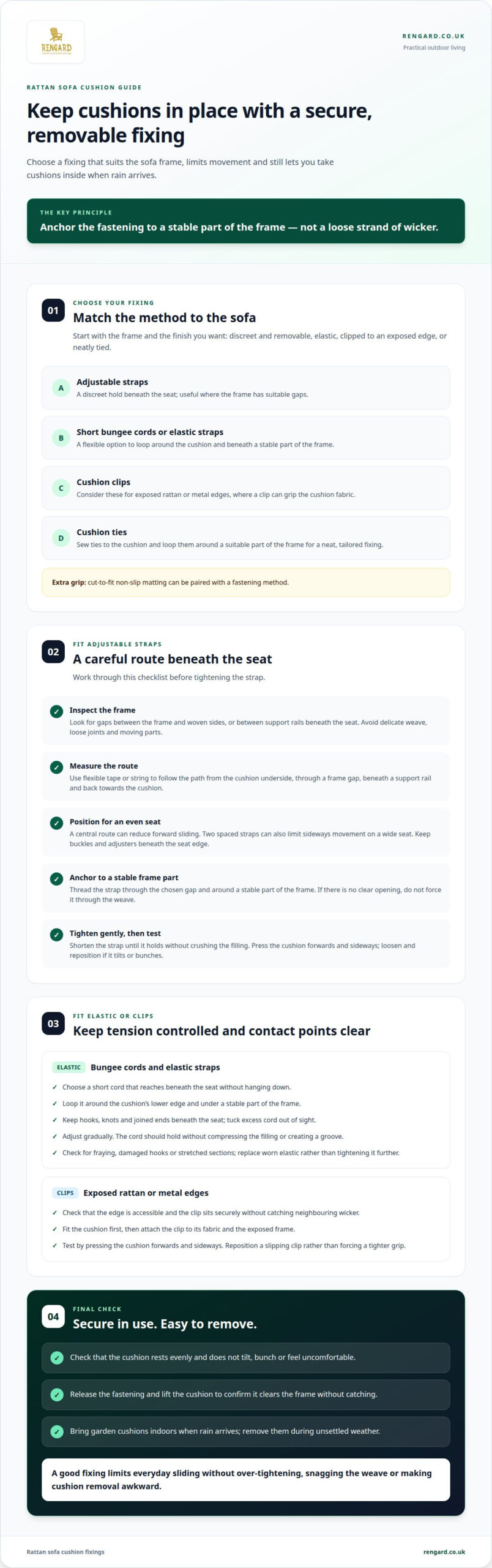
- Lift each cushion and inspect the rattan sofa’s seat frame before choosing a strap route. Look for gaps between the frame and woven sides, or between support rails beneath the seat. Adjustable furniture straps can pass through these openings and anchor below the cushion. Avoid delicate weave, loose joints and moving parts, where tension could snag or strain the rattan.
- Measure the route around the seat frame with flexible tape or string. Follow the path from the cushion’s underside, through a frame gap, beneath a support rail and back towards the cushion. On a corner sofa, assess each seat separately because the frame layout may change at the corner. This measurement helps you choose a strap that reaches without excessive stretch.
- Position the strap to limit movement without creating a ridge beneath the fabric. A central route can reduce forward sliding; two spaced straps can also limit sideways movement on a wide seat. Keep buckles and adjusters beneath the seat edge, rather than directly under someone’s sitting position. Check that the cushion rests evenly across the rattan.
- Thread the strap through the chosen gap and around a stable part of the frame. Bring it back beneath the cushion, then fasten it as designed. Let the frame, not a loose strand of wicker, take the pull. If there’s no clear opening, don’t force the strap through the weave; choose another fastening method.
- Set the cushion in its usual position, then shorten the strap until it holds without crushing the filling. Press the cushion forwards and sideways to check for movement. If it tilts or bunches, loosen the strap and reposition it across a broader, stable area. To stop cushions sliding off a rattan sofa, secure them without applying excessive tension.
- Test removal before leaving the straps fitted. Release the buckle, lift the cushion and check that the strap clears the frame without catching on woven edges. This matters outdoors, where you may need to bring cushions inside when rain arrives. Replace each cushion and readjust if the fabric pulls or the seat feels uneven.
- For a compact patio sofa, route the fastening beneath the seat so it stays discreet from the front. On a deeper garden sofa, check that the strap doesn’t interfere with the rear support or cushion placement. These adjustments can help stop cushions sliding off a rattan sofa while keeping the seating surface smooth and comfortable.
Bungee cords and elastic straps
- Choose short bungee cords or elastic straps that reach beneath the seat without hanging down. The cord should loop around the cushion and under a stable part of the rattan sofa frame. Compare its length with the cushion and seat before fitting. A cord that is too long can droop below the frame, while excessive stretch may pull the cushion out of shape.
- Remove the cushion and identify a clear route around its base. Wrap the cord around the cushion’s lower edge, then guide it beneath the seat frame. Avoid catching the elastic on exposed wicker, sharp edges or a joint that shifts when someone sits. On a wide seat, position the cord to limit forward movement without pressing into the main seating area.
- Refit the cushion and adjust the cord tension gradually. The elastic should hold the cushion against the seat without compressing its filling or creating a visible groove. Press the cushion forwards and sideways to check for movement. If the fabric gathers or the cushion tilts, release the cord and reposition it nearer the base.
- Keep hooks, knots and joined ends beneath the seat, where they won’t catch clothing or scratch the floor. Tuck excess cord under the frame instead of leaving a loop beside the sofa. On a corner sofa, fit each seat cushion independently: a single cord across several cushions may pull them unevenly when someone shifts position.
- Test the arrangement with the cushion in use, then remove it as you would during your usual garden routine. The cord should come away without snagging the rattan or stretching the cushion cover. Easy removal matters outdoors, since garden cushions should be brought inside when rain arrives. If the cord makes removal awkward, loosen or reroute it.
- Inspect the elastic and its contact points regularly, especially after moving the sofa or using it in windy weather. Look for fraying, damaged hooks, stretched sections and marks on the woven frame. Replace a worn cord rather than tightening it further. Elastic can lose tension over time, so retest the cushion after refitting the fastening.
- On an exposed patio, treat bungee cords as a way to limit everyday sliding, not as a reason to leave cushions outside during storms. Remove and store cushions indoors when conditions turn unsettled. If the cord is visible from the front, route it closer to the underside to keep the sofa’s woven silhouette clear.
Cushion clips for exposed rattan or metal edges
- Inspect the sofa’s outer edge before choosing a clip. Grip-tight cushion clips clamp onto exposed edges, including rattan or metal frames, and hold the cushion fabric. Check that the edge is accessible and the clip can sit securely without catching neighbouring wicker. A clip suited to a straight metal rail may not sit neatly on a curved woven edge.
- Position each clip near the cushion’s edge, where it can grip the fabric without pressing into the main seating area. Fit the cushion first, then attach the clip to its fabric and the exposed frame. Press the cushion forwards and sideways to test for movement. If the clip slips or pulls the fabric, reposition it rather than forcing a tighter grip.
- For a more fixed attachment, fit poppers to the cushion corners and matching hard-fixing poppers to the chair frame. Align each pair before joining them so the fabric sits naturally and the cushion lies flat. This method suits cushions that stay on a particular seat. Keep the fastening accessible if you regularly remove cushions for storage.
- To choose replacement cushions that fit securely, measure the seat’s width, depth and shape, including any curved corners. Compare those measurements with the cushion, then check that it rests within the frame rather than overhanging loosely. A close, even fit reduces movement. Clips can help, but they won’t correct a cushion that is substantially too small.
- To attach hook-and-loop fasteners without damaging cushions, place the strips beneath the cushion and on a suitable frame surface. Choose adhesive intended for outdoor use, and press the pieces together only once aligned. Avoid fixing adhesive directly to delicate rattan strands, which may be pulled when the fastener is removed.
- Cushion grippers and anti-slip sprays can affect fabric or leave residue, depending on their material and formula. Don’t spray the rattan itself. Test a gripper or spray on a hidden area first, and follow its care instructions before treating visible fabric or woven surfaces.
- To maintain anti-slip pads, remove them from beneath the cushion and clear away grit, leaves and dust. Wipe or rinse them according to their care instructions, then let them dry fully before replacing them. Check the pad and cushion underside for trapped debris that could rub against fabric or mark the frame.
- If cushions slide because their size or fit is wrong, measure the seat again and choose cushions shaped to match its dimensions. Don’t rely on a stronger clip to compensate for a loose fit. Once correctly seated, use clips only where the frame has a suitable exposed edge, and keep cushions removable for storage in wet weather.
Cushion ties secured around furniture frames
- Check where each cushion meets the rattan sofa frame before adding ties. Choose a stable rail or frame section behind the cushion, not a loose strand of wicker. Ties sewn to the cushion can secure it around the furniture frame, creating a direct fixing point close to the cushion’s edge.
- Position ties near the cushion’s rear corners, where they can reach the frame without crossing the seating surface. If the cushion already has ties, place it on the sofa and mark where each meets a suitable frame section. For a long seat cushion, distribute the ties so one corner doesn’t bear all the pull.
- Sew each tie firmly to the cushion cover, preferably at a reinforced seam. Use fabric ties that can be knotted around the frame and untied when you remove the cushion. Avoid stitching through delicate decorative fabric or the cushion filling. If the chair frame lacks a convenient fixing point, create a suitable loop on the chair.
- Set the cushion in its usual position, then wrap each tie around the chosen frame section. Secure it with a knot that holds during use but can be untied for cleaning or storage. Leave enough slack for the cushion to sit flat. A tie pulled too tightly can gather the cover, distort the cushion or shift its corners.
- Test the ties by pressing the cushion forwards and sideways, then sit down carefully. If it moves, reposition the ties closer to the frame or add a fixing loop where needed. On reclining rattan furniture, route each tie clear of moving sections. Furniture clips or straps designed to secure cushions may also suit reclining frames.
- Use plastic cable ties only when a fixed fastening suits the cushion and frame. Loop one around a stable frame section and the cushion’s fixing point without cinching it against the fabric. Cable ties are less convenient to remove than knotted fabric ties, so they may not suit cushions that you bring indoors regularly.
- Inspect sewn ties, loops and frame contact points each season. Replace a tie if its stitching frays or its fabric weakens. Don’t leave lightweight cushions unsecured in windy conditions; tie them down or store them indoors when it gets blustery. Before rain, untie cushions that need bringing inside, then refasten them when the sofa is dry.
Sewing ties onto garden furniture cushions can help secure them, with fixing loops created on the chairs if needed. Furniture clips or straps designed to secure cushions are another option for keeping garden furniture cushions in place. A plastic cable tie can also be used to secure garden furniture cushions. These options provide alternatives when selecting a way to hold a cushion to its chair, while keeping the fastening connected to a suitable fixing point.
Check outdoor cushion fasteners each season, and replace them if adhesive weakens or sewn areas fray. Inspect both adhesive and sewn attachments so you can deal with weakened fixing points. Don’t leave lightweight outdoor cushions unsecured in windy areas. Secure them before conditions turn blustery, or bring them indoors rather than leaving them exposed and loose.
Do non-slip rug pads work on wicker and rattan sofas
- Yes. Non-slip matting can sit between a cushion and a wicker or rattan sofa, adding friction beneath the fabric. Choose a flexible mat that lies flat rather than a thick pad that lifts the cushion. A router mat works similarly to the non-slip matting used to line drawers.
- Measure the cushion’s underside before cutting the mat. Trim it to fit inside the cushion’s edges, with no corners visible once the cushion is in place. A cut-to-size piece can suit a single rattan chair, while a longer strip can support a garden sofa seat without obstructing the woven frame.
- Lift the cushion and place the mat directly on the seat, not over the rattan sides. Smooth out folds, then lower the cushion evenly. Press its centre and corners to check that the pad hasn’t bunched beneath the fabric. If it has, lift the cushion and trim or reposition the mat.
- Use non-slip matting on a clean, dry surface to prevent leaves, grit and damp residue collecting between the layers. Rattan weaves can gather garden debris, so brush the seat before laying down the pad. After wet weather, remove the cushion and mat, then let both dry fully before returning them to the sofa.
- If cushions still shift, combine a non-slip pad with hook-and-loop fasteners. Place the fasteners beneath the cushion and on a suitable part of the furniture frame, then add the mat for grip. For outdoor use, choose fasteners with outdoor-rated adhesive and avoid delicate woven strands.
- Keep the pad removable. Garden cushions should be easy to bring inside when rain arrives, and a loose mat makes this simpler. Lift the cushion and pad together, or remove the cushion first if the mat clings to its underside. Don’t leave lightweight cushions unsecured in an exposed, windy area.
- Check the mat each season for dirt, flattening, tears or edges that curl beneath the cushion. Clean it according to its care instructions and let it dry fully before refitting. Replace a worn pad if it no longer lies flat or the cushion slides across it during normal use.
- Use this method as a discreet first step for everyday movement, especially on smooth seating surfaces. If you’re refreshing a garden seating area, get in touch about your outdoor furniture and the details of your space.
Non-slip pads are described as suitable for most patio furniture surfaces and can be cut to fit chairs or benches. For wicker or rattan, treat that as a general guide, not a reason to skip checking the fit. Keep the cut piece within the cushion’s footprint and make sure it doesn’t catch on the woven frame when lifting or replacing the cushion.
A pad that sits neatly beneath the cushion leaves the seat accessible for cleaning and drying. If the fit changes after repositioning, adjust the pad rather than forcing the cushion over a folded edge. This keeps the setup removable and helps the cushion rest evenly on the seat.
Rengard: Furniture Accessories
Rengard offers Furniture Accessories for refreshing an outdoor setting once your cushions are secure. Ties, clips and non-slip matting address cushion movement; they don’t replace a suitable sofa or frame. If you’re also updating the seating area, explore Rengard’s Rattan Garden Furniture and consider how its materials and proportions will suit your patio or garden.
Furniture Accessories can also help complete the surrounding space, while the article’s fastening methods remain practical options for existing cushions. Choose the next step according to what needs attention: cushion movement, the furniture itself or the overall arrangement. Contact Rengard to discuss your outdoor furniture needs.
Make your outdoor seating feel considered
A comfortable garden sofa should feel settled in its surroundings, not like a collection of pieces that need constant adjustment. If you’re considering how to stop cushions sliding off a rattan sofa, think about how the fastening will work with the frame, cushion fabric and your everyday use. A discreet, practical solution can help keep the seating neat and make a patio or terrace more inviting.
Consider the whole setting, too. The sofa’s position, nearby surfaces and the way people move through the garden all influence how the space feels. Thoughtful choices can balance function and style, whether you’re refining an existing seating area or planning a new outdoor arrangement.
For a considered next step, contact Rengard to discuss your garden furniture. Make the adjustment that suits your setting, then enjoy a seating area that feels ready for relaxed outdoor living.
Frequently Asked Questions
How to stop sofa cushions slipping on rattan furniture?
To stop cushions sliding off a rattan sofa, place a non-slip outdoor cushion underlay between the seat and cushion, trimming it to fit without covering drainage gaps. If it shifts during use, reposition it beneath the cushion’s main contact area. After wet weather, lift both layers to dry, and check that the cushion fits the seat rather than overhanging, which can make movement more likely.
How to make cushion ties for a rattan sofa?
Make cushion ties from durable outdoor fabric or webbing. Fold each strip lengthways and stitch along the edge to reinforce it, then sew one end into the cushion’s rear seam or a suitable tab. Leave enough length to loop around a solid support and fasten without distorting the cushion. A simple bow is easy to untie when you need to remove the cover for cleaning.