
WPC in Garden Furniture: A Complete UK Guide
British gardens are changing in clear ways. Outdoor spaces are no longer just lawns with a shed at the back; they’re often arranged for shared meals, quiet early mornings, and long, unhurried evenings with family and friends. This shift shows a more social use of space. As expectations rise, demands on materials rise too. Homeowners want furniture that feels well made, lasts for years, and needs little upkeep. Few people have patience for sanding, sealing, or seasonal repairs. Therefore, this change helps explain why WPC garden furniture UK buyers are paying closer attention than before.
WPC, or wood polymer composite, blends natural wood fibres with modern polymers. It looks similar to timber but behaves differently outdoors. It handles rain and frost well, and UV exposure causes fewer problems than with traditional wood. The surface stays smooth, so splintering isn’t an issue. Warping is rare, and rot is avoided altogether. In the British climate, these qualities often matter more than they would in drier places.
Regional Adoption of WPC Garden Furniture UK
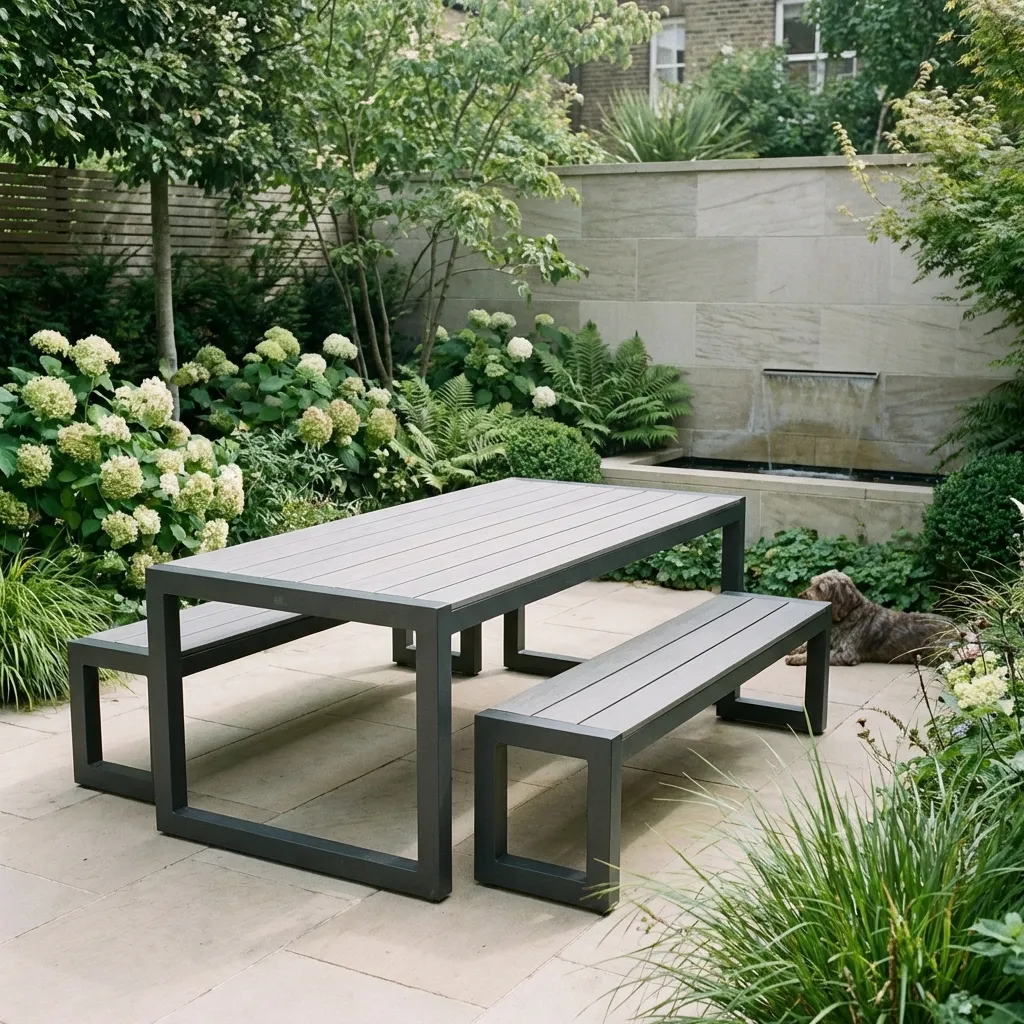
Across Shropshire, Cheshire, Staffordshire, Manchester, and Birmingham, WPC has moved from a niche option to a trusted choice for premium composite furniture UK customers. Dining tables, benches, patio tables, and other seating often combine WPC surfaces with aluminium frames. Clean lines suit urban gardens, while rural spaces benefit from furniture that copes with wet winters and bright summers. People tend to notice that steady performance over time.
This guide outlines what matters when considering wood polymer composite outdoor furniture. It looks at how WPC works, where it performs best, and how it compares with teak and rattan. It also examines how it fits with current UK garden furniture trends, helping those planning a long‑term investment make a better‑informed choice.
What Is WPC and Why WPC Garden Furniture UK Works Outdoors
WPC stands for wood polymer composite. Manufacturers combine recycled wood fibres with plastic polymers, then use heat and pressure to bind the mixture into a stable form. This process produces a dense material designed for outdoor use. Natural timber reacts to changing weather by absorbing moisture, often leading to swelling or movement. In contrast, WPC behaves in a more controlled way.
Under typical British conditions, weather-resistant WPC furniture handles rain well. Water stays on the surface instead of soaking in, so decay seen with untreated wood is reduced. Cold weather doesn’t cause cracking, and strong sunlight helps colours remain even over time. This combination explains why WPC garden furniture UK collections are chosen for exposed table tops and benches that stay outside all year.
Dimensional Stability and Market Growth
Dimensional stability is another important factor. Because WPC is engineered, its response to environmental stress stays consistent. Boards are more likely to remain flat rather than twisting, which matters on larger dining tables. Designers can specify longer spans and slimmer profiles without losing strength.
Market data adds context. The global WPC market is expected to exceed USD 9 billion by 2027, driven by outdoor construction and furniture demand (Fortune Business Insights). In the UK, growth in the outdoor furniture sector reflects how homeowners spend more time using garden spaces.
Visually, WPC offers consistency. Panels are uniform and free from knots. When paired with powder‑coated aluminium frames, the result feels structured and durable while still fitting domestic settings.
How WPC Garden Furniture UK Fits the British Climate
British weather is famously unpredictable. One week can be bright and dry; the next brings heavy rain. Traditional timber often struggles with these changes unless it gets regular care. However, WPC suits outdoor spaces because it copes with frequent weather shifts with much less attention.
Moisture Resistance and Sunlight Protection
Moisture resistance is often the main concern. Natural wood takes in water and releases it as conditions change. Over time, that movement causes expansion and contraction, which puts stress on the boards. WPC behaves in a more stable way. This helps explain why WPC tables UK homeowners choose often remain flat and usable year after year.
Sunlight also matters. Many British gardens get long stretches of direct sun during summer. Quality composite garden furniture UK ranges include UV stabilisers to slow fading. Charcoal greys, warm teak tones, and stone shades keep their colour over time.
Humidity, Frost, and Longevity
Humidity encourages mould and mildew on porous surfaces. WPC’s non‑porous surface limits organic growth, so cleaning is easier. Frost can damage timber when temperatures drop overnight. WPC handles cold snaps better and is less likely to split. Manufacturers design WPC products to last 25 to 30 years outdoors, with maintenance costs up to 60 percent lower than timber (Designer Deck).
Where WPC Garden Furniture UK Is Used in Modern Garden Furniture
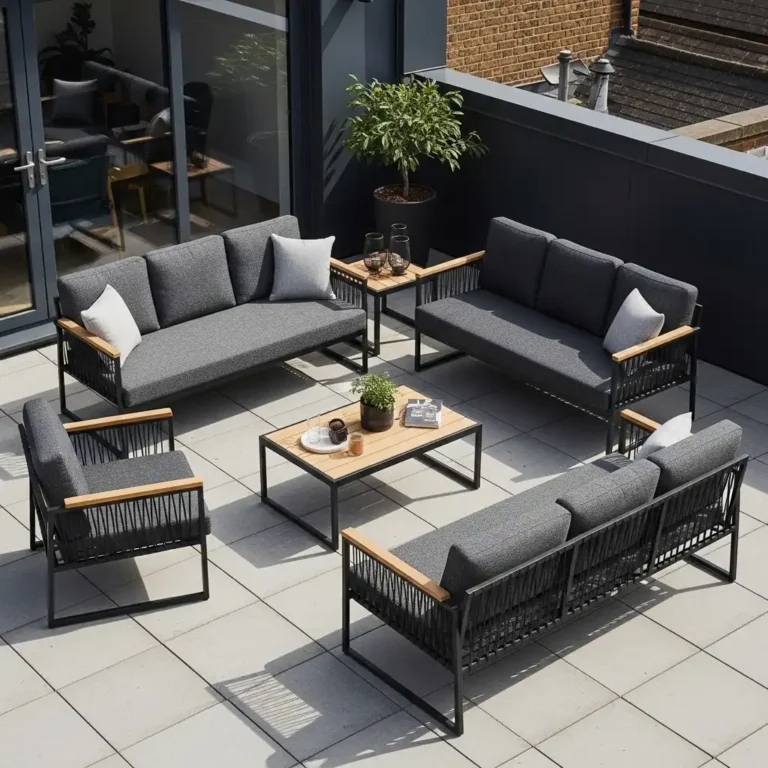
WPC performs best when combined with other materials. Across the UK market, WPC is most often paired with aluminium frames and sometimes ceramic details.
Common Applications
You will find WPC used in several common ways:
- Table tops for dining and coffee tables
- Slatted bench seats and backs
- Armrests for regular wear
- Structural panels for reinforcement
In Shropshire and Cheshire, WPC patio tables are popular because they copy the look of timber without sanding or oiling. Urban areas like Manchester and Birmingham prefer low‑maintenance WPC seating paired with aluminium frames. Cleaning is simple; mild soap and water usually do the job.
Fixed Features and Mixed Materials
WPC is also used in built‑in benches and outdoor kitchens. Its resistance to moisture is especially useful near barbecues, hot tubs, or pools. Mixed‑material lounge sets remain popular because WPC adds visual warmth, aluminium provides strength, and rope elements soften the overall feel.
WPC vs Teak, Rattan, and Aluminium in WPC Garden Furniture UK
Choosing furniture often means comparing materials. Each has strengths. Knowing those differences helps explain where WPC fits.
Comparing Performance and Care
Teak offers natural warmth but needs regular oiling to keep its original colour. When left untreated, it turns silver. Others prefer furniture that keeps a consistent look with little effort, which is where WPC performs better.
Rattan suits sofas and lounge chairs, but WPC tables UK buyers choose often work better for dining. Aluminium frames are light and rust-resistant. Adding WPC surfaces softens their look and adds warmth.
Value and Practical Benefits
High‑quality WPC furniture costs more upfront than entry‑level rattan, but lower maintenance and longer life improve overall value. When viewed side by side:
- WPC copes with changing weather better than timber
- Care needs are lower than teak
- WPC offers rigidity for dining tables
- Aluminium frames gain warmth with WPC surfaces
Sustainability and Eco‑Conscious Buying of WPC Garden Furniture UK
Environmental impact matters more than before. Buyers now ask where materials come from, how they’re processed, and how they hold up. WPC supports outdoor spaces through dependable performance and responsible sourcing.
Recycling and Longevity Benefits
Most WPC products use recycled plastics and waste wood fibres. This reduces landfill waste and pressure on virgin timber. Analysts note sustainability as a major reason WPC keeps gaining ground. Furniture designed to last decades leads to fewer replacements and less waste. When WPC surfaces are paired with aluminium frames, the result matches circular economy principles.
Transparency and Trust
Some manufacturers publish environmental product declarations. Buyers who seek clear sourcing details use these to verify eco claims. Transparency builds trust over time.
Care and Maintenance Made Simple for WPC Garden Furniture UK
Low maintenance is one of WPC’s strongest selling points. Unlike timber, it doesn’t need oiling or sealing. Therefore, this means less ongoing work and lower long‑term costs.
Everyday Cleaning Tips
Basic care includes:
- Washing with warm water and mild detergent
- Using a soft brush on textured surfaces
Spills are easier to clean when handled quickly. Using protective covers in winter helps garden furniture stay cleaner. For households with children, this simplicity makes a big difference.
Designing with WPC in Small and Large Spaces
WPC works well in many garden sizes. In smaller spaces, clean lines keep the area calm. Short sightlines help, and slim WPC benches maintain balance.
Urban and Large Garden Design
Balconies suit lightweight aluminium frames paired with WPC surfaces that don’t need storage. A small WPC patio table can stay outside all year. In larger gardens, WPC often becomes a focal point around dining or seating areas. Designers use WPC to connect indoor and outdoor spaces, creating smooth transitions.
Buying WPC Garden Furniture in the UK
For UK buyers, quality differences are noticeable. Not all composites are made the same. Solid panels feel more reliable than hollow cores. Check whether colour runs through the material or only sits on the surface. Clean edges are another good sign. Inspect joints where WPC connects to metal frames, as they handle stress.
What to Look For
Higher‑end brands pair WPC with aluminium. Warranties also matter; longer guarantees show confidence in durability. For practical examples, see Staffordshire Gardens with Durable Outdoor Furniture.
Commonly Asked Questions
Yes, it’s made for the UK’s wet, cold weather and regular UV exposure. Maintenance is minimal.
Does WPC furniture fade in sunlight?
High‑quality WPC contains UV stabilisers, so colour changes slowly. Compared with wood, it keeps its colour longer.
Is WPC environmentally friendly?
Most WPC blends recycled plastics with wood fibres. It lasts longer and reduces waste.
Can scratches be repaired?
Most minor surface marks are easy to clean. Light sanding often fixes them. Serious structural damage is rare.
The Bottom Line for Modern British Gardens
For many British gardens, WPC offers a balance that’s hard to beat. It provides the warmth of wood and the strength of modern materials. Therefore, homeowners who want reliable furniture often choose WPC garden furniture UK for long‑term performance. It’s practical, durable, and ideal for everyday outdoor use.
Trends in UK garden furniture point toward long‑term value and sustainability. Ultimately, WPC fits that direction well: practical, eco‑conscious, and easy to maintain.
For anyone planning an outdoor space with the long term in mind, wood polymer composite outdoor furniture is worth serious consideration.

One Comment