How to Furnish a Small UK Home Without Losing Space
Furnishing a compact home can feel trickier than settling into a large one. When you furnish a small UK home, every choice is easier to notice and harder to hide, because one oversized piece can throw off the whole room before anything else is in place. In a small flat, terrace, townhouse or snug semi, size matters. A sofa that’s too deep can block the room. A bulky table can eat into your walkway. A cabinet without hidden storage can turn daily life into a constant cycle of tidying.
Knowing how to furnish a small UK home is about more than buying less. It means buying better, with furniture that suits the way British homes are actually built and a layout that keeps rooms calm, practical and easy to live in from morning to night. Whether the home is in Shropshire, Staffordshire, Cheshire, Manchester, North Wales, Birmingham or anywhere else with compact rooms, narrow hallways and modest footprints, the same challenge shows up time and again.
The good news is that small spaces in UK homes can still look stylish. At times, they look even better when they’re edited carefully, with choices that support the room and nothing that weighs it down. Less noise. A soft-modern approach, clean lines, lighter colours, raised legs and well-planned small home storage UK solutions can help a home feel bigger than it is. Buyers are also finding more smart options in space saving furniture UK collections, from nesting tables to benches with storage and compact furniture UK dining pieces.
In this guide, you will learn how to plan each room, choose the right scale, use storage more effectively and create a modern small home UK look without losing comfort. The aim is simple: make your home work harder while still feeling warm and lived in.
Start With the Real Limits When You Furnish a Small UK Home
UK homes are genuinely small. According to the English Housing Survey, the average usable floor space of all dwellings in England is 96 m2. For owner-occupied homes, the average is 110 m2, while privately rented homes average 76 m2 and socially rented homes average 66 m2 (GOV.UK).
| Home type | Average usable floor space | Year |
|---|---|---|
| All dwellings in England | 96 m2 | 2024 |
| Owner-occupied | 110 m2 | 2024 |
| Privately rented | 76 m2 | 2024 |
| Socially rented | 66 m2 | 2024 |
| Social rented homes under 50 m2 | 26% | 2024 |
These figures explain why small home furniture UK buyers may need pieces that do more than one job. They also show why a room can feel full so fast. In a smaller home, even one oversized item can change how the whole space works, and what fits beside it.
These sub-sized properties now constitute at least 5% of new housing nationally, rising to 10% in notable locations including many London boroughs.
Measure first. Check the wall width, walkway, door swing, radiator position and window line. Good compact furniture UK options start with an honest view of the room you actually have, rather than the room you wish you had.
Plan the Layout Before You Furnish a Small UK Home
A smart small home layout UK plan can save more space than any single product. Start with movement. You should be able to walk through the room without turning sideways or brushing past corners. In most compact homes, the layout needs to protect the main walkway, natural light, and at least one clear visual line across the room.
Map the room in zones. In a living room, one zone is for seating. Another might hold media or storage, while a third can be used for reading, dining, or home working. In an open-plan flat, rugs, lighting, and furniture placement help define each zone without adding walls.
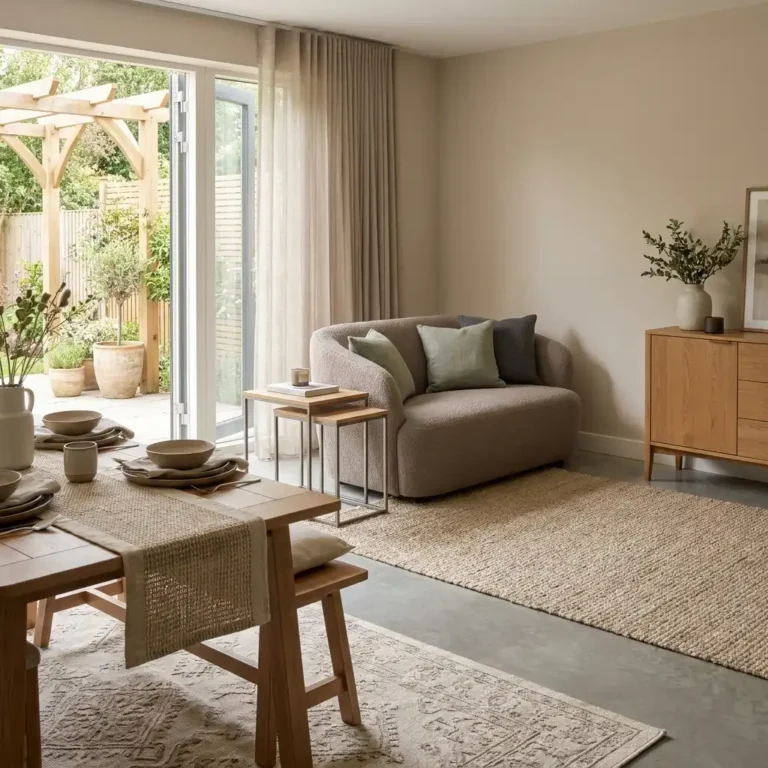
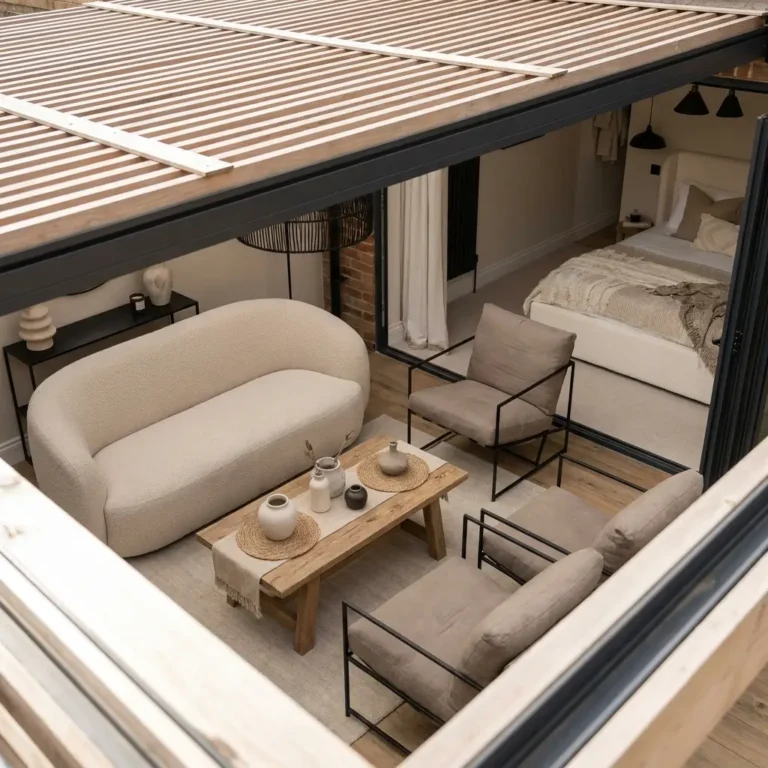
Use rectangles and circles as guides. Rectangles make it easier to line furniture up against walls. Round or curved pieces can soften a tight room and make movement easier, which helps explain why soft modern furniture UK styles can work so well in smaller homes. They add structure without making the room feel harsh.
For many homes, a better layout also means using fewer pieces. Instead of a sofa, two side chairs, a coffee table, and a sideboard, a compact two-seater, one light armchair, and nesting tables may fit better while still making the room easier to move through. If the room is especially awkward, this guide to small and narrow living room layouts can help with room flow and furniture placement.
Picture the room from above. Then picture the empty floor that remains after each item goes in. If you can still see more floor, the room will often feel larger.
Choose the Right Scale to Furnish a Small UK Home Well
A common mistake when furnishing small spaces in UK homes is choosing furniture by looks alone. A beautiful piece can still be wrong for the room if it’s too deep, too tall, or simply too solid. Scale matters just as much as style.
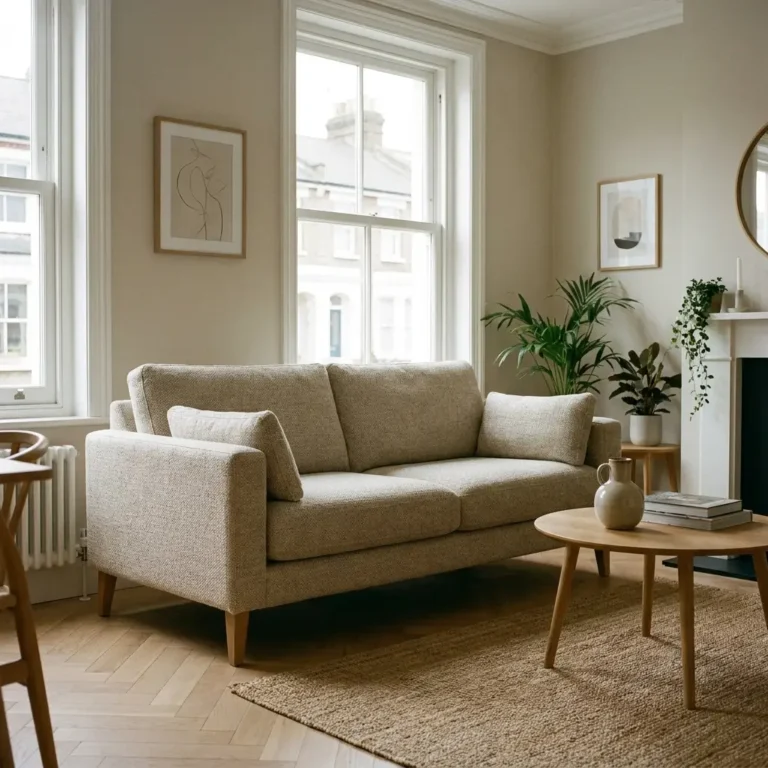
For a small living room, look for narrow arms, raised legs, and a shallower depth so the space feels lighter and easier to move through. In dining areas, choose chairs that tuck fully under the table. That sounds simple, but it’s important. In bedrooms, choose bedside tables that stay slim while still doing the job. Along hallways, pick storage that sits higher or runs narrower instead of spreading wider across the space.
The best small living room furniture UK options share a few practical features:
Raised designs
Furniture with visible legs shows more floor, opens the sightline, and helps a room feel less closed off and more airy.
Slim profiles
A slim frame can still feel comfortable, especially in soft modern designs where rounded backs and supportive cushions make it easy to settle into.
Open visual weight
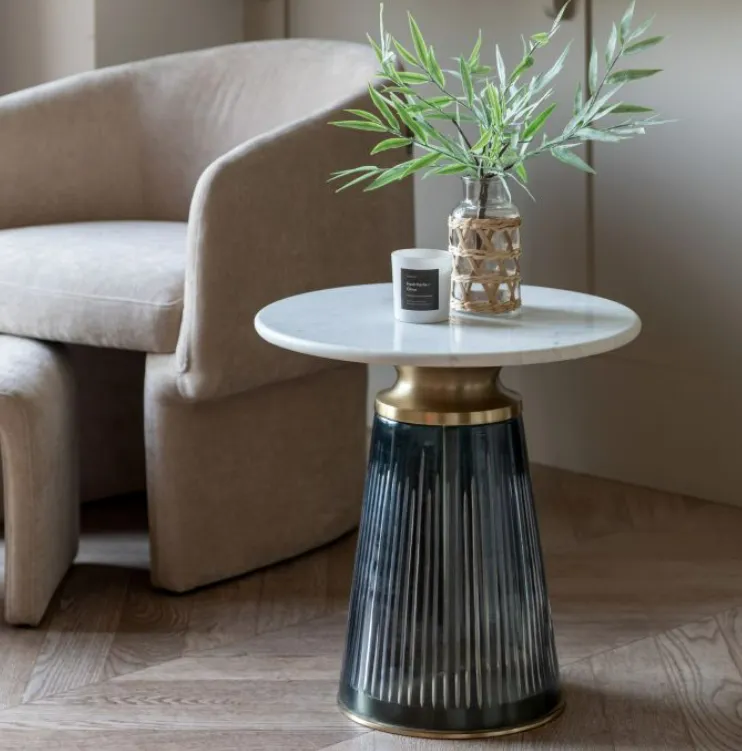
Glass, woven textures, rope details, and natural wood tones can feel lighter. Heavy block shapes do not.
Double-duty use
Benches with shoe storage, ottomans that hide blankets, and nesting side tables are all good examples. They’re simple but effective.
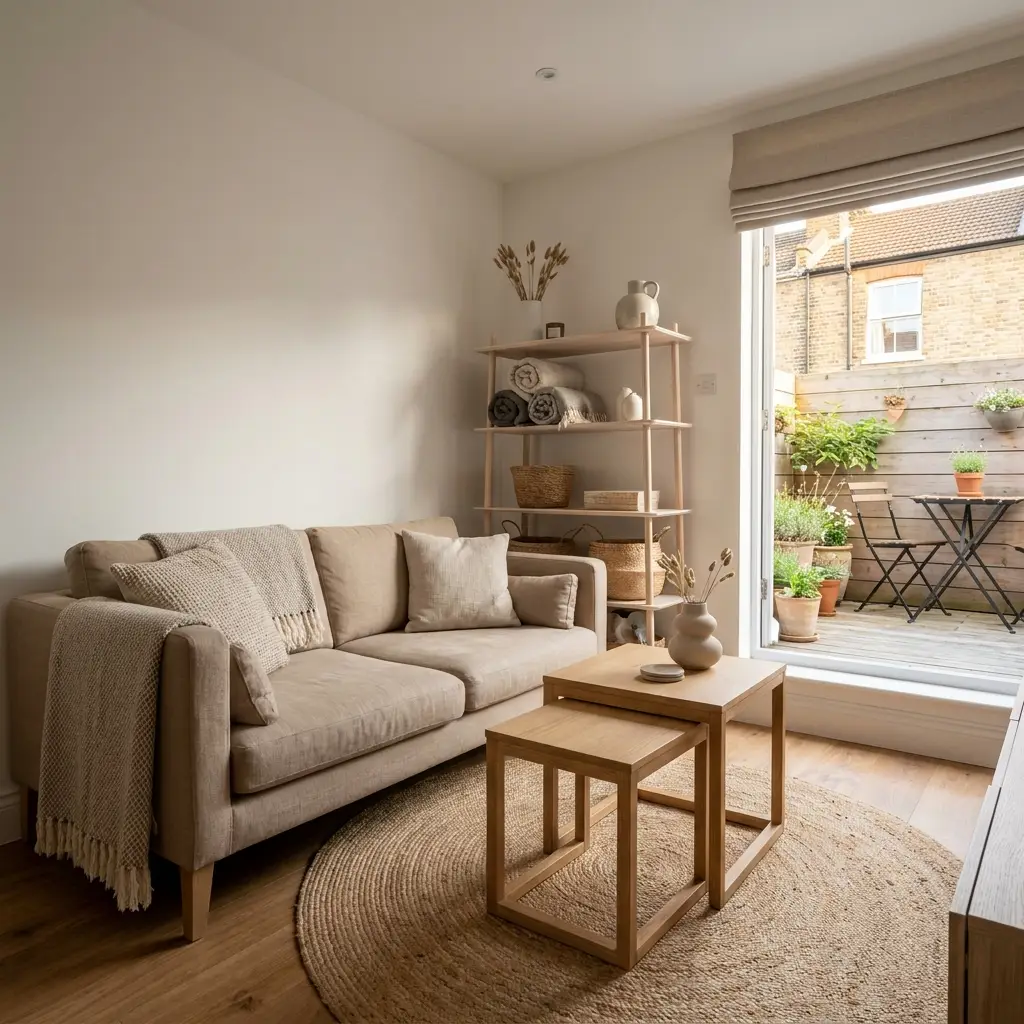
A before-and-after makes the change easy to see: a deep sofa, a heavy square coffee table, and a wide TV stand crowd a compact terrace lounge, while a compact sofa, two nesting tables, and a slim raised media unit open the floor. That’s a big difference. The room keeps the same functions, yet it feels easier to use.
When comparing styles online, Home Furniture Online UK: Best Modern Stores for 2026 gives useful guidance on what to notice while browsing modern compact pieces. Readers looking for best small sofa sets for compact living can also compare proportions and layouts that suit tighter rooms.
Use Storage to Furnish a Small UK Home More Efficiently
In a small home, storage needs to be part of the plan from day one. UK housing standards treat built-in storage as a real requirement, not just a nice extra. It is not optional.
For example, the nationally described space standard says a 1-bed, 2-person, 1-storey home should provide 50 m2 and include 1.5 m2 of built-in storage. In a 3-bed, 5-person, 2-storey home, that built-in storage figure rises to 2.5 m2 (GOV.UK).
Small home storage UK solutions do more than keep things neat. They make a home practical and shape how people use the space every day.
A good storage plan uses different levels:
Daily storage
These are the items used every day: shoes, chargers, throws, remotes, keys, and children’s things. They need storage that’s easy to reach and placed near where people actually use them.
Weekly storage
People use these items regularly, though not every day. Board games, spare bedding, serving pieces and paperwork fit best in closed units, storage benches or higher shelves.
Deep storage
Keep seasonal items, luggage and rarely used tools under beds, above wardrobes or in tall cabinets.
In 2024, the UK self-storage sector reached £1,080 million in turnover, with 77.5% occupancy across 60 million sq ft of stock (PKF Smith Cooper). Those figures suggest many households are already short on space and are looking beyond the home for a place to keep their things.
Well-designed furniture can ease that pressure. A bed with drawers, a lift-top bench or a slim sideboard with internal shelving keeps clutter inside the home instead of shifting it elsewhere.
Why Soft-Modern Style Works So Well When You Furnish a Small UK Home
A modern small home UK interior does not need to feel cold or sharp. The newer direction feels softer, warmer and far better suited to compact spaces. Sharps reports that soft minimalism has seen a 90% year-on-year surge in searches (Sharps). The reason is fairly simple. People want calm homes, not rooms that feel like showrooms.
Soft modern furniture UK works particularly well in smaller homes because it cuts visual noise, makes rooms feel more restful and helps compact spaces feel less boxed in through curved, organic lines.
According to Ideal Home, designers Liz Hellmers and Sarah Hellmers describe a renewed preference for generous seating depths and softened contours. Comfort now matters just as much as appearance (Ideal Home). In a small home, that does not mean choosing oversized furniture. It means choosing pieces that feel inviting without dominating the room.
A soft-modern room usually includes:
- warm neutrals
- natural wood tones
- tactile fabrics
- rounded corners
- simple shapes
- a few well-chosen decorative layers
Lisa Jones of Dunelm has also noted growing interest in burl wood-style furniture because it adds warmth, character and a subtle sense of luxury without heavy ornament (Ideal Home).
This works well for anyone who wants small home furniture UK choices to look refined while still feeling relaxed. A pale sofa, a light oak table, woven lighting and one textured accent chair can do more for a compact room than lots of dark furniture. In a small space, each piece changes how open the room feels.
Pick Multi-Functional Pieces to Furnish a Small UK Home
Space-saving furniture in the UK should solve real problems without making a home feel temporary. The best pieces need to stay practical, yes, but they should also look like furniture people would genuinely want to keep for years, not something bought only to deal with a tight layout.
The market reflects that. Future Market Insights says the UK small space furniture market is projected to grow at a 5.8% CAGR from 2025 to 2035, with fold-down, extendable and stackable designs driving interest (Future Market Insights). Spherical Insights also estimates the UK multifunctional furniture market at USD 4.3 billion in 2024, with projected growth to USD 9.48 billion by 2035 (Spherical Insights).
Focus on pieces that ease real pressure points in daily life.
Best uses for multi-functional pieces
- nesting coffee tables for living rooms
- extendable dining tables for couples who host now and then
- storage benches in hallways or bedrooms
- ottomans with hidden compartments
- slim consoles that can work as desks
- stackable dining chairs if guests come by regularly
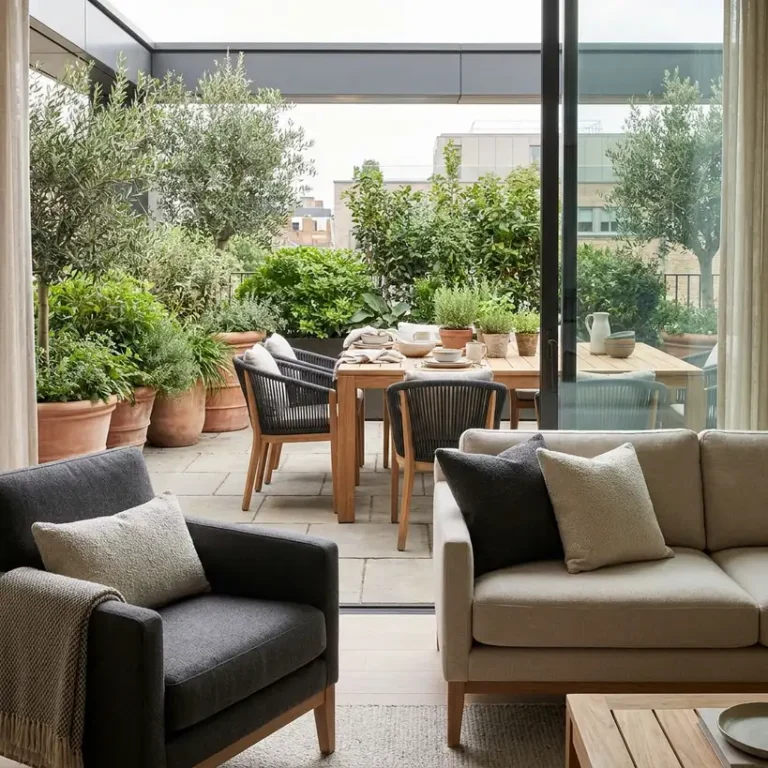
In many British homes, especially terraces and flats, the dining space is usually the trickiest area to get right. A compact round table generally works better than a rectangular one because it’s easier to move around. That same approach helps when outdoor space is tight, and bistro sets for small outdoor spaces can help people use a small patio or balcony without making it feel crowded.
For anyone drawn to a soft-modern look, multifunctional pieces in oak, teak tones, rope, rattan, or matte finishes can make a room feel intentional rather than improvised. More thought-through.
Use Height, Corners, and Underused Zones Better
When floor area is tight, use the full height of the room. Many people put furniture only at eye level or below, which leaves some of the most useful parts of the home unused. In a compact property, walls, corners, under-window spaces and the backs of doors can all serve a purpose.
Tall storage is one of the handiest tools in a small home layout UK plan. A slim, tall cabinet may hold more than a low, wide one while taking up less floor space. Wall-mounted shelves free the area below and can help a room feel more open. Keep them simple and avoid filling them too much.
Corners deserve attention too. A corner chair, corner shelf or compact corner desk can turn an awkward patch into something practical. Dining nooks with banquette seating are also getting noticed in small-room design because they turn dead space into seating and storage. Trend reporting has also highlighted built-ins, pocket doors, folding doors and reconfigurable furniture as useful choices in smaller homes (Yahoo Shopping).
Bedrooms show this clearly. Floor-to-ceiling wardrobes can make sense because they use height instead of taking up more wall width. If bedroom storage is part of the plan, this guide on modern wardrobes for limited space covers practical ways to get more from a smaller room. People considering modular sofa sets UK layout tips for small rooms may also find useful ideas for flexible layouts.
When you can’t go wider, go taller and use space more intelligently.
Materials and Finishes That Help Small Rooms Feel Bigger
Material choice changes how furniture feels in a room. In a small home, heavy-looking materials can create visual drag, even when the piece itself is not actually that large. Lighter finishes tend to help. They can make a room feel brighter, calmer and less crowded.
That does not mean everything has to be white. Too much bright white can feel flat and slightly lifeless. In soft-modern interiors, warmer neutrals can work better, especially shades like pale stone, oat, sand, mushroom and muted timber tones. Natural teak-style wood, woven rope and textured fabrics add depth without making the room feel busy.
Durability matters too. When people buy fewer pieces for a smaller home, those pieces need to last through daily use and still look good over time. Easy-care materials and finishes that wear well can offer the best value. Many buyers look at brands such as RENGARD when they want indoor and outdoor furniture with modern shapes, natural textures and durable materials suited to everyday life. Buyers can also explore What Styles of Home Furniture Does RENGARD Offer in the UK? for more compact-friendly ideas.
Light and reflection matter as well. A lightly textured wood surface, a glass lamp base or a woven shade can bounce light around or soften it in ways that help the room. Even small shifts can have a big effect. They change how the space looks during the day. Dark glossy finishes can look smart, but in compact rooms they can feel heavier than people expect.
It also helps to choose a limited number of materials and repeat them across the room. Repetition creates rhythm. The home feels more planned, calmer and easier on the eye, while each piece gets a bit more room to stand out.
Common Mistakes When You Furnish a Small UK Home
Most space issues come back to the same handful of mistakes. One of the biggest is buying furniture in isolation. A sofa might fit neatly along the wall, yet still be far too large if it blocks a side table or leaves no decent room to walk. It may look fine but function badly.
Then there’s the habit of pushing every item right up against the wall. It seems logical at first, but that does not always help a room feel bigger. In some cases, moving one piece slightly forward or centring a seating area more carefully improves movement and makes the whole room feel more balanced.
Too many tiny items create problems as well. Small homes do not automatically need miniature furniture. Once a room is filled with lots of little pieces, it can start to feel cluttered quickly. Fewer items with cleaner lines tend to work better.
Hidden storage matters more than many people think. If everything stays out on display, the room can feel busier than it needs to. Closed storage reduces visual noise and makes it easier to create a calmer feel.
Another common mistake is decorating before solving function. Cushions, throws and art all have their place, but the layout needs to work first.
The furniture market is still significant, with UK furniture manufacturing sales reaching £10.8 billion in 2024 and the total UK furniture sector valued at £47.9 billion (FIRA). There are plenty of products available. The difficult part is choosing with discipline.
Frequently Asked Questions
What is the best way to furnish a small UK home?
Start with a room plan before buying anything. Measure the room, note doors and walkways, and choose fewer, better-sized pieces with storage built in. The best approach is to combine compact furniture UK sizing with a clear layout and a calm colour palette.
What type of sofa works best in a small living room?
Look for a sofa with slim arms, raised legs, and a shallower depth. A compact two-seater or small modular design often works better than a bulky three-seater. In many small living room furniture UK setups, a lighter visual frame matters just as much as the actual width.
How can I add more storage without making my home feel crowded?
Use vertical space, under-bed storage, benches with lids, and closed cabinets that hide clutter. Tall and narrow pieces often work better than low and wide ones. Storage feels less intrusive when it is built into furniture you already need.
Is soft-modern style good for a small home?
Yes. Soft-modern interiors use calm colours, rounded forms, and simple materials, which help a room feel relaxed instead of cramped. If you are exploring soft modern furniture UK looks, RENGARD is one example of a brand that leans into natural textures and modern silhouettes that can suit compact homes.
Is space saving furniture UK worth it for homeowners, not just renters?
Absolutely. Homeowners in smaller terraces, townhouses, and flats benefit just as much from extendable, stackable, or storage-led pieces. The goal is not temporary living. It is making every square metre work better over time.
Where can I find modern compact furniture for a small home?
Start by looking for retailers that clearly show dimensions, material details, and room styling examples. For buyers who like a modern small home UK look with warm finishes and practical design, modern furniture and home decor collections can give you a useful reference point for compact-friendly styling.
Make Every Piece Earn Its Place
To furnish a small UK home well, focus less on filling rooms and more on making them work better. Good furnishing supports flow, comfort, scale and storage, so the home is easier to move through, simpler to keep tidy and more pleasant to live in.
The key points are clear:
- measure before you buy
- protect walkways and natural light
- choose the right scale, not just the right look
- use storage as part of the furniture plan
- lean into soft-modern shapes and calming finishes
- make vertical space work harder
- avoid visual clutter and oversized pieces
Across small homes in Shropshire, Staffordshire, Cheshire, Manchester, North Wales and Birmingham, the right plan can help a space feel stylish and more open than expected. Personality still matters. A compact home doesn’t need less of it, only more thought behind every choice.
When each piece serves a purpose, small home furniture UK choices stop feeling restrictive and start feeling useful. That’s the real secret to furnishing small spaces UK homes without giving up the room they already have.