decorative cushions styling guide UK for Modern Homes
Decorative cushions are one of the few home updates that can shift the mood of a room quite quickly, without turning it into a full redesign. A sofa can look a bit flatter than expected, an armchair can seem slightly unfinished, and a bedroom can lack that warm, layered feel even when the furniture itself is beautiful. In rooms like these, the smaller details often make all the difference. That’s why a well-thought-out decorative cushions styling guide UK homeowners can follow is so useful: the right arrangement adds warmth, texture, colour balance, and a more pulled-together finish without much upheaval.
In modern British interiors, especially in homes across Shropshire, Staffordshire, Cheshire, Manchester, North Wales, and Birmingham, cushions usually look best when they feel considered rather than overdone. The aim isn’t to add as many as possible. Instead, it’s about bringing in softness, shape, and visual rhythm in a way that suits the room, works with the natural light through the day, and fits the sofa, armchair, or bed that gets used in real life.
This guide looks at how to choose decorative cushions UK buyers genuinely enjoy living with, and how to approach sofa cushion styling in UK homes. It also covers styling beds and reading corners, using texture through fabric mixes and layered finishes to create a refined soft-modern look, along with the luxury cushions UK homeowners often prefer. You’ll also find cushion arrangement ideas UK households can adapt from room to room, plus practical ways to avoid common styling mistakes that leave accessories feeling random rather than carefully considered.
Why decorative cushions matter more than people think in a decorative cushions styling guide UK homes can use
Decorative cushions fall somewhere between the big furniture and the smaller finishing touches that make a room feel done. You can switch them out with the seasons, and they stand out enough to shift the feel of the whole room. Therefore, they’re one of the quickest ways to refresh a space without replacing larger furniture.
There’s also a broader spending picture behind it. The UK spent £22.773 billion on furniture and furnishings in 2025 (ONS), and household spending on the broader category of furnishings, household equipment and routine household maintenance reached £78.242 billion in 2024 (ONS). Decorative cushions don’t account for those totals on their own. However, the figures show how much British households still value home comfort and interior styling.
Current trend coverage also points clearly to tactile, layered rooms, extra softness, curved forms, and warm neutrals instead of hard-edged minimalism (Vogue, Hide Rugs). As a result, soft modern cushions UK homes love can warm up rooms that feel cold or unfinished.
Start with the furniture before you choose the cushions
One easy way to get the kind of living room cushion styling many UK homeowners like is to stop treating cushions as separate buys. They tend to look better when they make sense with the furniture first. The shape, scale, upholstery texture, and overall silhouette all play a part.
A clean-lined modern sofa often looks better with cushions that feel softer and more textured. Meanwhile, a deep relaxed sofa can usually handle more structure. A curved armchair often looks best with just one cushion because too many can interrupt the shape.
It helps to start with four simple questions:
- Does the furniture look visually heavy or light?
- Is the upholstery plain, textured, patterned, or a mix?
- Does the room already feel warm, or does it need a softer feel?
- Will the cushions be used every day, or are they mostly decorative?
If the room is still coming together, it helps to think about cushions at the same time as the seating. A larger sofa with broad arms and a generous seat can take bigger square cushions well. A smaller two-seater often looks tidier with fewer pieces. For example, this guide on choosing the right sofa for modern UK homes is a useful companion.
You can also explore decorative cushions UK for Sofas and Chairs for more styling inspiration linked directly to seating layouts.
The easiest cushion formula for a modern British sofa
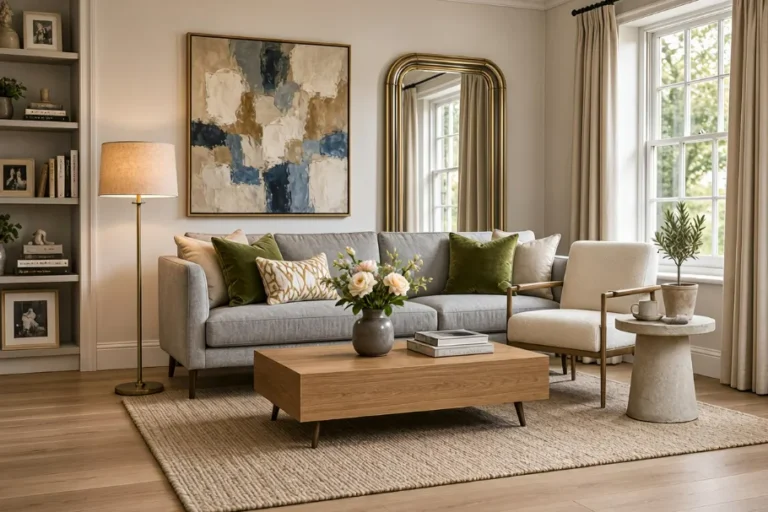
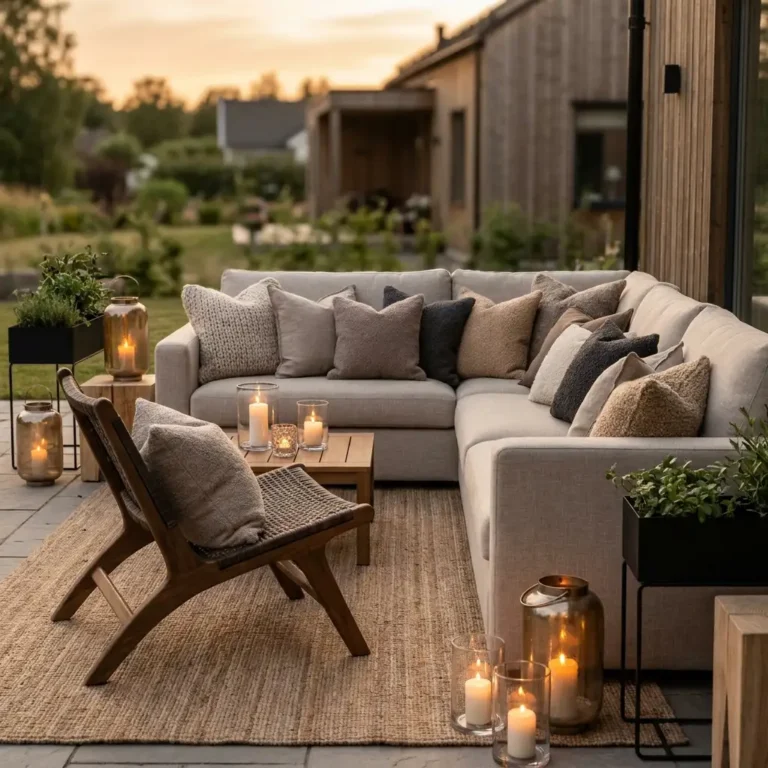
Most people don’t need dozens of combinations. When you’re styling sofa cushions in UK homes, it usually helps to start with one simple formula you can adjust: a base cushion, a second textured cushion, then a smaller accent cushion.
A simple arrangement that works in a decorative cushions styling guide UK readers can follow
With a standard two- or three-seat sofa, this setup tends to work well:
- Two larger base cushions in a calm tone such as oat, taupe, stone, warm grey, or muted olive
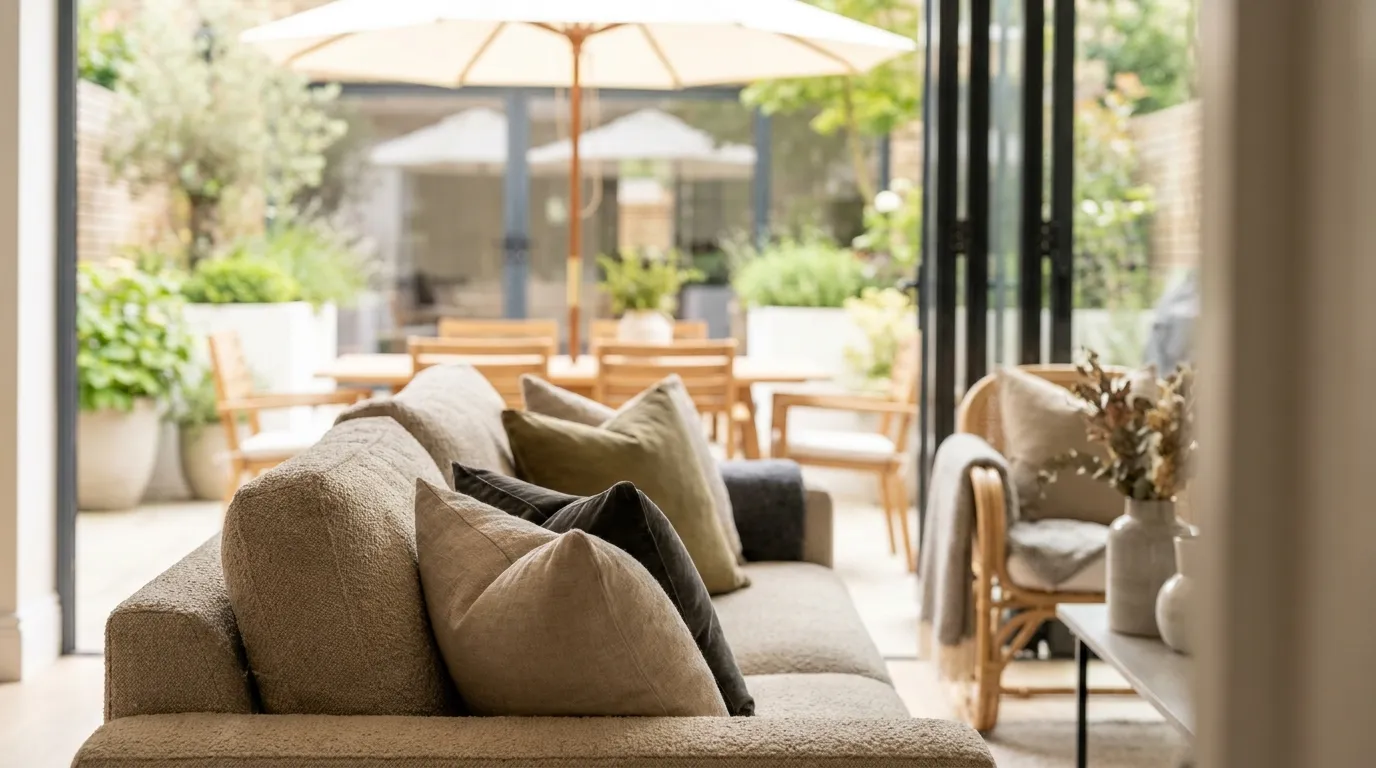
- Two medium cushions in a different texture, like bouclé, washed linen, or velvet
- Add one smaller accent cushion in the centre, or place it slightly off-centre for contrast
It’s one of the best cushion arrangement ideas UK homeowners can use because it creates balance without feeling crowded.
How to build the mix
It tends to work better if you build the look in layers instead of trying to make everything match exactly:
- Layer one: colour, keep the palette tonal so everything feels connected
- Layer two: texture, bring in matte finishes and surfaces with a bit more feel
- Layer three: shape, mix square and rectangular forms carefully
- Layer four: detail, add piping, fringe, or a subtle pattern in small amounts
Right now, interiors coverage says details like fringing and tassels are showing up on beds, sofas, chairs, and cushions to make them feel more luxurious (Vogue). However, restraint still matters.
If the room is compact, it often helps to keep the centre of the sofa a little open so the arrangement has space to breathe.
Soft-modern styling: the textures that make a room feel expensive
When people talk about luxury cushions UK shoppers love, it’s usually the texture they respond to as much as the colour. Consequently, even neutral rooms gain more depth and warmth.
The best soft-modern combinations are usually simple. They use quiet colour, while the materials bring in contrast. That’s why many modern cushions UK buyers choose are made in a small group of dependable fabrics.
The textures worth combining in a decorative cushions styling guide UK interiors suit
Bouclé adds softness and depth. It works especially well on smoother sofas.
Washed linen feels relaxed and understated. Moreover, it suits both contemporary and classic rooms.
Velvet brings depth and a quiet sense of luxury, especially in darker neutrals.
Woven cotton adds a casual layer that offsets more polished fabrics.
Wool-blend or brushed textures work especially well in cooler months and reading corners.
UK interior trend coverage keeps coming back to tactility as a key direction (Opulent & Co, FableRoom). In addition, cushions are one of the easiest ways to introduce those textures without replacing furniture.
Colour palettes that work in real UK homes
A lot of cushion guides make colour seem more complicated than it is. In real UK homes, decorative cushions usually look best when the colours work with the flooring, paint, and natural light already in the room.
The most dependable palettes
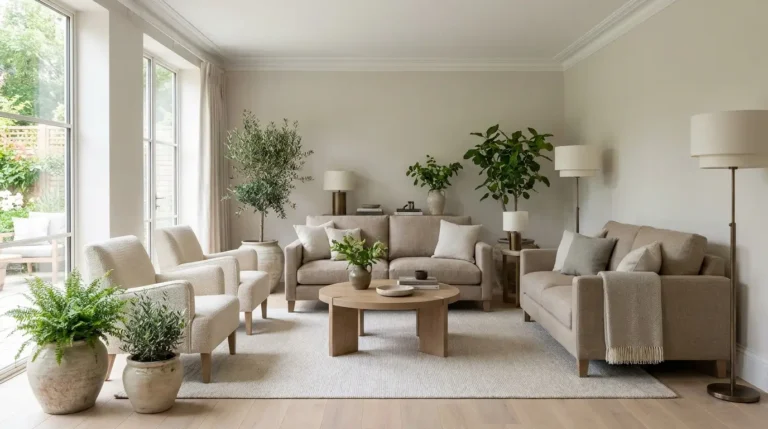
Warm neutral layering: ivory, flax, oatmeal, mushroom, sand and taupe.
Earthy contemporary: olive, clay, rust, bark and stone.
Muted contrast: greige, charcoal, black accents and off-white.
Deep refined tones: forest, aubergine, ink and chocolate, used in small amounts.
One of the most common styling mistakes is matching everything too closely. Similarly, tonal and textural variation can make a room feel more layered and collected instead of overly staged.
In smaller homes, tonal layering usually works better than strong contrast. For example, Small & Narrow Living Room Layout Ideas for British Homes offers useful guidance on keeping compact spaces calm and balanced.
Armchair cushion ideas for reading corners and quiet spaces
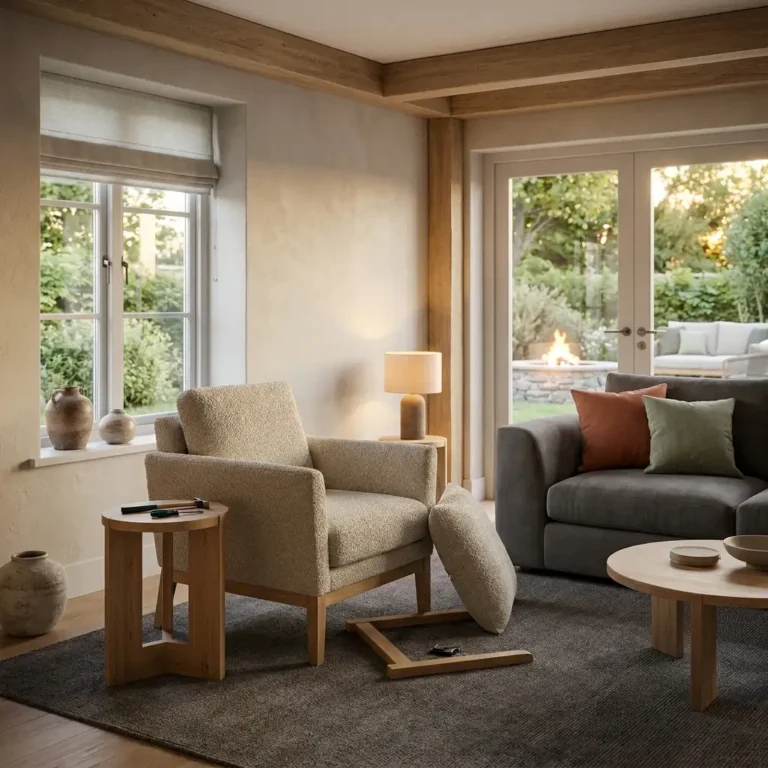
An armchair doesn’t need the whole sofa-style treatment. More often than not, a simpler look works better.
One-cushion styling
One square cushion or a lumbar pillow usually works best when:
- the chair already has a strong shape
- the upholstery has visible texture
- the chair is in a smaller room
- you want the corner to feel calm instead of cluttered
Two-cushion styling
Two cushions can work well if:
- the chair is oversized
- the seat depth is generous
- the corner needs more softness
- one cushion is practical and the other decorative
In a reading corner, a supportive lumbar cushion often works best with a softer textured one behind it. Meanwhile, consistency across sofas and armchairs usually matters more than exact matching.
You can also pair cushion choices with advice from Armchair UK: Elevate Your Living Room in 2026 when designing a coordinated seating area.
How to create a luxury look without overfilling the room
When it comes to luxury cushion styling, it’s usually less about quantity and more about choosing the right pieces.
A 2025 retail survey found that more than half of UK consumers planned to maintain or increase soft-furnishing spending, and 67% said they would pay more for durable, higher-quality products (Retail Week). As a result, many homeowners now prefer fewer cushions with better fabric and filling.
What makes cushions look more premium
- Heavier fabrics with visible texture
- Well-filled inserts that hold their shape
- Subtle trims like piping or flange edges
- Tonal palettes instead of unrelated colours
- A mix of crisp and relaxed pieces
Even beautiful covers can fall flat if the insert is too thin. Therefore, fuller inserts often create the softer, more luxurious look people expect.
Room-by-room cushion styling ideas
Each room needs something slightly different. Therefore, choose cushions based on how the room actually gets used.
Living room
Most living room cushion styling UK searches start here. Focus on balance, comfort, and softness.
Bedroom
With beds, a balanced arrangement usually looks best. Two sleeping pillows, two larger decorative pillows, and one rectangular accent cushion are often enough.
Reading corner
Keep it simple with one lumbar cushion or one textured square.
Open-plan rooms
In open-plan spaces, cushions can help connect different areas together. For example, muted olive or clay tones can link the seating area with artwork or dining chairs.
New-build homes
These spaces often need softness because clean-lined architecture can feel stark. In addition, Living Room Ideas for New Build Homes offers more ways to warm up modern interiors.
Common mistakes that stop cushions from looking professionally styled
Most cushion problems come down to a few simple issues: everything matches too closely, there are too many cushions, or there isn’t enough contrast.
Mistake 1: Buying sets and stopping there
Matching sets are convenient. However, they can make the room feel flat.
Mistake 2: Ignoring scale
Small cushions can look lost on a large sofa. Oversized cushions can overwhelm slim chairs.
Mistake 3: Using just one texture
If every cushion uses the same smooth fabric, the arrangement can feel flat.
Mistake 4: Styling for a photo instead of daily life
If the cushions need moving constantly, the setup probably isn’t practical.
Mistake 5: Treating cushions as separate from other decorative home accessories UK rooms rely on
Cushions usually work best when they connect with nearby throws, rugs, lighting, and finishes.
For example, Coffee Table Decor Ideas UK for Modern Homes can help tie cushions into the wider styling scheme.
Frequently Asked Questions
How many decorative cushions should a sofa have?
On most modern British sofas, five cushions is about the limit for a standard three-seater, while three usually looks right on a smaller sofa.
What colours work best for decorative cushions in UK homes?
Warm neutrals usually work best because they suit different lighting conditions and flooring tones.
How do I style cushions on an armchair without making it look cluttered?
Begin with one cushion rather than two. If the chair is oversized, you can add a second cushion with a related colour or texture.
Are luxury cushions worth it?
They’re worth paying for if the fabric, insert, and finish are noticeably better. Better-made cushions hold their shape longer and improve the overall room.
How often should I update decorative cushions?
Many homeowners keep a neutral base all year and swap one or two accent cushions seasonally.
Where can I find decorative cushions that suit a soft-modern interior?
Go for textured neutrals, refined accent shades, and quality fabrics instead of novelty prints.
Pulling the whole look together in a decorative cushions styling guide UK homeowners can use
A good decorative cushions styling guide UK readers can rely on isn’t about following rigid rules. Instead, it’s about making a room feel warmer, calmer, and more finished.
If only a few points stay with you, these are usually the most useful:
- choose cushions in relation to the furniture rather than on their own
- mix texture more than colour
- keep the arrangement edited
- use one accent instead of several competing statements
- buy fewer, better cushions if a luxury finish is the goal
Decorative cushions are small, but they can change the mood of a room very quickly. Whether you’re styling a main sofa, an armchair, a bedroom, or a reading corner, the same principles usually apply. A careful mix of texture, scale, and colour will almost always look more refined than a pile of random extras.
If you’re looking for pieces that fit this softer, more refined direction, RENGARD and this UK home and garden furniture retailer can be useful places to start when building a coordinated room scheme around furniture, decor, and finishing touches.