Furniture for a Pergola: How to Choose a Stylish, Practical Setup
What if the best-looking furniture for a pergola isn’t the best fit for how you’ll use it? A dining set may suit long lunches, whilst a garden sofa set creates a relaxed place to unwind. Either can feel awkward if it overwhelms the space. Choosing well means balancing style with purpose, available room and the changeable British weather.
You may already have a look in mind; the challenge is making the pergola comfortable and practical without crowding it. Start with how you’ll use the space, then check the layout and choose outdoor materials and cushions to suit. This guide compares lounge and dining arrangements, compact options for smaller spaces, and finishes including powder-coated aluminium, rattan, rope weave and teak. You’ll also find ways to bring the pieces together in a cohesive setting designed for everyday outdoor living.
Key Takeaways
- Choose furniture for a pergola around its main purpose, whether that’s relaxed lounging, outdoor dining or a flexible mix of both.
- Match the arrangement to the usable footprint, leaving clear routes around posts, entrances and access to the garden.
- Compare powder-coated aluminium, rattan, rope weave and teak for the look and role you want, with the British climate in mind.
- Weather-resistant materials and fabrics are suited to outdoor use, but a pergola doesn’t keep furniture dry in every condition.
- Bring the space together with a considered combination of garden sofa sets, corner lounges, dining sets and outdoor tables.
Furniture for a Pergola: Start With How You Want to Use the Space
Pergola furniture is outdoor seating or dining chosen for the space beneath the structure. A pergola defines an outdoor room and can offer a sheltered feel, but it remains open to the elements. For a brief introduction to what a pergola is and how it’s commonly used, Wikipedia offers useful background.
Begin with the experience you want: a calm spot to unwind, a welcoming place for meals, or seating that can serve both purposes. This decision guides your furniture choices and helps you judge how much floor space each arrangement will need.
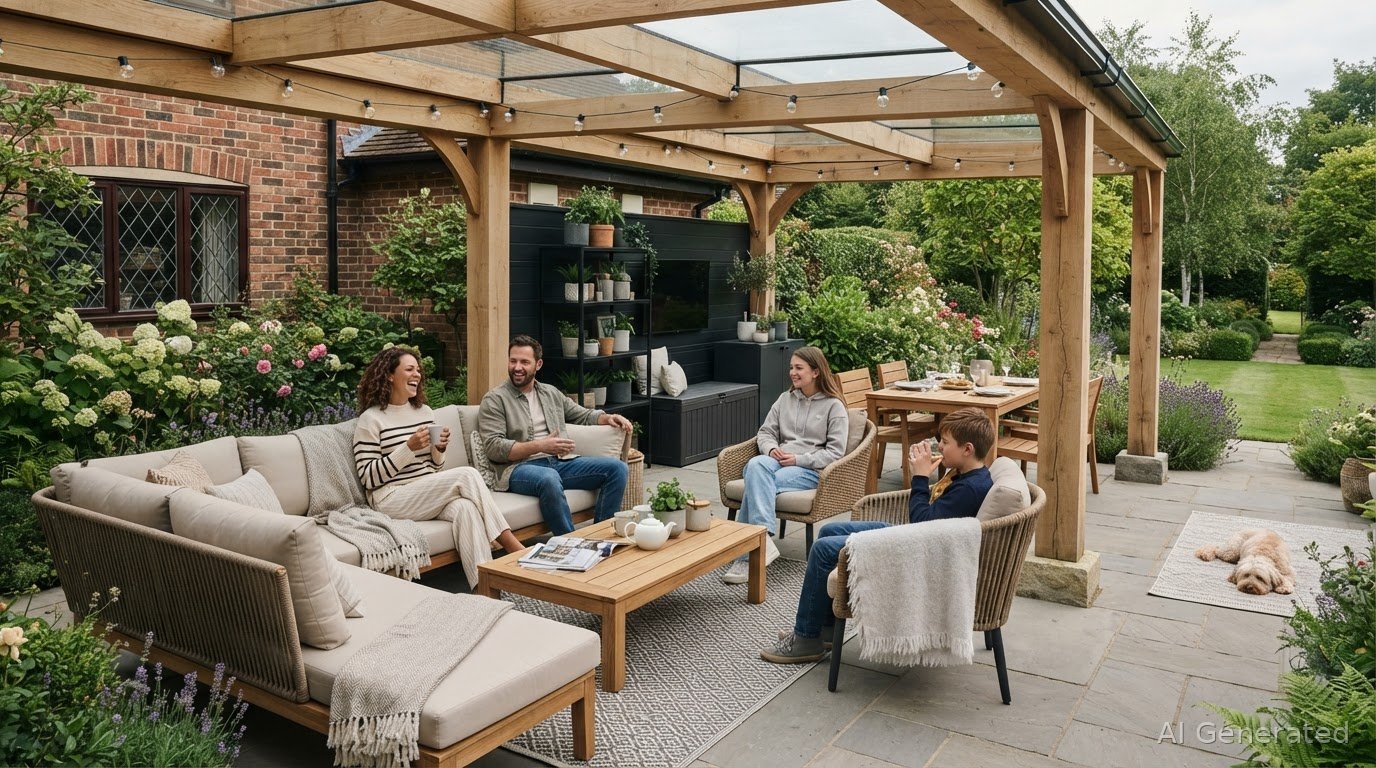
For a visual example of a pergola furnished as an outdoor living space, watch this installation and review:
Should the pergola be a lounge or dining space?
For conversation and relaxing, a garden sofa set or corner lounge creates a natural seating area. Pair it with an outdoor table for drinks, books or snacks. Explore garden sofa sets to see options for a lounge-led layout.
If meals and hosting are the priority, choose a dining set with enough space for people to sit down and get up comfortably. A bistro set suits a smaller patio or pergola, providing a table and chairs without taking up as much room as a full dining arrangement. For flexible use, make the activity you do most often the focus. Avoid squeezing a full lounge and dining setup into a space that cannot comfortably accommodate both.
Plan around the pergola’s footprint
Measure the usable area before choosing furniture, not just the structure’s outside dimensions. Note the position of posts, entrances and routes to the garden or house. These fixed points determine where a table or seating can go and how people will move through the space.
Sketch a layout or mark out the furniture footprint on the ground. Check the route between seats, tables and garden access, and allow for chairs to move when people sit down or stand up. A garden furniture buyer’s guide can help you compare categories and materials, but the first practical check is whether each piece fits the pergola’s real layout. A considered setup makes use of the available space without filling every corner.
Which Pergola Furniture Materials Suit the British Climate?
Material choice affects how a pergola looks and how its furniture performs outdoors. In the UK, rain, damp and changing temperatures make it worth considering the frame, weave, surfaces and cushions together, rather than choosing a set on appearance alone.
A pergola can provide a sheltered feel, but it isn’t an enclosed room. Wind-driven rain and changing weather can still reach furniture. Weather-resistant doesn’t mean that every part of a set will stay dry in all conditions, so choose materials designed for outdoor use and consider how you’ll care for cushions.
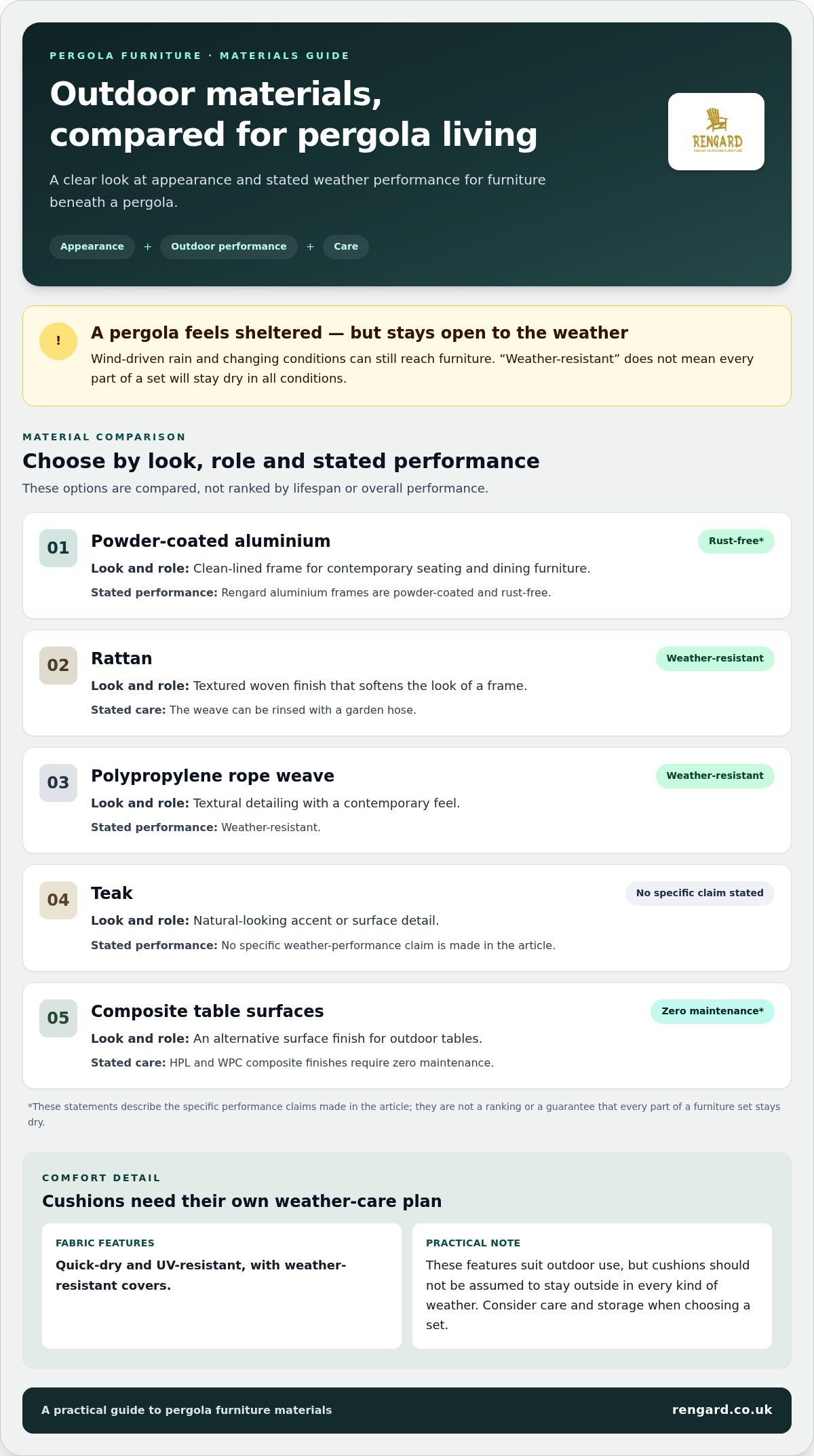
The table compares material options by appearance and role. It is a practical guide, not a ranking of lifespan or a claim that every piece has identical performance.
| Material | Appearance and role | Stated weather performance |
|---|---|---|
| Powder-coated aluminium | A clean-lined frame for contemporary seating and dining furniture | Rengard aluminium frames are powder-coated and rust-free. |
| Rattan | A textured woven finish that softens the look of a frame | Weather-resistant; the weave can be rinsed with a garden hose. |
| Polypropylene rope weave | Textural detailing with a contemporary feel | Weather-resistant. |
| Teak | A natural-looking accent or surface detail | No specific weather-performance claim is made here. |
| Composite surfaces | An alternative surface finish for outdoor tables | HPL and WPC composite finishes require zero maintenance. |
Aluminium, rattan and rope weave: different looks, practical performance
Powder-coated aluminium gives furniture a streamlined frame, while rattan adds woven texture for a more relaxed look. Polypropylene rope weave brings a different tactile detail and a contemporary feel. These finishes can complement a pergola without tying you to one design style. Choose combinations that suit the wider garden and the atmosphere you want to create.
Rengard aluminium frames are powder-coated and rust-free. Rattan and polypropylene rope detailing are weather-resistant, making them practical options for outdoor settings. A pergola still does not keep every part of a set dry in all conditions.
Teak, composite surfaces and outdoor cushions
Teak and composite finishes offer further options for table surfaces and accents. Combine them with a woven finish or metal frame to introduce contrast, while keeping the overall palette coherent. HPL and WPC composite finishes require zero maintenance.
Cushions add comfort and colour. Rengard’s cushion fabrics are quick-dry and UV-resistant, with weather-resistant covers. These features suit outdoor use, but don’t assume cushions should remain outside in every kind of weather. Consider how you’ll care for and store them when choosing a set.
For a closer look at material and furniture options for your outdoor space, explore Rengard’s outdoor furniture range.
Lounge Furniture or Pergola Dining Set: Compare the Best Fit
Compare arrangements by how they work when people are using them, not just by how they look in a product photograph. Consider where drinks, plates or books will go, how easily guests can join the group and whether there’s room to move. A layout that looks spacious on an empty patio can feel quite different when chairs are pulled out and people are walking around.
Think about how defined you want the space to feel. A dining arrangement gives the pergola a clear centre, whilst a lounge layout can feel more informal. If you want both, choose pieces that don’t compete for the same floor space and keep the route between them open.
When a lounge arrangement works best
Garden sofa sets and corner lounges create a natural group. Consider the shape of the seating in relation to the pergola’s posts and open sides. A corner configuration can anchor one edge, whilst a sofa opposite separate chairs may make conversation feel more inclusive. Browse outdoor sofa sets and compare which arrangement best uses the available space.
Think carefully about the outdoor table that accompanies the seats. A central table is handy for a group but can make it harder to move through the seating area. A side table keeps the middle more open, while a larger surface can support shared food and drinks. Match the table to how you’ll use the seats, rather than adding one without a clear purpose.
When dining or bistro furniture makes more sense
A dining set centres the arrangement on a table, so check that people can sit down and stand up without shifting other furniture. The table’s position affects serving too: placing it near the easiest route from the house can make carrying food simpler. Compare outdoor dining sets with these practical details in mind, not just their appearance.
A bistro set provides a dedicated surface while preserving more open floor area. It can also suit a secondary corner of a larger pergola, leaving the main space free for another purpose. Consider whether a smaller table meets your everyday needs, and make sure its position doesn’t narrow the route through the structure.
For a mixed layout, create separate zones through placement rather than adding screens or extra furniture. Keep the dining table near the easiest serving route and position the lounge area so it doesn’t obstruct access. If both arrangements feel cramped on paper, choose the one you’ll use most often. The best furniture for a pergola supports your routine and leaves enough room to move comfortably.
How to Arrange Furniture Beneath a Pergola Without Crowding It
A good layout plans for movement as well as furniture. Decide on the main activity, assess the usable footprint, position the key pieces, then check the routes around them. This helps make the pergola useful for everyday life rather than awkward to move through.
- Define the main activity. Decide whether the space is primarily for lounging, dining or a combination of both.
- Assess the footprint. Mark the pergola posts, entrances and routes to the house and garden.
- Place the primary furniture. Position the main sofa or dining arrangement to support the activity.
- Refine circulation. Check that people can reach seats, move around tables and pass through without obstruction.
Clear circulation helps a pergola feel usable, not overfilled. Don’t plan only around where furniture fits on paper. Consider how the layout works when people are seated, standing or carrying food outside.
Create a clear lounge or dining focal point
For a lounge layout, place the main sofa or corner seating where people can face one another and enjoy the garden. For dining, position the table within the usable area and allow chairs to be pulled out without blocking an entrance. An outdoor table can also make a lounge arrangement more practical, giving drinks and other items a place without adding another large piece.
Posts can help define the edges of a seating zone, but don’t place furniture where a post interrupts access or makes a route feel pinched. Keep the most direct path between the house and garden open, especially if you’ll be carrying dishes between the two.
Add comfort and shade without overcomplicating the layout
Weather-resistant cushions make outdoor seating more comfortable and add colour or texture. Keep their exposure in mind, and don’t treat the pergola as complete protection from the weather. A garden parasol can provide another shade option if there’s room to position it without obstructing movement.
Adapt the plan to the setting. In a spacious garden, a lounge area can sit beneath the pergola with a clear approach from the lawn. On a patio, placing the main arrangement to one side may preserve a route past the table. In a compact outdoor area, choose a pared-back setup and leave open space around it. A few coordinated pieces can make the whole garden feel considered; broader outdoor-living inspiration can help connect the pergola with its surroundings.
Explore furniture options for your pergola layout in Rengard’s garden furniture range.
Choose Pergola Furniture That Brings the Whole Garden Together
A considered pergola setup should feel comfortable to use and connected to the surrounding garden. Before settling on a style, weigh up how you’ll use the space, what fits comfortably and which materials suit its exposure. The aim isn’t to fill the pergola, but to select a few pieces that work well together and support the way you spend time outdoors.
Use this checklist to bring the practical and visual decisions into focus:
- Intended use: Decide whether lounging, dining or occasional coffee breaks matter most.
- Available footprint: Check the usable area and leave space for comfortable movement.
- Material: Consider the frame, weave and surfaces in relation to the pergola and outdoor conditions.
- Comfort: Choose seating and weather-resistant cushion fabrics to suit how you plan to spend time outside.
- Visual cohesion: Bring furniture together through a considered mix of finishes and forms.
Build a cohesive look around the pergola
Start with a material or finish palette, then carry it across seating and tables. A powder-coated aluminium frame can provide a clean outline, while rope detailing or rattan introduces texture. Teak or a composite surface can add another element. The pieces don’t need to match exactly; repeating a finish or material helps the arrangement feel intentional.
Let the garden inform the final look. Contemporary silhouettes can sit comfortably alongside established planting when their scale feels balanced. Rengard’s garden sofa sets and corner lounges suit a relaxed seating focus, while dining sets and outdoor tables support meals and shared occasions. Rust-free, powder-coated aluminium frames, weather-resistant rope detailing and weather-resistant cushion fabrics bring practical qualities to these outdoor furniture options. Choose furniture for a pergola that complements the structure without competing with it.
Make the next step simple
First decide which category best answers your everyday needs: a sofa or corner lounge for relaxed seating, a dining set for meals, or a compact bistro arrangement for a smaller footprint. Then compare the pieces with your measurements and the style of the wider garden. This keeps the selection focused and helps prevent an attractive option from becoming an awkward fit.
Rengard’s garden furniture range includes sofa sets, corner lounges, dining sets and outdoor tables to help shape a pergola around its intended use. If you’d like to discuss suitable options for your space, talk through your pergola furniture plans with Rengard.
Shape a Pergola Space You’ll Enjoy Using
Think about the moments you’d like the pergola to make room for, from a quiet start to the day to an evening with friends. Let those routines shape your choices so the finished setting feels personal as well as practical.
Consider how the space connects with the rest of your garden. A view you enjoy, nearby planting or the route to the house can all influence where furniture feels most at home. Thoughtful placement can make the pergola feel like a natural part of outdoor life.
Choose furniture for a pergola with your own habits in mind, then leave the arrangement room to evolve as you discover how you use it. The right setup is one you’ll want to return to.
Find the right outdoor furniture for your pergola with Rengard and take the next step towards a garden space that feels distinctly yours.
Frequently Asked Questions
Is furniture for a pergola different from other garden furniture?
Not necessarily. “Pergola furniture” describes garden furniture chosen for the area beneath a pergola, rather than a separate furniture type. The useful distinction is whether each piece is made for outdoor living and suits the setting. Consider how its shape and finish relate to the structure, paving and planting, so it feels at home in the garden rather than like an indoor arrangement moved outside.
Can garden furniture stay beneath a pergola throughout the year?
Some outdoor furniture can remain outside, but that shouldn’t be assumed for every piece or every situation. A pergola may offer some shelter, yet exposure varies with its design and the weather. Follow the care guidance for the furniture, and check it periodically for leaves or standing water after unsettled weather. You can then clean or reposition pieces as needed, without relying on the pergola alone to protect them.
What furniture works best beneath a pergola for dining and relaxing?
Consider the comfort and posture each activity calls for. Dining chairs support sitting at a table, whilst lounge seating is designed for a more relaxed position. If you expect to move between meals and conversation, consider whether the table and seating work together for both activities. Picture setting down a meal, then clearing the table for a more informal gathering.
Can I use a garden sofa set beneath a pergola?
Yes. A garden sofa set can be used beneath a pergola as part of an outdoor seating arrangement. Consider how its shape will sit alongside the structure and the garden beyond. Also think about how you’ll use the seats: a group arranged to face one another encourages conversation, whilst positioning seats towards the garden makes the view part of the experience.
Should I remove outdoor cushions when the weather changes?
Removing cushions during prolonged wet weather or when they won’t be used for an extended period can help keep them ready for the next occasion. Let cushions dry before putting them away, and store them in a dry place. For routine cleaning, follow the fabric care instructions; Rengard cushion covers are removable and machine-washable on a low-temperature gentle cycle.
How do I keep a pergola furniture layout from feeling crowded?
Start by editing the arrangement. If a piece is rarely used or an extra table has no clear purpose, leave it out and see whether the space feels easier to enjoy. Test the layout during a typical visit, not just while the pergola is empty: imagine arriving with a cup of tea, sitting down and getting back up. This can reveal unnecessary furniture or accessories.
Can I combine lounge seating and a dining table beneath one pergola?
Yes, provided the space can accommodate both without making either arrangement difficult to use. Consider how the area changes through the day: dining may be the focus at mealtimes, whilst lounge seating can suit a slower start or a relaxed evening. Keep each area distinct through furniture placement, and avoid extra decorative pieces to divide them if they take up useful space.