Garden Furniture Repair: Fix or Replace?
If your patio set looks tired, wobbly, rusty, or split, it does not always need throwing away. This guide helps readers figure out whether garden furniture repair is the smarter choice or whether replacing it makes more sense. It is for UK homeowners, balcony dwellers, and anyone who wants outdoor furniture to last longer, still look good, and help reduce waste, which is probably a nice bonus.
Readers will learn how to check furniture properly and judge the real damage. From there, they can compare repair costs with long-term value and decide based on the material. That includes aluminium furniture repair, rattan furniture repair UK options, WPC furniture repair, a fix for rusted garden furniture, and broken garden bench repair. Need a simple way to handle weather damaged furniture UK conditions often cause, like rain, damp, and frost? These steps walk readers through it from start to finish. Simple enough.
Before you start
Here’s what you’ll want before you pick an outdoor furniture fix-or-replace plan, just to make things easier:
- A dry day with decent light
- Gloves
- Mild soapy water and a sponge
- A soft brush or an old toothbrush
- A screwdriver or Allen key set
- Sandpaper or a wire brush to check for rust
- A tape measure
- A notebook or your phone for photos
- A rough budget for repair or garden furniture replacement UK shopping
Tip: It usually helps to clean the item before you judge it. Dirt, algae, pollen, and other buildup can hide damage, but they can also make solid furniture look much worse than it really is, which happens pretty often. Once it’s clean, you’ll usually have a clearer view of its condition and a better idea of whether repairing it makes sense or if replacing it is the better choice.
Step 1: Check whether the furniture is structurally safe
Start with the frame, not the surface. Sit gently on chairs, press down on the table corners, and wiggle the arms, legs, and backs. It only takes a minute. If the piece rocks, bends too easily, or creaks at the joints, that is usually your sign to stop and examine it more closely.
Look for these signs:
- Cracks in metal or wood
- Split joints
- Failing welds
- Legs sinking or twisting
- Severe rot in timber
- Deep rust around load-bearing parts
This step matters because surface damage can often be fixed, while structural failure usually changes the whole decision. In the UK, rain, frost, and damp air are common, and furniture left outside all year can weaken inside long before the outside looks badly damaged, which is frustrating, honestly.
The wider market also helps explain why this matters. The UK outdoor furniture market is strong, and buyers are paying more attention to durability and long-term value. That is probably because people want furniture that can handle repeated use and wet weather, not just something that looks good at first glance.
| Market indicator | Figure | Why it matters |
|---|---|---|
| UK outdoor furniture market | £1.39 billion | People are investing more in outdoor living |
| UK furniture repair market | £1.8 billion | Repair is a real and active option |
| Consumers willing to pay more for durability | 70% | Long-lasting furniture matters more than ever |
That table shows the same pattern: people are spending more on better outdoor living, and many also use repair services when a piece is worth saving. In most cases, that means solid frames, better materials, and furniture that probably cost enough to make fixing worthwhile.
Common mistake: Repainting a set or replacing cushions before checking the frame. When the frame is failing, surface updates will not fix the real issue. If the structure is weak, paint or fabric will not really hide it.
Step 2: Clean the furniture so you can see the real damage
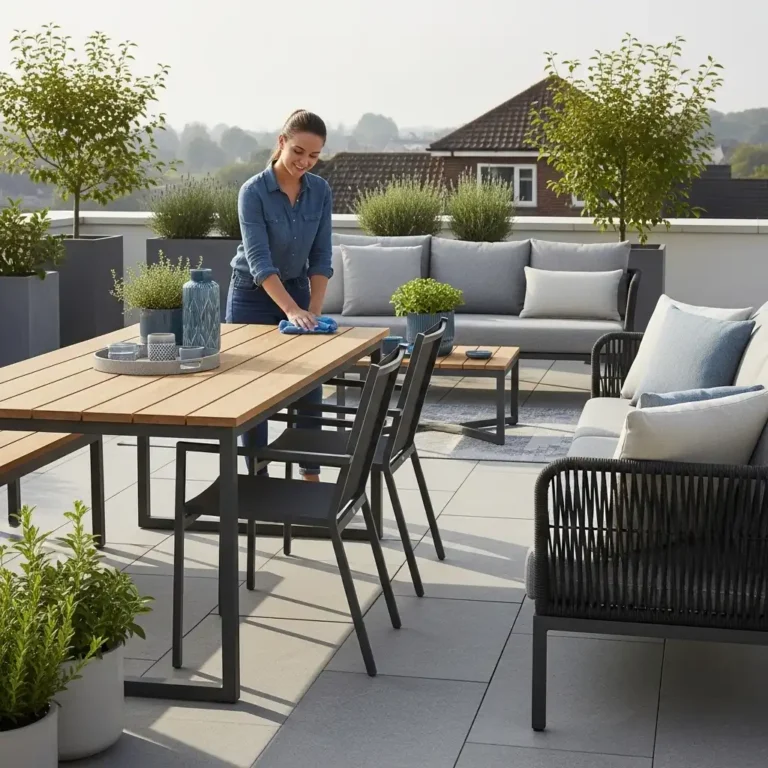
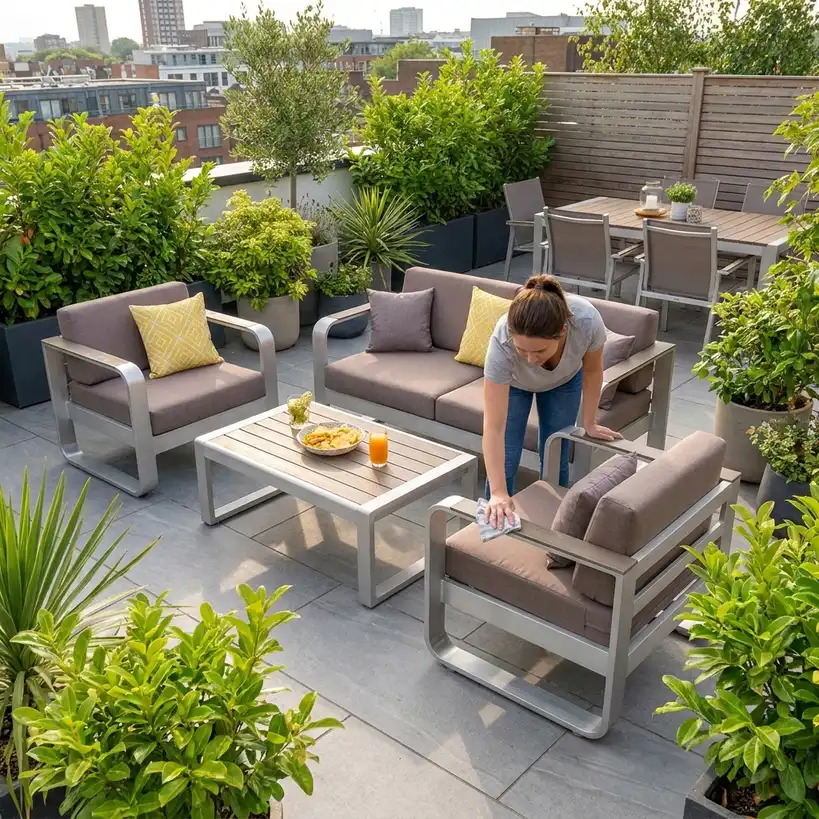
Before you decide that UK weather has cut short the life of your garden furniture, it helps to clean the piece properly first. A lot of all weather furniture UK buyers have can stay outside all year, which is clearly handy, but it still needs regular care. Often, a simple rinse and wash with lukewarm soapy water is enough to remove stains, food marks, and built-up grime, so the actual damage becomes much easier to see.
Use these exact actions:
- Hose off loose dirt.
- Wash with lukewarm water and a mild non-detergent soap.
- Use a soft brush on weave, corners, and fixings.
- Dry with an old towel or let it air dry fully.
- Recheck every joint, slat, and edge.
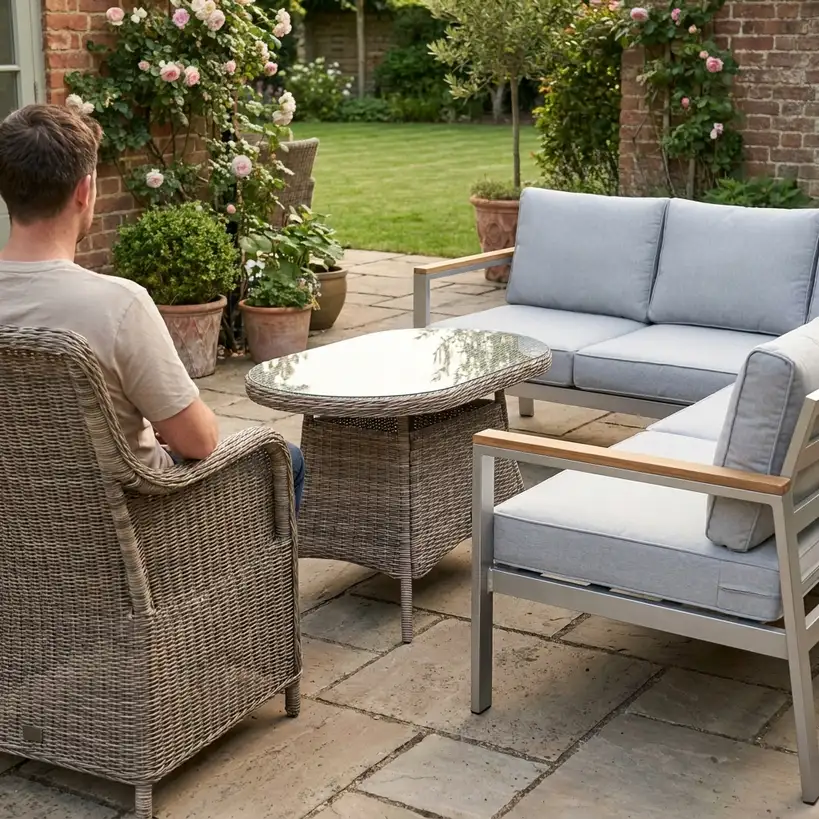
If the furniture is synthetic rattan on an aluminium frame, this step can show whether the issue is only in the weave or if the inner frame has damage too. That is worth spotting early, before it turns into something worse. Many premium sets use rust-free powder-coated aluminium frames because they cope well with British weather, so that also helps explain why well-made furniture is often worth repairing instead of replacing.
If you’re comparing materials for a future purchase, cleaning first can also show what actually failed, which is useful later. It is a practical way to learn what usually holds up best in UK weather. Btw, we wrote about that here: Teak vs Rattan vs Aluminium Garden Furniture UK Durability.
Tip: Take photos after cleaning. If you speak to a repair service later, the pictures make it easier to get advice and show the problem clearly.
Step 3: Match the damage to the material
Now decide based on the material, because it really does matter here. Not every garden furniture repair UK job needs the same fix, and that is really the key part.
Aluminium furniture repair
Repair aluminium when you notice chipped coating, light oxidation, loose bolts, or small cosmetic marks, as these are all pretty common. It’s usually easy enough to fix. If the frame is bent or cracked, though, or the welds are starting to fail, replacement often makes more sense since that’s usually the bigger issue.
Powder-coated aluminium is a good option for modern outdoor furniture UK homes use a lot. It stays lightweight, resists rust, and needs very little maintenance. In this case, premium aluminium frames are often worth repairing when the damage is minor and only affects the surface. For additional reading, Aluminium Garden Furniture Cheshire: Reliable for UK Weather provides insight into why aluminium remains one of the best options for long-term use.
Rattan furniture repair UK and HDPE rattan repair
If only a few strands are broken and the frame underneath still feels solid, repair is usually the simpler option. Replacement makes more sense when the weave has become brittle across the whole chair or sofa, when several sections have snapped, or when the inner frame is warped or starting to rust.
Synthetic rattan wrapped over aluminium often handles British weather well, especially when it comes with removable, washable cushions. Small, local damage can often be repaired. But when UV brittleness has spread across large areas, it usually can’t, and patching it is often not worth doing.
For more examples of design and durability, check Outdoor Rattan Furniture: Stylish & Durable Patio Solutions.
WPC furniture repair
WPC is low-maintenance, but repairs can still be tricky when boards crack or the colour match seems off. Small surface marks are usually easy to fix. But if load-bearing parts split, replacement is likely the safer choice for support. If you want a complete overview of material strengths, WPC in Garden Furniture: A Complete UK Guide covers more details.
Rusted steel or iron furniture
Fixing rusted garden furniture usually makes sense when the rust is just on the surface and hasn’t gone deeper. Sand it down, treat it, and repaint it. But if rust has started eating into the legs, joints, or welds, replacing it is often the better choice.
Broken garden bench repair
A wooden bench can often be fixed when the problem is minor, like loose fixings, worn slats, or maybe a small patch of rot. Replace it if the supports have become weak, though. Once rot has spread through the structure, that is usually the point where a repair no longer makes sense.
Common mistake: Treating every crack the same. A split slat is often only cosmetic. A split support rail, though, is a real safety issue and should not be ignored.
Step 4: Compare repair cost with replacement value
Once the material and the damage are clear, the next step is to look at the real cost. It is not just a matter of asking, “Can I fix it?” but also, “Should I fix it?” A sensible outdoor furniture repair-or-replace decision usually comes down to four practical points:
- Frame quality, Is it premium and still solid?
- Repair cost, Parts, paint, labour, and your time.
- Expected extra life, One more season, or five more years?
- Style fit, Does it still suit your patio, balcony, or garden space?
When furniture is low grade and has already broken more than once, replacement is often the better long-term choice. That is especially true if the frame already feels weak. On the other hand, quality outdoor furniture with a strong frame will usually give better value if you repair it. It can also mean less waste, which often matters more in real life than people first think.
That also matches wider UK buying trends. 60% of households are investing in outdoor furniture for comfort and appearance, and many now treat patios and balconies more like outdoor rooms than spots to leave a spare chair or table. Because of that, function matters, but design usually matters too. In this view, people want furniture that feels comfortable, looks right in the space, and holds up to regular use.
UK dominated the Europe outdoor furniture market with a share of around 43% in 2023.
Guidance from the RHS, along with consumer advice from Which?, suggests that regular care can extend the life of outdoor furniture far more than many owners expect. Rust checks, repainting protective coatings every few years, and cleaning in ways that suit the material can all help. It is not complicated, just steady upkeep over time.
Rule of thumb: If the repair costs more than about half the price of a better replacement, and the result is still an old, weaker frame, replacement is usually the smarter choice.
Step 5: Decide when replacement is the better investment
Sometimes replacing furniture is not wasteful at all. It is just the practical option. If a set feels unsafe, looks uneven and patchy, or was made from lower-grade materials to begin with, buying new can often save money and hassle over time, especially once repair jobs start piling up.
Replace when:
- The frame is cracked, bent, or unstable
- Rust is deep rather than just on the surface
- The weave is brittle across large areas
- Rot affects key supports
- Spare parts are hard to find
- Repairs would still leave it looking poor
This is usually the point where material choice matters most. Better all weather furniture UK buyers choose now is often made for long-term use rather than only one or two seasons. Powder-coated aluminium frames, premium synthetic rattan, teak, and low-maintenance composite surfaces can help reduce future repair costs while also cutting down on regular upkeep. In this situation, that makes replacement a smart long-term choice.
If a fresh setup is already on the table, Best Weather-Resistant Outdoor Furniture for UK Gardens is a useful next step. For anyone after durable design with low upkeep, Rengard trendy outdoor furniture focuses on weather-ready materials like aluminium frames, teak, rattan, and composite finishes suited to British outdoor living.
Tip: On small patios and balconies, replacement can also improve the layout. A compact modular or bistro design may fit the space better than the set being saved, especially in tight corners or narrow seating areas. For inspiration, see Small Space Garden Furniture UK: Balcony & Patio Ideas 2026.
Step 6: Prevent the same damage from happening again
Whether the furniture is repaired or replaced, it helps to finish with a simple patio furniture maintenance UK routine. It does not need to be complicated, and in most cases a small regular habit is enough. The goal is to protect what has already been paid for before rust, damp, and wear start building up again.
Use this checklist:
- Rinse and wash furniture every few weeks during the warmer months
- At the start of each season, check bolts, feet, and any moving parts
- Sand and treat small rust spots early
- Store cushions somewhere dry when not in use
- Use breathable covers instead of plastic tarps, since plastic can trap moisture
- If possible, lift furniture slightly above standing water
- Repaint or refinish protective surfaces when needed
Some sources estimate that a large share of outdoor furniture is replaced within five years because rust and weather damage might have been avoided with basic care. That makes maintenance one of the cheapest ways to protect it, and usually one of the easiest too.
For colder months, Garden Furniture Covers: Winter Maintenance Tips UK is worth a look if keeping sets in better shape through winter matters. It can help protect them before frost, wind, and damp start causing problems.
Common mistake: Covering dirty furniture for winter. Trapped dirt and moisture often lead to stains, mildew, and damage to the finish.
How to verify success and what to do next
You likely made the right choice if your furniture is now safe, steady, comfortable, and still earns its place. After any repair, test each chair and table on a flat surface, and a patio slab often works well. Then tighten the fixings and check again for any wobble. It also helps to make sure any rust treatment, paint, or replacement weave has fully cured before use, and if you are not sure, waiting a bit longer is usually the safer option. If replacing it was the better choice, check that the new set fits your garden, patio, or balcony properly, suits the amount of upkeep you can handle, and can cope with real UK weather.
One easy next step can make the whole job feel simpler. Walk around your garden, patio, or balcony and sort each item into a few groups: repair now, keep an eye on it, replace, or leave it as it is for now. That usually makes everything feel easier to manage.
When the frame is strong, garden furniture repair is often the greener and smarter choice. But if the structure is failing or the material is poor, replacement can be cheaper over time, especially when the furniture stays outside all year. For most households, the usual answer is to repair the better pieces, replace the weaker ones, and pick better materials next time.