Living Room Furniture Mistakes Every Homeowner Should Avoid
A living room might look great in a showroom or on Pinterest, then feel completely off once it’s in an actual home. Usually, it comes back to a handful of avoidable decisions: furniture that’s too large, layouts that get in the way of movement between the door, sofa, and storage, styling that works in photos, and setups that don’t really fit everyday life. These are very common mistakes. Across UK homes, especially in rooms with narrower proportions, tighter access, and very little spare space, these living room furniture problems appear again and again.
That matters more than a lot of people realise, especially with this much money involved. UK household consumption on furniture and furnishings reached £22.773 billion in 2025 (Office for National Statistics). That figure shows how much care and attention goes into these purchases. In a 2025 survey of 2,000 UK residents, 52% said the living room was the space they felt most particular about. Another 21% said they were held back by a lack of confidence in their interior design choices (Sofology). In many cases, that’s a very relatable result.
If someone is refreshing the room, moving house, or starting from scratch, this guide covers the biggest living room layout mistakes, the furniture placement issues UK homeowners often make, and the buying choices that can end in regret. It also looks at scale, spacing, circulation, styling, and the practical side of planning a room that feels calm, balanced, and useful every day. Put simply, the aim is to help avoid expensive living room furniture mistakes and create a modern living room design UK homeowners can actually use and enjoy day to day, not just in photos.
Buying Before Measuring Properly and Other Living Room Furniture Mistakes
One of the costliest furniture mistakes usually starts with something simple: buying first, then measuring later. It sounds obvious, but people do it all the time with sofas, armchairs, coffee tables, media units, and rugs.
In a 2025 survey of 1,500 UK furniture buyers, 60% said they’d bought furniture online that turned out to be the wrong size. Another 49% said an item wouldn’t fit through the front door or up the stairs, and 23% had returned a large furniture item within the previous two years (CMO Tech). In many British homes, especially in places such as Shropshire, Staffordshire, Cheshire, Manchester, North Wales, and Birmingham, this can become a problem very quickly. Older terraces, semis, and converted properties often have narrow halls, sharp turns, smaller front doors, and awkward layouts that buyers don’t always spot in advance, which is probably more common than most people admit.
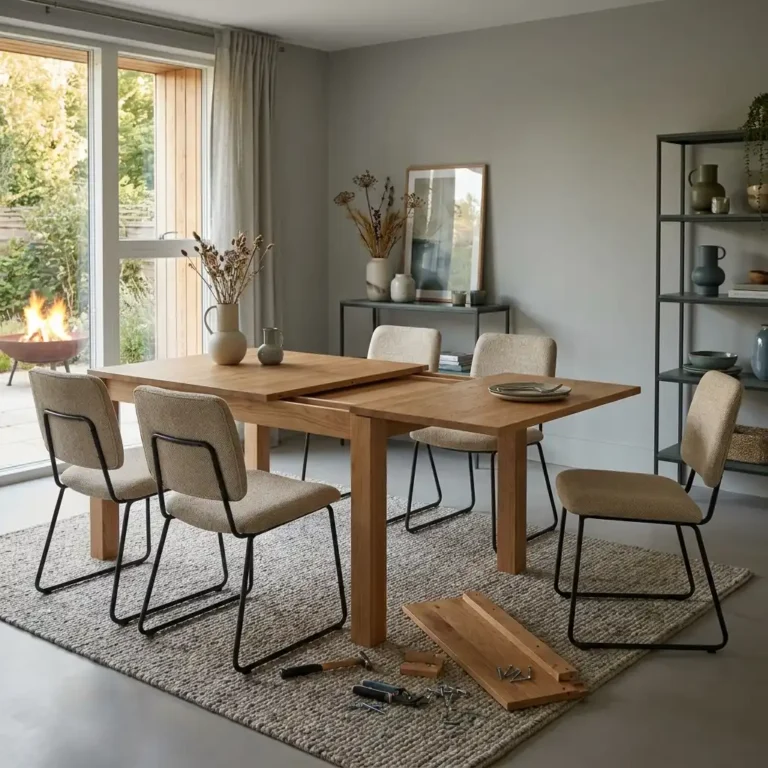
Don’t forget the biggest rookie mistake of them all, forgetting to measure your front door to ensure a large sofa or dining table will fit.
For living room planning UK homeowners can actually use, it helps to measure these areas before you buy:
- The room itself: width, length, window positions, radiators, alcoves, and any awkward corners
- The furniture footprint: width, depth, height, and seat depth
- The full access route into the room, including the front door, internal doors, staircase width, landings, and corners
- Any fixed features that affect placement, such as sockets or built-in shelving
A handy way to do this is to mark out key pieces on the floor with masking tape. It’s basic, but it tends to work really well. It gives you a better feel for the scale and helps you catch one of the most common living room furniture buying mistakes before it becomes a hassle. It works because you can see, in a practical way, how much floor space a sofa or table will really take up instead of relying on guesswork from a product page. Then there are sofa labels. A lot of people assume a two-seat or three-seat sofa will fit because the name sounds fairly modest, but once it’s actually in the room, it can look very different.
If you want a more general guide to what to compare before you shop, we covered this in modern living room furniture. Additionally, homeowners working with tighter layouts may also find these small living room ideas UK for stylish compact homes useful when planning furniture sizes.
Choosing a Sofa That Dominates the Whole Room
Your sofa is often the biggest thing in the living room, both to look at and to live around, so if the size is off, the whole space gets much trickier to arrange. In a 2025 survey of 2,000 UK adults, 63% said the sofa was the thing they cared about most when furnishing a living room (Furniture And Choice). That makes sense here, and it helps explain why one oversized choice can throw the whole room off balance more easily than many people expect.
It’s one of the living room design mistakes UK homeowners make most often. Quite often, people choose a sofa for comfort first and don’t give enough thought to how it’ll fit with the rest of the room. A deep, bulky sofa can feel brilliant in a large retail showroom, but in a typical British reception room, it soon starts to dominate. And the knock-on effect isn’t just visual: walkways shrink, wall space goes, armchairs stop earning their keep, and the coffee table ends up so near that sitting down and getting back up feels awkward.
A few signs your sofa is too big are:
- You have to turn sideways to walk past it
- Curtains can’t hang freely
- Side tables look tiny or disappear
- The room feels full even before you add storage or lighting
- Other seats face awkwardly, or they end up too far away for conversation
This is where a furniture layout guide UK shoppers can actually use becomes especially helpful. A good way to do it is to work out the clearance you actually want first, then pick the sofa to fit that plan. According to reporting in The Telegraph, interior designer Alison Hughes recommends leaving roughly 50 cm around coffee tables or sofas for circulation where possible and pulling larger pieces 12 to 15 cm off the walls so the room has a little more breathing room (The Telegraph). That’s practical advice, and usually easier to use at home than people think.
In real terms, a slightly smaller sofa can make a room feel more luxurious. It’s easier to move around, light carries better, and the room feels more in proportion. The effect isn’t only visual either. In soft-modern interiors, a calmer atmosphere often comes from holding back slightly: leaving clearer paths, letting other furniture matter, and giving the room enough open space to feel settled.
For homeowners comparing sizes and proportions, this guide on choosing the right sofa for modern UK homes can also help avoid some common living room furniture mistakes before buying.
Pushing Every Piece Against the Wall and Other Living Room Furniture Mistakes
A lot of people think pushing furniture right up to the walls will make a room seem bigger. But in practice, it often does the opposite: the room can end up feeling flat, disconnected and, strangely, even more cramped. It’s a very common mistake, and an easy one to make.
When every piece is placed along the wall, the middle of the room can become a sort of empty island. Seating ends up too far apart, so conversation doesn’t happen as easily. The room may start to look more like a waiting area than a home, which is probably not what you want. House Beautiful notes that designer Sarah Magness says furniture layouts should support conversation and circulation, because without that, a room can feel awkward and unwelcoming (House Beautiful). In the same feature, designer Lin also recommends floating sofas even a little away from the wall, since that can cut down on visual clutter and give the room a better sense of rhythm (House Beautiful).
I would encourage anyone to do a floor plan themselves with a scale ruler, or by downloading a specialist app.
A more useful approach is to create a furniture island based on how the room is actually used. It’s a simple idea, but it often works well. For example:
- Float the sofa slightly forward
- Pull the rug under the front legs of the main seats
- Place chairs close enough for easy conversation
- Add side tables so the seating group feels connected
Still, not every room needs a bold layout set in the middle of the space. In some British homes, just pulling the sofa 10 to 15 cm off the wall and turning the chairs slightly can improve the flow between the seating area and the walkway. It’s not a big change, but you can notice the difference. In narrow or awkward spaces, this matters even more, because there just isn’t much usable floor area to spare. If that sounds familiar, it’s covered here: small and narrow living room layout ideas for British homes. People dealing with compact spaces may also like these Small Living Room Shropshire Styling Tips.
Ignoring Walkways, Doors, and Daily Movement
A room can look balanced on paper and still feel annoying once people start using it. That often happens when the plan is based on furniture shapes instead of how the space is really used, and that’s a very common problem. This is often the point where furniture placement mistakes UK homeowners later regret become most obvious.
Picture an ordinary evening at home. Someone comes in carrying shopping. A child settles on the floor. The pet threads its way round the coffee table. Maybe one person wants to watch TV, another wants to read, and someone else needs to cross the room to close the curtains. They’re all small, everyday moments. But if the layout keeps getting in the way, the room never quite feels settled. That’s when the space can start to feel frustrating rather than comfortable.
In most rooms, the best layouts keep natural paths clear. You should be able to enter, reach the seating, get to storage, and move toward the windows without constantly weaving around obstacles. The coffee table is often the main problem. It may be too large, have sharp corners, or sit too close to the sofa, especially in narrower rooms. Side chairs can block movement too, particularly when they are added only to make the room look symmetrical. Symmetry can help visually, but it often shouldn’t come at the cost of easy movement.
A quick way to test the layout is to picture these routes:
- Door to main seat
- Main seat to TV or focal wall
- Main seat to side table or lamp
- Door to window or garden doors
- Seat to storage unit or shelves
If any of these routes feels cramped, the layout needs work. It can matter even more in family homes and open-plan spaces, where movement overlaps with play, storage, and entertaining.
The market is changing this way too. IKEA UK now points to planning consultations, modular furniture, awkward-space solutions, and storage-led thinking as part of living room planning and interior design support (IKEA UK Planning Consultation; IKEA UK Interior Design Service). That points to a broader shift towards structured room planning instead of impulse buying, especially when everyday movement is part of the decision.
Buying for Trend Instead of Longevity
A common living room mistake is settling on a style before thinking properly about how the room actually needs to work. It’s easy to get drawn into what looks new online, especially when the room you’ve got is starting to feel a bit tired. In a 2025 survey of 2,000 UK residents, 72% said they wanted to make changes to their homes, and 40% said the main reason was that their space felt outdated or tired (Sofology). That urge to update things is understandable. But if you buy into trends too quickly, it often ends in regret.
You see the same thing in what matters to people when they buy furniture. In a 2025 survey of 2,000 UK adults, 80% said value for money was their top consideration. Only 37% prioritised trendy, modern designs (Furniture And Choice). That points to something fairly clear. Most people want a room that looks good, but not if it means losing comfort, durability, flexibility, or everyday practicality.
For modern living room design UK homes can work with for years, it helps to start with the pieces that usually last best over time:
- A well-scaled sofa in a versatile fabric
- Storage that suits how the room is really used
- Lighting for evenings, darker days, and winter afternoons
- Accent chairs and occasional tables that can be moved around easily
- A colour palette that feels calm enough to live with
Personality can come later through smaller pieces. Cushions, throws, lampshades, side tables, and art are all far easier to swap out than a sofa or media unit. Often, that leaves the room feeling more flexible and simpler to update, without locking it into a look that starts to date too fast. It also makes updates easier in day-to-day life, for example by switching textiles or lighting instead of replacing the biggest furniture pieces.
Copying a Showroom Set Too Literally and Creating Living Room Furniture Mistakes
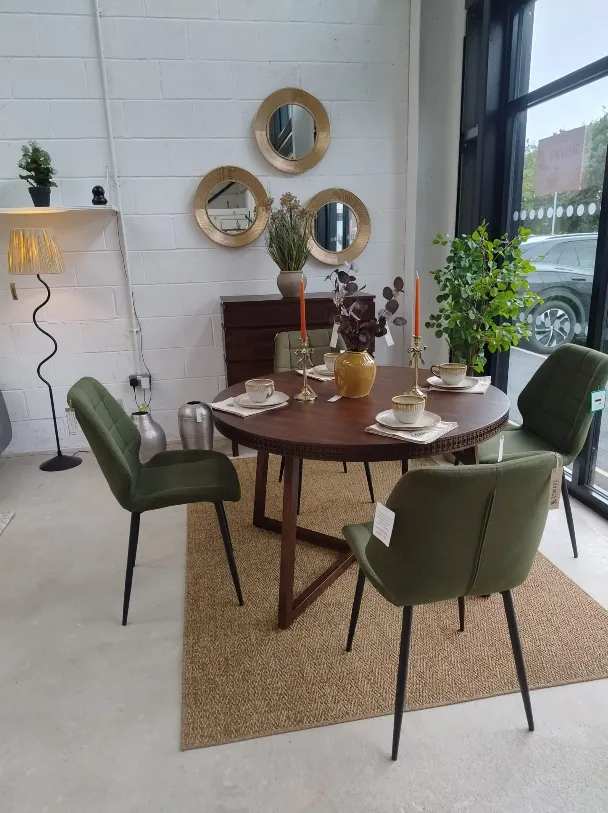
Showrooms are there to spark ideas, but a showroom set isn’t a blueprint. That’s one of the more subtle interior design mistakes UK homeowners make, mostly because it feels safe, which is often why it happens so often. Your room at home isn’t the showroom floor. Room size changes, daily life changes, and things like ceiling height, wall length, window placement, walkway space, and everyday habits all affect how it turns out.
Copying a full set too literally can take away character and ignore proportion. A matching sofa, armchair, coffee table, side table, media unit, rug, and lamp arrangement can look polished in-store, then feel too heavy and too planned once it’s in your home. Something that seems balanced under showroom lighting will often end up feeling crowded in a real living room.
It’s usually more useful to take the idea behind the room, not copy the whole thing. So what makes that setup work?
- Why does this setup work?
- Is it the contrast in shapes?
- The spacing between the pieces?
- The balance of light and dark tones?
- Or is it the mix of soft upholstery and harder surfaces?
If you’re shopping in person, it’s more useful to compare seat depth, arm height, leg style, and fabric texture than to try to recreate a staged room exactly. That’s usually the better test. It’s especially useful for couples making decisions together, since they can judge comfort and scale side by side. For that process, this article on visiting a modern furniture showroom in the UK can help with better questions.
Retailers such as RENGARD are most useful when you treat the showroom or collection as a planning tool, not a fixed template. The rooms that work best usually keep some consistency but also enough contrast to feel natural, not forced. For more inspiration on current layouts and styling ideas, these Modern Showroom Trends UK Shaping Interiors can also help.
Forgetting How the Room Really Needs to Work
A beautiful room that doesn’t fit daily life is still a room that falls short. A lot of living room furniture mistakes start when homeowners plan for the room at its best, rather than how they actually use it day to day, and that’s usually the real problem. Often, they imagine the room when it’s looking tidy, not on an ordinary evening, over a busy weekend, or during a rushed morning.
That usually means practical needs get overlooked, such as:
- Toys, plus hidden storage for them
- Pets that jump onto seats
- Teenagers stretched across the sofa
- Guests who need extra seating
- A reading corner
- Hybrid work habits
- Easy cleaning around furniture legs and under tables
The main lesson is fairly simple: real life should guide the choices. If a sofa can’t handle teenagers lying across it, or there’s nowhere to put toys out of sight, the room will probably stop working well before long, even if it looks impressive at first.
There’s also a broader social reason to buy carefully. Research from NatCen Social Research and Furniture Poverty UK showed that around 4 million UK adults were living in furniture poverty in 2025, and that 8.1 million essential household items were missing because people needed them but couldn’t afford or get them. The survey was carried out from 20 November to 14 December 2025 and included 2,551 respondents (NatCen Social Research). It’s a useful reminder that furniture isn’t just decorative; it needs to do a job in everyday life. Things like seating, storage, and comfort shape how well a home works from one day to the next.
So looks alone are usually not enough.
Letting the TV Control Everything and Other Living Room Furniture Mistakes
In many homes, the TV ends up as the only real focal point. When that happens, every seat points to one wall, side tables can seem oddly placed, and the room loses a lot of flexibility, which is very common in modern British living rooms. It’s a familiar styling issue, and it often makes the whole space feel more fixed than it needs to.
Of course, the TV matters. It just shouldn’t crowd out conversation, reading, or a calmer layout. If the television is the first thing your eye goes to, it usually helps to add a few other points of focus: a rug under the main seating area, a pair of lamps beside the sofa, a fireplace, shelving, or even a statement chair. That usually makes the room feel more settled and less shaped by the screen alone.
Small items that you can just pick up and move enables you to change the focus away from the TV.
It helps because flexible pieces give the room more than one use. Pouffes, small stools, movable side tables, and light occasional chairs make it easier to switch the layout from TV time to conversation or having guests over without much effort. In most rooms, it just means the space is easier to adapt. More flexible, less fixed.
If the living room feels too centred on the screen, a few small changes can help:
- Angle one chair slightly away from the TV
- Add a lamp and table to create a reading corner
- Use a larger rug so the room feels more connected across the seating area, not only near the screen wall
- Style shelves or a console so the eye has another place to rest
Frequently Asked Questions About Living Room Furniture Mistakes
What is the most common living room furniture mistake?
A common mistake is buying furniture before you’ve properly measured the room and the way in. A sofa can look right online and still be too deep for the space, or too big for the front door, hallway, or stairs. Plan it out carefully, and you’re less likely to end up with expensive returns and an awkward room layout.
How much space should I leave around living room furniture?
A good rule of thumb is to leave enough room to walk comfortably, without having to turn sideways or clip the corners. Design guidance reported by The Telegraph suggests leaving about 50 cm around coffee tables and sofas where possible to keep movement easy, although exact spacing depends on the room’s size and shape. The priority is easy movement.
Should a sofa always go against the wall?
No. A very common living room layout mistake is putting every piece right up against the wall. Even moving a sofa a little forward can help the room flow better, make it feel more intentional, and set up better conversation areas.
How do I avoid buying the wrong living room furniture online?
Don’t just look at the product dimensions, start with a full room plan. Measure the room, the doorways, the internal access points, and your current clearances, then check those measurements carefully against the product sizes. Small details matter. If you want to see the scale, materials, and comfort in person before buying, retailers such as RENGARD can help, since it’s easier to judge the pieces realistically that way.
Is it a mistake to buy a full matching living room set?
It can be. It’s easy to buy a matching set, but if every piece carries the same visual weight, the room can end up feeling flat or oddly large. Instead, start with one anchor item and build around it with supporting pieces that vary in shape, texture, or even the style of the legs.
What should I prioritise first when planning a living room?
Start with how the room needs to work, then look at size, and only then think about style. Consider who uses the room, what goes on there day to day, and how people need to move through it. Cover the basics first. Once that’s sorted, choosing pieces from a home furniture retailer like stylish UK furniture retailer gets a lot easier because the room’s needs are already clear.
A Better Way to Plan the Room From the Start
A good living room usually doesn’t just happen. More often, it starts with a clear plan: the size of things, how people move through the room, comfort, and how the space actually gets used day to day. If you want to avoid the living room design mistakes UK homeowners often run into, start with the room itself before you look at products. A quick sketch and accurate measurements can save a lot of trouble later on. It also helps to keep walkways clear. Pick a sofa that fits the room, not just the showroom, and don’t feel you have to use every wall or corner.
Here are the key reminders:
- Measure the room and the access route before buying
- Let circulation shape the layout
- Avoid oversized sofas and bulky coffee tables
- Don’t push everything right up against the walls
- Choose durable core pieces before adding trend-led extras
- Plan for pets, storage, guests, and your daily routines
- Keep the TV from becoming the only focal point
Once you’ve got these basics in place, modern living room design feels much more manageable. You’ll probably spend more wisely, deal with fewer returns, and end up with a room that feels calm instead of crowded. That may sound simple, but it’s often what matters most in real homes. The real goal of smart living room planning UK households need is a space that looks balanced, works well, and still feels good months after the excitement of buying starts to fade, which it often does. Avoiding living room furniture mistakes early on usually makes the whole process easier and far less expensive.