Sun Lounger Materials: Aluminium, Rattan, Textilene or Wood?
Choosing the best sun lounger material is about more than appearance. In the UK, it is a practical decision too. A lounger that seems ideal in a showroom can feel very different after a full season of rain showers, sudden heat, damp mornings, and long stretches outdoors. For homeowners investing in luxury garden furniture, understanding different sun lounger materials helps assess comfort, maintenance, durability, sustainability, and how naturally the piece fits into the space.
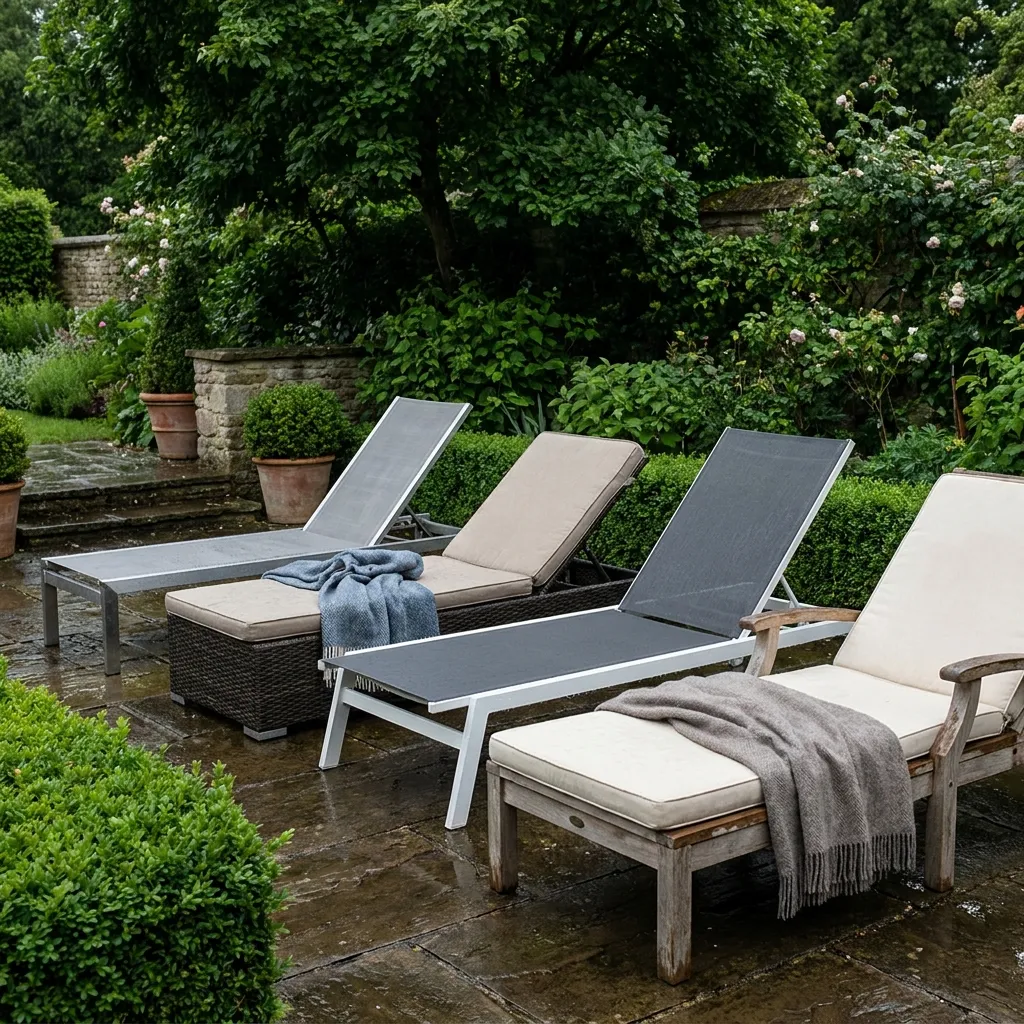
That applies for a large terrace, a poolside area, a city balcony, or a compact patio where every item needs to justify its footprint. An aluminium sun lounger UK buyers like for its clean lines can work beautifully in a modern garden. In contrast, a rattan sun lounger UK households choose for warmth and texture may feel better suited to a softer, more relaxed lounge setting. Meanwhile, a textilene sun lounger is often a good option for low-maintenance living. Finally, a wooden sun lounger UK buyers value for timeless appeal can become a lasting statement piece.
Moreover, the market is growing. Fortune Business Insights values the global sun lounger market at USD 3.39 billion in 2025, while Mordor Intelligence projects the global outdoor furniture market will reach USD 24.98 billion by 2031. Consequently, buyers increasingly see premium outdoor materials UK homeowners can rely on as a long-term home investment.
This British garden furniture guide looks at aluminium, HDPE rattan, textilene, and wood in detail, helping you choose weatherproof sun lounger materials that match your design preferences and the level of maintenance you are genuinely willing to keep up with. You can also explore more about weatherproof outdoor fabrics for a complete understanding of how materials perform in different UK conditions.
What Really Matters in the British Climate
Comparing sun lounger materials in the UK changes the focus quickly. In hotter, drier climates, appearance may come first. Here, appearance still matters, but it needs to work alongside performance. A lounger must handle moisture, UV exposure, grime, wind, and changing temperatures without becoming something that constantly needs attention.
First is frame stability and corrosion resistance. Powder-coated aluminium tends to work especially well in British gardens. Unlike untreated steel, it will not rust, and it stays light enough to move as the weather changes. It also needs very little beyond basic cleaning, which helps if it has to be repositioned often. Based on market and durability data cited in Rengard’s own material comparison, well-made powder-coated aluminium furniture typically lasts 15 to 25 years. For further reading, see Aluminium Federation UK for insights into aluminium sustainability.
Then there is surface comfort. Some buyers prefer deep outdoor fabric cushions, which makes sense. In UK conditions, though, dampness and storage can become more of an issue. Others prefer breathable materials that are ready to use again soon after a shower. In that respect, textilene stands out.
The third point is maintenance reality. A wooden lounger may look great, but not every homeowner wants to sand it, oil it, or let it weather into a silver finish over time. The same applies to rattan: quality varies. A premium HDPE rattan lounger on an aluminium frame is much better suited to these conditions than a cheaper version built on steel.
The most weatherproof material tends to be powder-coated cast aluminium, followed by high-quality synthetic rattan and sealed hardwoods.
That ranking also closely reflects how many modern sun loungers UK buyers now judge value: not just by first impression, but by how easily a piece keeps doing its job year after year.
Aluminium Sun Loungers: The Modern All-Rounder in Sun Lounger Materials
For anyone looking for the safest all-round choice in sun lounger materials, aluminium is usually the one. It suits contemporary homes, roof terraces, architect-designed gardens, and poolside layouts with very little effort, and it rarely looks out of place. Its appeal is not just about looks.
An aluminium sun lounger UK homeowners buy from a premium retailer will usually have a rust-resistant frame with a protective powder-coated finish. That finish helps the frame handle rain, coastal air, and everyday wear while keeping the sleek, premium appearance in place. As a result, outdoor furniture feels solid enough for luxury spaces without becoming too heavy.
Aluminum is a very durable, lightweight material that can be recycled again and again without losing its properties.
In day-to-day use, aluminium has a few practical benefits that become clear quickly when compared with other materials:
- Low maintenance: usually just a wipe-down with mild soap and water
- Weather resistance: well suited to exposed patios and open gardens
- Light weight: easy to move as the sun shifts
- Design versatility: works well with textilene slings, teak accents, and premium cushions
- Clean aesthetic: a good match for modern sun loungers UK design trends continue to favour
Therefore, aluminium shows up so often in hospitality settings. Resorts and spas tend to choose it because it combines a sharp look with durability, and those commercial-grade details often shape residential buying as well. We covered frame quality here: aluminium frame garden furniture in the UK. Additionally, see British Stainless Steel Association for related corrosion resistance insights.
Rattan Sun Loungers: Softer Looks, Smarter Specifications
A rattan sun lounger UK buyers like often makes an impression before anyone checks the specifications. It brings a warm, relaxed feel, softens a paved terrace, and fits easily with side tables, lanterns, and layered cushions. However, what matters is being able to spot high-quality synthetic rattan rather than lower-grade versions.
Natural rattan does not suit the British climate particularly well. Synthetic weave is the better option, ideally an HDPE rattan lounger built on an aluminium frame. That still gives the textured, woven finish people link with comfort while offering much better resistance to UV, damp, and everyday weather exposure.
According to durability figures cited in Rengard’s material comparison, PE rattan on an aluminium frame may last 10 to 15 years, while steel-frame rattan may last only 3 to 7 years. For buyers spending at a premium level, that is a real difference.
A quality rattan lounger tends to work best for buyers who want:
- a more lounge-led, less minimalist look
- a softer visual fit in traditional or transitional gardens
- integrated or separate outdoor fabric cushions UK homes can store when not in use
- garden furniture that matches sofas, coffee tables, corner seating, and similar pieces
Look closely at UV-resistant outdoor furniture specs, check for tight and even weaving, and pay attention to aluminium sub-frames and cushions made from proper outdoor-grade fabrics. If the comparison extends beyond loungers, Teak vs Rattan vs Aluminium Garden Furniture UK Durability gives broader material context.
Textilene Sun Loungers: The Performance Choice for Easy Living
Textilene can be easy to miss because of its simple look. But in real use, it’s one of the most useful choices for buyers who want a low-maintenance sun lounger that still feels comfortable. Instead of relying on thick cushions, a textilene sun lounger uses tensioned sling fabric that adjusts to the body, dries fast, and stays breathable.
That practicality matters even more in the UK. Thick cushions trap moisture, need storage, and usually ask for more seasonal care. Textilene removes much of that extra effort. It works especially well for poolside areas, urban terraces, and balconies.
Textilene is a PVC-coated polyester fabric engineered for strength, weatherability and UV resistance.
That construction explains why fabric-led loungers continue to sell well. Custom Market Insights also reports that the fabric segment held 40.7% of the sun lounger market in 2023.
In practical terms, textilene is a good fit when you want:
- a sleek, minimalist silhouette
- fast drying after showers or pool use
- less need for separate cushions
- easier cleaning with less risk of mildew
- ergonomic support without heavy visual bulk
Additionally, textilene also has a visual benefit for buyers working with limited space. It gives a lounger a lighter look, so balconies and compact patios can feel more open.
Wooden Sun Loungers: Natural Luxury with a Longer View
A wooden sun lounger UK homeowners choose often says as much about taste as practicality. It adds character, warmth, and craftsmanship to an outdoor space. Compared with metal and technical fabrics, wood has a natural feel that is hard to match.
Teak remains the standout choice. Its high oil and silica content helps it resist moisture, insects, and decay outdoors.
Grade A teak is the best wood for outdoor dining furniture in the UK, it is naturally weatherproof, requires no treatment, and lasts 20-30+ years.
That long-lasting quality is a main reason wooden loungers continue to appeal to buyers. Choosing wood also means making an early decision about appearance. With regular care, the original honey tone can be kept, or the timber can be left to weather into a silvery grey.
Wood is best for:
- heritage homes and classic garden schemes
- buyers who see furniture as a long-term investment
- sustainability-conscious households
- design-led spaces where natural texture matters
For buyers weighing ethics alongside aesthetics, FSC certification is worth looking for. You can also explore the Sustainable Outdoor Furniture Guide for more insights.
How to Match Sun Lounger Materials to Your Space and Lifestyle
The best weatherproof sun lounger is not always the one that looks strongest on paper. It is the one that fits how you really use your outdoor space.
For a modern patio or roof terrace, aluminium often makes the most sense. It looks clean and architectural without feeling cold. In a garden lounge setting with sofas, HDPE rattan often feels more at home. A poolside area or exposed balcony works best with textilene. In a traditional garden, teak is hard to beat.
Ultimately, to narrow down the right choice, use a simple buying framework:
- Assess exposure
- Define maintenance tolerance
- Think about movement
- Check comfort preference
- Consider visual weight
Premium brands stand out because of better engineering and stronger finishes, which separate a lounger that only looks good from one that keeps performing over time.
Maintenance, Care and Longevity Without the Guesswork
Luxury buyers often ask the same practical question: which lounger will still look good in five years? The answer depends on build quality, exposure, and regular care.
For aluminium, maintenance is easiest. For HDPE rattan, a soft brush and occasional cleaning help. For textilene, sunscreen marks and dirt come off easily. For wood, care depends on the finish you want.
Helpful habits for all materials include:
- using breathable covers
- storing cushions during wet spells
- keeping furniture clean
- checking feet and moving parts once a year
If keeping metal furniture pristine is the main priority, more detail is covered here: Outdoor Aluminium Furniture Care: How to Keep It Looking New.
Sustainability and Future Buying Trends in the UK
Sustainability is no longer a side issue in the British garden furniture guide discussion. Buyers increasingly want reassurance that the premium outdoor materials UK retailers sell are durable and responsibly chosen.
Aluminium performs well because it’s recyclable. Wood can also be good when responsibly sourced. Synthetic materials are more complex. However, choosing better-made furniture and replacing it less often is generally more responsible.
Livingetc points to sustainability, comfort-led design, and outdoor furniture trends for 2026. Aluminium and textilene now fit comfortably within the premium design conversation.
Compact-space living continues to shape demand. Foldable sun loungers accounted for 80.5% of market share in 2023, according to Custom Market Insights.
Frequently Asked Questions
Which is the best material for a weatherproof sun lounger in the UK?
For most buyers, powder-coated aluminium is the best all-round weatherproof sun lounger material.
Is rattan or aluminium better for sun loungers?
It depends on your priorities. Aluminium is better for longevity and modern styling, while HDPE rattan is better for warmth and comfort.
Are textilene sun loungers comfortable without cushions?
Yes, many are. A good textilene sun lounger uses tensioned sling fabric that supports the body well and dries quickly after rain.
What is the best wood for a wooden sun lounger UK garden owners can trust?
Grade A teak is widely regarded as the premium choice. It lasts for decades outdoors.
How do I choose low maintenance sun loungers for a small patio or balcony?
Start with aluminium or textilene designs with slim frames and easy-clean surfaces.
The Best Choice Comes Down to Honest Priorities in Sun Lounger Materials
Put the four sun lounger materials side by side and the differences are clear. Aluminium is the strongest all-round option for modern British outdoor living. HDPE rattan offers a softer, more luxurious look. Textilene suits buyers who want breathable comfort. Wood, especially teak, still has its place as the premium natural option.
The best purchase matches your exposure level, maintenance tolerance, sustainability preferences, and desired look.
For anyone still comparing options, Sun Loungers: Stylish & Durable Outdoor Lounge Furniture explores more ideas on styles and use cases.