
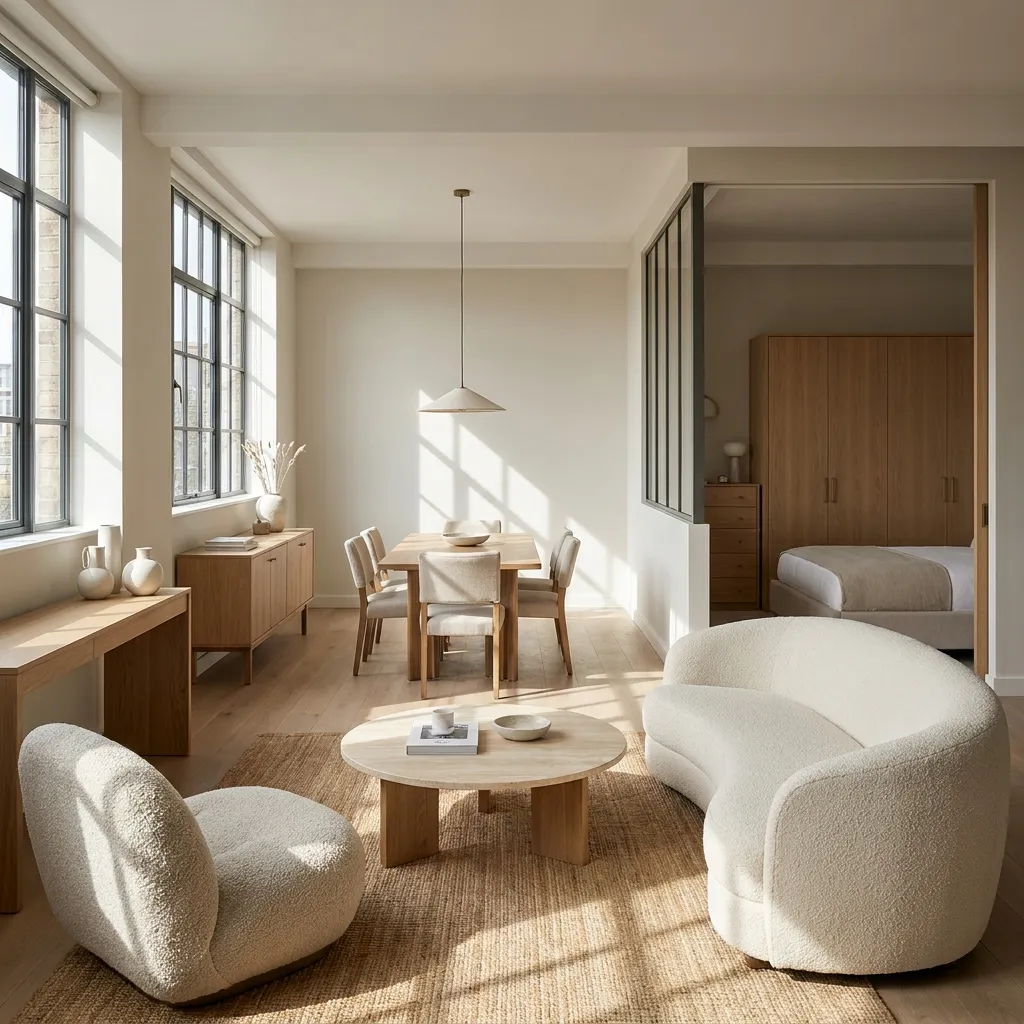
Sofas and Armchairs UK: How to Furnish Your Home with Style
Furnishing a home goes beyond filling empty rooms. It shapes daily life. The sofas and armchairs UK buyers choose can make a new-build feel warm, lived-in and welcoming instead of bare and unfinished. Moreover, coffee tables UK homeowners pick can bring balance to an open-plan room. A small change can have a big effect. Additionally, the wardrobes UK families invest in can help a bedroom feel calm and organised rather than crowded.
For many homeowners in the UK, the hardest part is choosing furniture that works together across the living room, dining room, hallway and bedroom. New-build homes need softness, texture and storage. Older homes that owners update may call for cleaner lines, better flow and layouts that work harder every day. Different homes have different needs. In both cases, people want modern home furniture UK shoppers can actually live with for years, not just through a passing trend cycle.
It helps to see the home as a connected set of spaces rather than buying a sofa, a sideboard and a bed one piece at a time. This article shows readers how to plan living room furniture UK buyers love, choose dining room furniture UK homes use every day and build bedroom furniture UK schemes that feel restful and practical. It also covers materials, scale, storage, colour and layout. Alongside that, it looks at how the RENGARD approach to coordinated furniture helps create a calm, modern British interior.
📈 Why whole-home furniture planning matters for sofas and armchairs UK buyers now
The UK furniture market is large and still growing, which shows how important home upgrades remain for British households. Mintel values the UK furniture retail market at £19.5 billion in 2025, while Mordor Intelligence estimates the UK furniture market at USD 29.69 billion in 2026. These are substantial figures. Furthermore, Mordor also notes that wood furniture holds a 54.40% share of the market in 2025, which lines up with rising interest in natural textures and warmer finishes (Mintel; Mordor Intelligence).
| Metric | Value | Source |
|---|---|---|
| UK furniture retail market | £19.5 billion in 2025 | Mintel |
| UK furniture market | USD 29.69 billion in 2026 | Mordor Intelligence |
| Wood furniture share | 54.40% in 2025 | Mordor Intelligence |
| Online share of UK retail sales | 30.1% in December 2024 | IMARC Group citing ONS |
Those figures point to a clear shift. People are still buying furniture, but they are making more careful choices. Moreover, they want pieces that last, suit smaller or open-plan layouts, and work well together across different rooms in the home. Consequently, they are taking a more connected approach. Mintel analysts put it clearly:
Online shopping continues to dominate, with larger basket sizes seen in online purchases, while physical stores remain important for inspiration and product examination.
That matters for anyone choosing sofas, console tables UK homes need for entry spaces, or beds and bed frames UK buyers compare online. Shoppers may notice styles online first, then narrow their options by material, scale, and finish as they compare. For more context on coordinated interiors, this guide to modern indoor furniture for contemporary British living is a useful next read.
🔍 Start with the living room: the anchor space for comfort and sofas and armchairs UK style
The living room sets the tone for everything else. If it feels too cold, too heavy or too cluttered, the whole house can seem off. Sofas and armchairs UK homeowners choose should come first because they shape the room’s scale, affect how comfortable it feels and set the style in a clear way.
Measure the room first, then mark out the main walking routes. A sofa should suit how people use the space, not get in the way. In many UK new-build homes, a compact three-seater with a pair of lighter armchairs works better than an oversized corner sofa. In larger living rooms, a deeper sofa with curved edges can soften the clean lines that come with modern architecture. Even a small change can make a big difference.
Trend coverage points to a clear move toward warm minimalism, curved forms and tactile fabrics. According to House Beautiful, designer Jerel Lake says, “In 2026, we’ll continue to see a strong movement toward authenticity in material selections” (House Beautiful). Therefore, bouclé, woven fabrics, linen-look textures, timber, stone and visible grain are strong choices for living room furniture UK buyers want to keep for years.
Once the seating is in place, add the supporting pieces. Coffee tables UK homes need should sit at a comfortable height and leave enough space around them. Round or oval tables can soften compact rooms, while rectangular tables suit longer layouts and create a cleaner, more architectural look. TV units UK shoppers choose should stay low, quiet and practical. Avoid bulky designs. A well-designed unit hides clutter, frames the screen and supports the room without taking over.
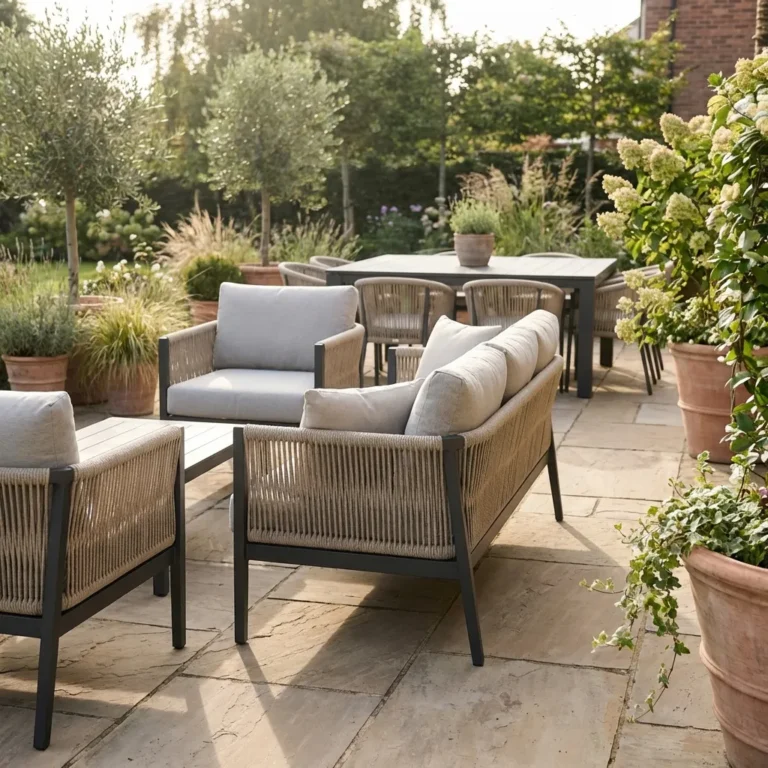
To see how this connects to outdoor design choices, explore Garden Furniture Showroom Ideas for Outdoor Dining Spaces, which shows how material and proportion choices translate across environments.
💡 Use tables and storage to shape flow, not just fill gaps
A common mistake in modern homes is leaving tables and storage until late in the process. Coffee tables, console tables, sideboards and TV units can do some of the hardest work in a room. They guide movement, hold everyday items and help the space feel complete. They do more than fill empty areas.
Console tables UK homeowners place in hallways or behind sofas are especially useful. In a narrow entrance, a slim console gives keys, post and lighting a clear home without taking over the space. In an open-plan room, a console behind the sofa helps mark out the seating area. It’s a small change with a big effect. Choose a design with soft edges and a finish that connects with the rest of the home.
Sideboards UK buyers use in dining areas now do far more than provide simple storage. They also work as design features in their own right, with ribbed fronts, dark oak tones, stone tops and mixed materials giving them a more refined look. They support day-to-day living too. A sideboard can hold table linen, glasses, games, paperwork and children’s art supplies, while keeping sightlines clear and the room easier to use.
Before you buy, think in layers:
⚙️ A simple framework for choosing tables and storage with coordinated style
- Function first: Decide what the piece needs to store or support, then choose with that in mind.
- Position next: Consider whether it sits against a wall, stands in the room or links two zones.
- Material match: Check whether it repeats wood, metal, fabric or stone already used in the home.
- Visual weight: Notice whether it feels too heavy for the room size. If it’s too bulky, it shows.
- Surface styling: Make sure it can hold a lamp, mirror, vase or tray without seeming crowded.
A cohesive look matters here too. If your coffee tables UK choice, console table and sideboard share a similar tone and shape language, the room feels intentional, thoughtful and pulled together rather than pieced together.




10 Comments