Floating wooden bedside shelf with drawer prices and sizes
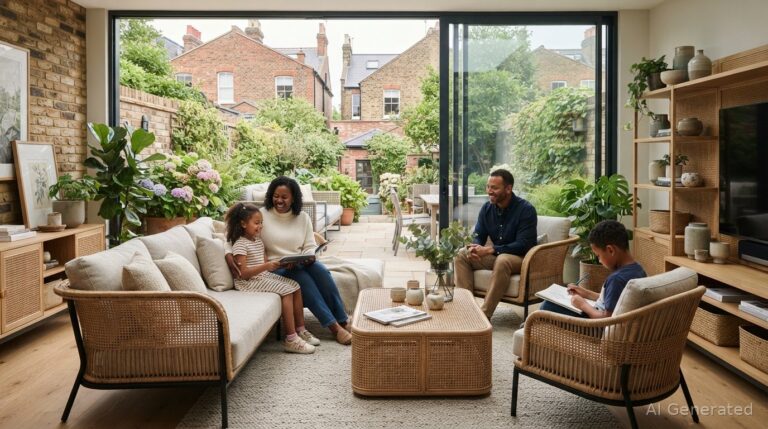
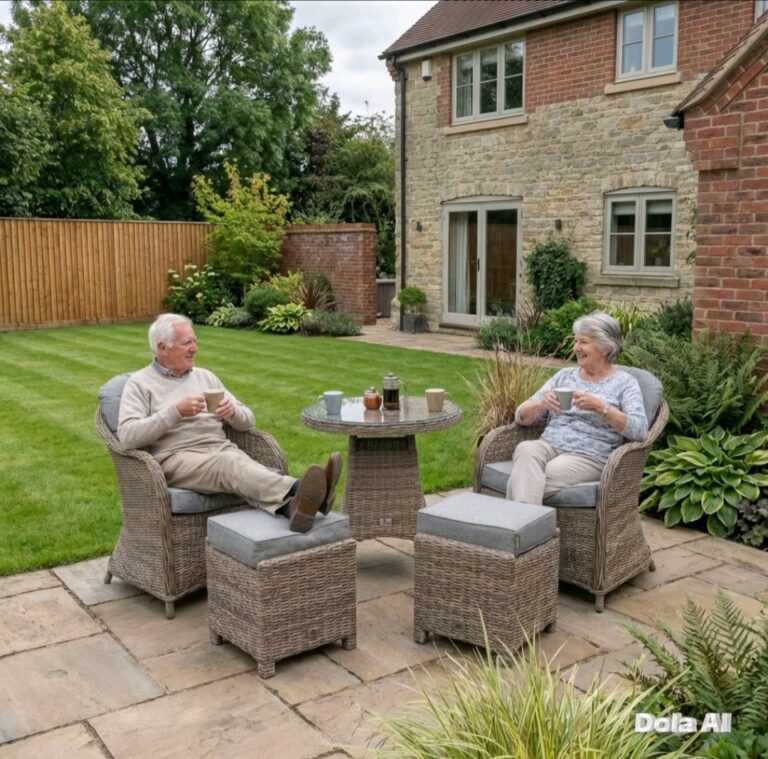
A well-chosen garden furniture arrangement can make an outdoor space feel more inviting, practical and considered. The right pieces shape how you relax, dine and enjoy time outside.
Before choosing furniture, think about how you use your garden, patio or terrace. A dining area needs a different layout from a quiet reading spot, and the available space affects which pieces will feel comfortable.
Plan your outdoor setting around the space and your everyday routines. Consider the layout, materials and style together to create a garden that feels cohesive and works well for you.
Key Takeaways
- Plan your garden layout around how you want to relax, dine and move through the space.
- Choose furniture that suits the available room, whether you’re arranging a spacious garden or compact patio.
- Compare frame, weave and surface materials with the weather exposure and upkeep you expect.
- Consider comfort alongside appearance, including seating style and the feel of outdoor fabrics.
- Use coordinated furniture and accessories to create a more cohesive outdoor setting.
Drawer and open-shelf storage
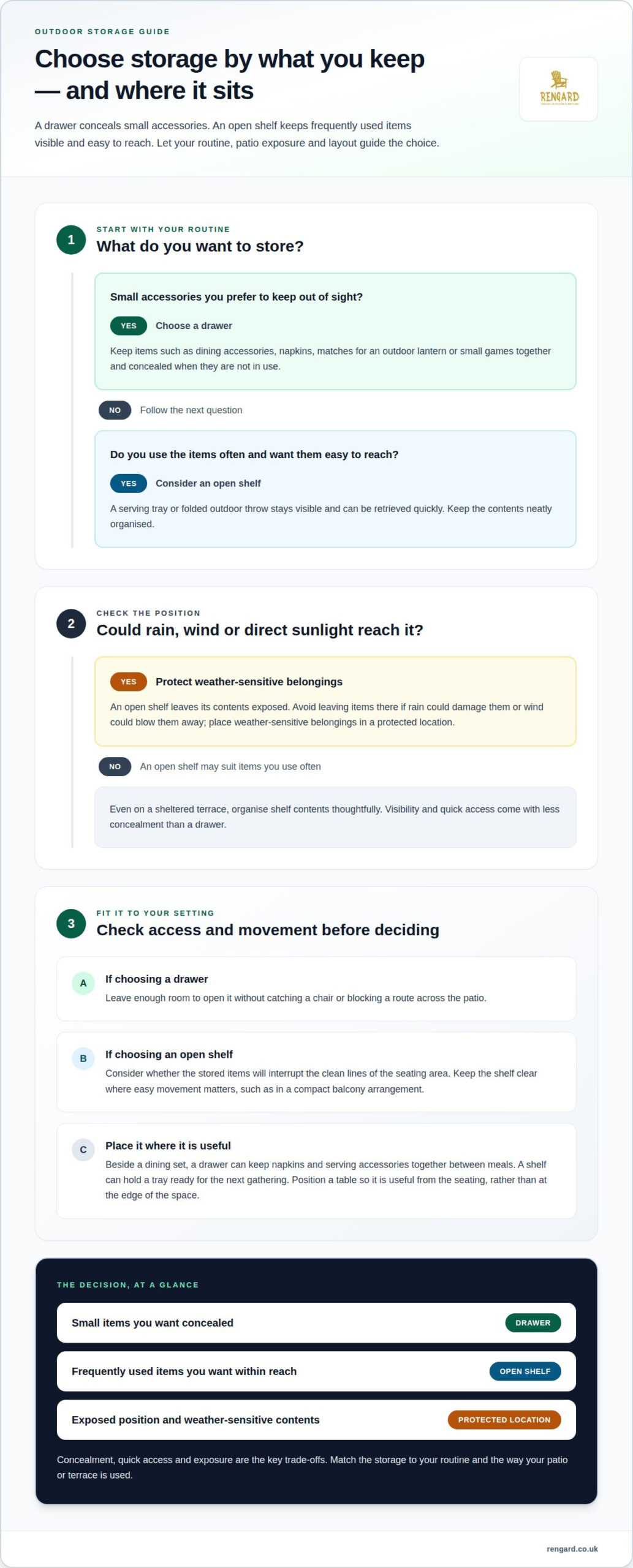
Outdoor furniture storage should suit your routine and the conditions on your patio or terrace. A drawer conceals small accessories, while an open shelf keeps frequently used items within easy reach. Before choosing, consider where the furniture will sit and whether rain, wind or direct sunlight could reach its contents.
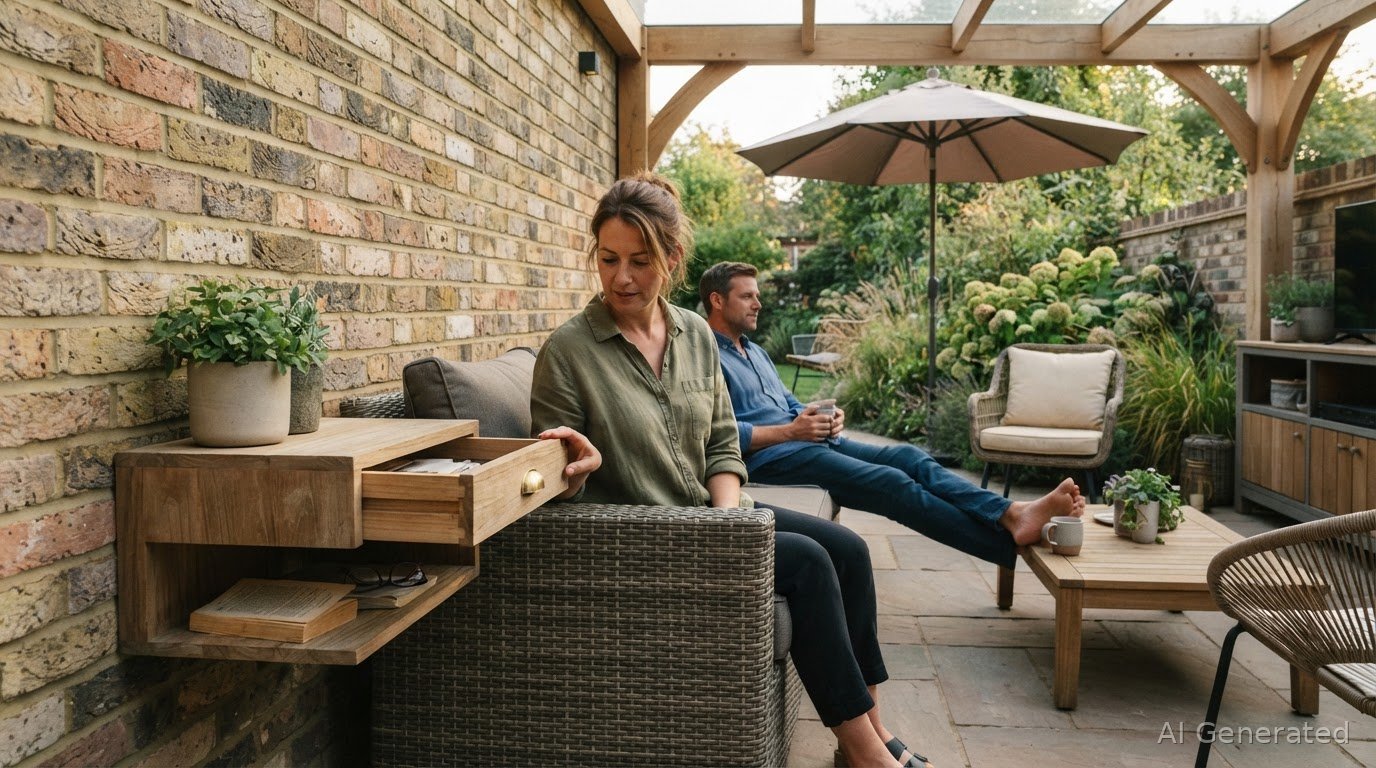
A drawer can keep dining accessories, matches for an outdoor lantern or small games together when they’re not in use. It also makes a seating area look tidier. Consider what you would store and how often you need it: items used at every meal may be more convenient on an accessible surface than inside a drawer.
An open shelf suits larger or frequently used items, such as a serving tray or folded outdoor throw. Its contents are easy to see and retrieve, but remain exposed. On an uncovered patio, avoid leaving items there if rain could damage them or wind could blow them away. A sheltered terrace offers different conditions, but the shelf still benefits from thoughtful organisation.
- Choose a drawer: for smaller accessories you prefer to keep out of sight.
- Choose an open shelf: for items you use often and can store neatly.
- Consider exposure: place weather-sensitive belongings in a protected location when furniture sits outdoors.
Beside a garden dining set, for example, a drawer could keep napkins and serving accessories together between meals. An open shelf might hold a tray ready for the next gathering. In a compact balcony arrangement, keep the shelf clear for easy movement rather than using it as a permanent dumping place for loose items.
Storage also affects how furniture fits into the wider layout. Leave enough room to open a drawer without catching a chair or blocking a route across the patio. With open shelving, consider whether stored items will interrupt the clean lines of a seating area. A table beside a sofa may be more useful than one at the edge of the space.
Match storage to how you use your outdoor setting. A drawer prioritises concealment and organisation; an open shelf prioritises visibility and quick access. Either can work well when you consider the furniture’s position, the items stored and their exposure to the elements together.
Compact garden tables and outdoor storage
Compact garden furniture can make the most of patios and balconies without taking up valuable floor space. The right choice depends on your layout, how you use the space and the materials’ suitability for outdoor conditions.
Compact garden table options
Small garden tables offer a handy surface for drinks, books or a meal, while outdoor storage units keep essentials neatly tucked away. Listings span 200+ garden table products, with options ranging from compact side tables to larger designs. Compare the storage arrangement, dimensions and finish, then consider how each piece will sit in your outdoor space.
An open side table offers a simple surface for a drink or book, but leaves belongings visible. A storage unit can create a more streamlined patio by keeping everyday items out of sight. A compact balcony, for example, may benefit from a small table that leaves room to move, while a wider terrace might suit a broader design with more surface space.
Before choosing, map the table’s position in relation to seating, doors and walkways. Consider whether it can be reached comfortably from your garden chairs or sofa. A pair of matching tables can create balance either side of a garden sofa, while a single compact design may suit a narrower layout. For help considering garden table options, get in touch.
Weight support
There isn’t one support figure that applies to every compact garden table. The safe load depends on the table’s construction and design. A capacity figure is useful only when it applies to the exact product.
Consider what the table will hold. A drink and book place a different demand on it than a heavier collection of items. Keep the intended load in mind when comparing designs, and don’t treat a table’s appearance or size as proof of its capacity.
Materials and construction influence how a garden table performs outdoors. Check the product information to understand its suitability for outdoor use, and follow any care guidance to help maintain its finish.
Position matters too: items placed towards the edge can affect stability differently from those kept near the centre. Keep the table within its stated capacity and place it on a level surface. If the product information doesn’t provide a capacity, don’t estimate a safe load from the table’s dimensions alone. The construction and stable positioning are key.
Prices and sale prices
The price of a garden furniture set depends on the details you compare. A sofa set differs from a dining set in its layout and construction. Frame material, fabric, dimensions and design details also affect the comparison. Start by choosing the arrangement you need, then compare pieces with similar materials and proportions.
A sale label alone doesn’t show whether two garden furniture sets offer equivalent value. Compare the final price with the features that matter in your outdoor space. A dining set, for example, may suit someone who prioritises outdoor meals, while a garden sofa set may better suit a relaxed seating area. A saving matters less if the layout doesn’t meet your needs.
Material is another useful point of comparison. Aluminium, rattan and teak have different appearances and finishes, so consider how each will work with your garden or patio. A simple finish may create a quieter look beside existing planting, while a distinctive design can become a focal point. Compare like with like rather than treating every garden furniture set as interchangeable.
Before comparing sale offers, check exactly what the displayed price refers to. Note the product, finish and configuration, then make sure those details match across your options. A price for a garden chair, for example, isn’t directly comparable with one for a sofa set. Keep a short list of the features included in each option, such as frame material and seating layout.
- Match the design: compare sets with similar seating arrangements.
- Compare materials: distinguish aluminium, rattan and teak finishes.
- Assess the layout: weigh dining space against a relaxed seating area.
- Review the finish: consider whether a simple or distinctive design suits your outdoor space.
Sale pricing can change, so treat a displayed offer as a snapshot rather than a lasting reference. Before deciding, return to the exact garden furniture set you’re considering and review its current price alongside its product details. This keeps your comparison focused on the chosen item, not a similar-looking alternative.
Set your priorities before weighing the price. If you mainly need space for outdoor meals, a dining set may be right. If you want a place to relax, a sofa set may matter more than decorative detailing. Ranking your needs makes it easier to see which sale offer represents value for your outdoor space and which features you can do without.
Product widths and dimensions
A listed size is a useful starting point when checking whether an outdoor side table will fit. Compare its width, depth and height with your garden sofa or chairs and the available patio space.
Product widths
Width describes how much space an outdoor side table occupies from side to side. The solid oak example measures 50 cm wide. Compare that figure with the clear area beside your seating, allowing room for nearby furniture or access routes. A width that fits the patio should also leave the surface practical to use.
Measure the intended position before comparing product widths. Mark the proposed edges with removable tape, then view the outline beside your garden sofa or chairs. This makes it easier to judge whether a 50 cm-wide table will feel balanced or crowd a narrow gap. Consider the full silhouette too: a broad table can appear more substantial than a slim design, even at similar widths.
For a pair of outdoor side tables, assess the available space on both sides of the seating. For a single table, consider where it will be most useful and whether its width suits that position. A 50 cm width provides a reference, not a universal fit. The surrounding furniture and the seating’s proportions should guide the final choice.
Product dimensions
The solid oak example measures 50 cm wide, 30 cm deep and 27 cm high. Read these measurements in that order: width across the front, depth from front to back, then height. Comparing all three helps you understand the table’s footprint, rather than relying on width alone.
Depth affects how far the table projects from its position. Use the 30 cm depth as a guide when considering nearby walkways, a door or the space beside a sofa. A shallow-looking table can still extend into a tight route, so mark its front edge before deciding where it belongs.
Height matters in relation to the seating and items placed on top. The example’s 27 cm height provides a concrete point of comparison; consider how its top would align with your garden sofa or chairs. A drink, book or phone also needs a usable surface, so picture those items within the available area.
Before choosing, note the product’s width, depth and height, then compare each measurement with the intended position. A table may fit the patio by width but project too far beside the seating, for example. Checking all three dimensions together gives a clearer picture of fit and proportion.
Materials and styles
Oak, mango wood and ash each offer a distinct starting point for a bedside finish. The best choice depends on the room’s palette, your existing furniture and whether you want a natural or coloured look.
Wood types
Compare the grain and tone of each wood against your bedroom’s existing finishes. Solid oak offers a natural wood option, while mango wood appears in wall-mounted bedside designs. Ash is another choice: according to the UK Government, it can be stained to almost any colour, making it suitable for a coloured finish.
Try a simple matching exercise before deciding. Place a sample or similar-toned object beside the bed, then compare it with the headboard, flooring and larger furniture. Warm-toned timber can echo a wooden bed frame, for example, while a contrasting shade can make the bedside piece stand apart. Focus on the overall balance rather than matching every surface exactly.
Wood names alone don’t determine the final appearance. A stain or surface treatment can change how the grain and colour look in the room. Compare the specific finish shown for each piece, especially when pairing oak or mango wood with existing furniture. A bedside shelf is a small surface, but its tone can still influence the room’s visual rhythm.
Finishes and styles
The finish shapes the character of a piece, from a restrained natural look to a decorative accent. For a calm scheme, choose a finish close to the tone of the bed or floor. To introduce contrast, select a different colour or distinctive detail, then repeat that tone elsewhere, perhaps in a lamp base or framed artwork.
Silhouette and detailing also shape the style. A rounded edge can soften a room with strong straight lines, while a brass inlay adds a refined decorative note. Open-shelf designs keep the form visually light; a drawer-front design gives the bedside area a more composed look. Match the detail to the room rather than adding competing finishes.
- Natural look: coordinate the wood tone with the bed frame or floor.
- Coloured finish: consider stained ash for a broader colour choice.
- Decorative accent: use details such as brass inlay sparingly.
For a cohesive result, keep the bedside area to a clear combination: one wood tone, one finish and one accent. For example, pair a natural wood surface with a muted lamp and a single metallic detail. This lets the material stand out without making the arrangement feel busy.
Discuss your bedside finish choice if you’d like help finding a look that suits your room.
Rengard: Garden Furniture
Rengard offers garden furniture for readers weighing comfort, dimensions and materials. Once you’ve clarified the space and style that suit your garden, explore the outdoor furniture options. Consider how a piece will work on your patio and complement the surrounding garden; a considered choice can bring function and visual balance to the space.
For a wider outdoor living scheme, garden chairs can help complete a seating area, while outdoor tables serve dining and entertaining needs. Keep your requirements distinct, especially if a compact design or particular seating arrangement is central to your decision.
For help with your selection, contact Rengard.
Make your garden furniture part of the space
Let an outdoor table shape a considered corner rather than treating it as an isolated purchase. A compact wooden garden side table can be the starting point for a calm, coordinated patio: choose garden chairs and nearby accessories that complement its finish without competing for attention.
Rengard offers garden furniture alongside garden chairs and outdoor tables, giving you options to carry a consistent design approach across your outdoor space. Consider the atmosphere you want on your patio, then decide which details will help create it, from the warmth of the wood to the objects displayed on the surface.
If you’re ready to discuss the right direction for your outdoor space, share your garden furniture plans with Rengard. A thoughtful choice can make the space feel more personal, practical and beautifully resolved.
Frequently Asked Questions
How much does a garden furniture set cost in the UK?
UK prices vary according to materials, finish, dimensions and seating layout. Compare sets with similar materials and configurations rather than judging value by a sale label alone. A different frame or cushion design can make two similar-looking sets difficult to compare directly. Review the current price alongside the exact product details to decide which option suits your garden and budget.
What dimensions should garden furniture have for a patio?
Choose dimensions that fit the available space and leave room to move around the furniture. Check the width against the area you plan to use, then consider whether the depth will obstruct access. Allow enough space to pull out dining chairs or reach a garden sofa comfortably. Also consider how the layout will work when the furniture is in use.
How do you protect garden furniture from British weather?
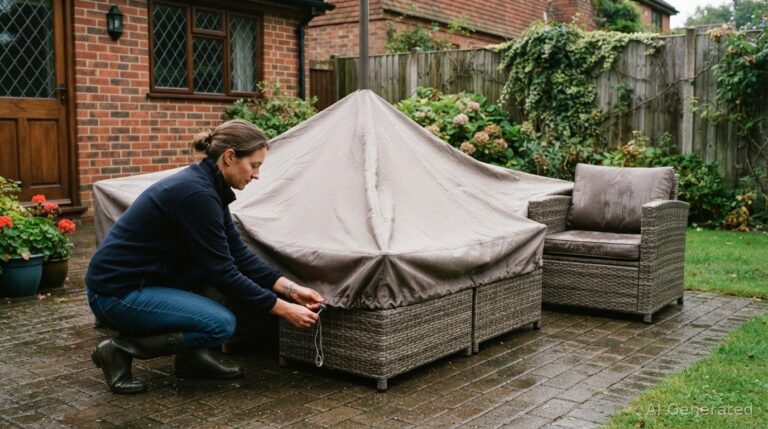
Follow the care instructions for the specific furniture and check that its materials are suited to outdoor use. Where possible, position it on a stable, level surface and avoid leaving cushions exposed to rain. Store removable cushions in a dry place when they are not in use. Clean and maintain the frame and surfaces as directed by the manufacturer.
What should you check before buying weather-resistant garden furniture?
Included cushions and accessories depend on the particular set and its design. Check the product details to see what is supplied and whether separate covers or cushions are available. Read the care instructions before buying, and consider how the materials will suit your garden and local weather. Don’t assume every frame or fabric has the same level of weather resistance.
What should you check before buying a garden sofa set?
Check the set’s dimensions, seating layout, materials, finish and care instructions together. Measure the patio or terrace and consider how people will move around the furniture. Think about how many people you intend to seat, then make sure the configuration suits those needs. Finally, review the stated weight capacity and care guidance to ensure the set suits its intended everyday use.
Which UK retailers sell garden furniture?
Rengard lists garden furniture, including outdoor seating and tables.
How do garden sofa sets compare with dining sets?
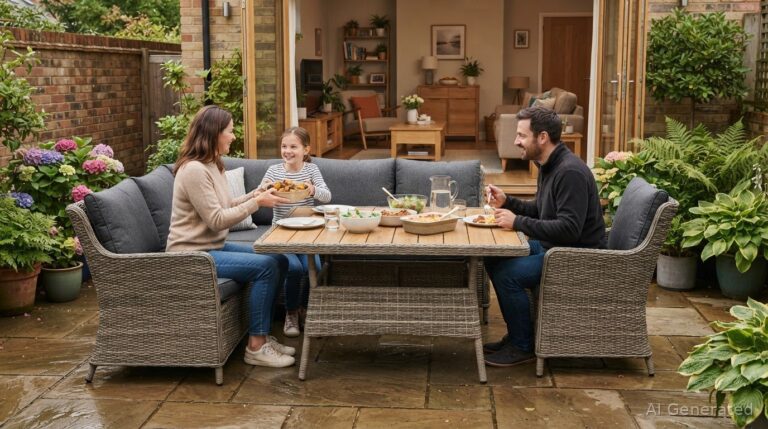
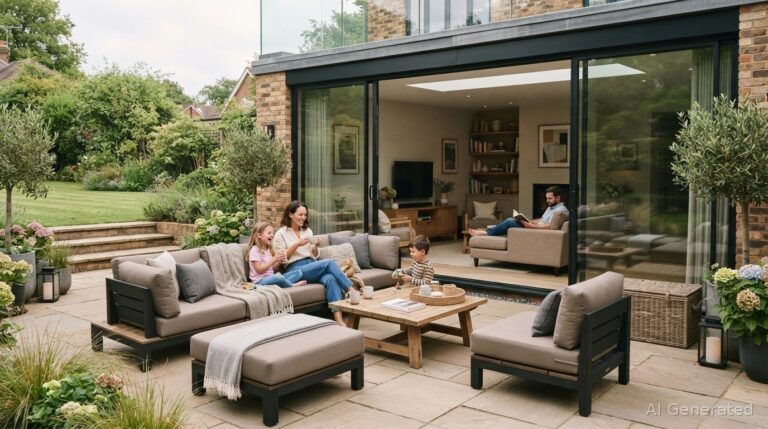
A garden sofa set provides a relaxed seating area, while a dining set is designed for eating outdoors. The right choice depends on the available space and how you plan to use it. This article doesn’t provide a specific comparison between individual sets.
How do you clean and maintain wooden garden furniture?
Reapply the oil finish approximately 1-2 times a year, following the manufacturer’s guidance. Keep wooden furniture in the recommended conditions of 40-60% humidity and a temperature of 14 to 26 °C.