Neutral Home Accessories UK for Modern Homes
Making a home feel calm sounds easy enough, until you actually start buying things. One vase feels too stark, one cushion looks a bit too beige, one tray seems on trend for about five minutes, and suddenly the room feels less pulled together than it did at the start. It’s frustrating, and it happens a lot. That’s why neutral home accessories in the UK are still such a useful part of decorating. They bring softness, balance, and flexibility to modern homes without making everything feel flat or stripped of character.
What’s changed is the kind of neutral people are after. British interiors have been moving away from cool grey minimalism and leaning more toward warmer, more tactile layers. In 2025, UK household consumption of furniture and furnishings reached £22.773 billion, which shows how important this category still is in the wider home market (ONS). That does feel like a meaningful sign. Houzz also reported that 60% of UK renovating homeowners planned to decorate in 2025, while 57% planned to decorate or furnish in fieldwork carried out from March to June 2026 (Houzz) (Houzz).
For homeowners across Shropshire, Staffordshire, Cheshire, Manchester, North Wales, and Birmingham, that matters because accessories are often the quickest way to make a room feel more considered. Even small updates can make a noticeable difference, especially when a full renovation isn’t part of the plan. This guide goes into how to choose neutral home decor in the UK in more detail, including colours that work well, materials that feel luxurious, room-by-room styling ideas, common mistakes, and ways to build soft modern accessory schemes that still feel personal.
Why neutral home accessories UK buyers choose still work in modern British homes
Neutral styling has stuck around because it solves practical decorating problems. In open-plan homes, it can make different areas feel more joined up, help mixed materials sit better together, and leave you more room to update things later without replacing the sofa, repainting, or changing the flooring. That still counts for a lot in the UK, where many homes mix architectural periods, have smaller rooms, and get daylight that shifts a lot through the day, especially in winter.
That demand still shows up in the market. A 2025 survey reported by Estate Agent Today found that 28% of UK buyers ranked neutral décor among the top factors influencing an offer, which suggests it still has wide appeal, even if buyers are rarely focused on one thing alone (Estate Agent Today). KPMG’s Q1 2025 consumer spending report also found that 16% of UK consumers planned minor home improvements and 9% planned major home improvements. That seems like a useful sign. It often suggests that lower-commitment decorative updates appeal, especially when cushions, lighting, or rugs can be swapped without reworking the whole room (KPMG).
That said, neutral no longer needs to mean plain. The strongest version of contemporary home styling in the UK tends to feel warmer, softer, and more layered than the old cool-grey look. It’s more welcoming and arguably easier to live with day to day.
Grey is starting to slowly fade and we’re starting to see lots of colour, more maximalist and very deep colours. I’m seeing super neutral palettes go away.
Don’t abandon neutrals. Be more deliberate with them. Go for stone rather than icy grey, oatmeal rather than bright white, and textured accessories instead of flat decorative fillers. It’s a small shift, but it usually makes a room feel more thoughtfully put together.
The new neutral palette for neutral home accessories UK homes: warmer, softer and more useful
If you want modern home accessories in the UK to feel up to date without tipping into anything too faddy, start with the palette. Right now, the best neutral interior accessories usually sit on warmer undertones: chalk, oat, mushroom, greige, sand, putty, clay, camel, taupe and chestnut. They still feel calm, which is probably part of the appeal, but they’ve got more depth than cooler minimalist palettes.
Colour consultant Simon Hutchinson notes that warmer stones, creams, ochres and browns still shape interiors. That points to a more worked-through version of neutral, rather than a complete move away from it (House & Garden). When you’re choosing decorative accessories in the UK, that can make a real difference, because tone-on-tone layering tends to work best when the undertones line up, even if the contrast seems slight at first.
A simple framework helps:
Start with your room’s fixed neutrals
Start with the flooring, paint, sofa upholstery, worktops, and large rugs; those fixed elements are the ones to look at first. Do they read warm, cool, or a mix of both? A stone vase may look great online and still feel off in the room, often beside a pink-beige wall or next to an oak sideboard with honey tones.
Build around three neutral depths
One easy way to handle this is to pick a light neutral, a medium neutral, and one grounding shade. For example:
- light: ivory, chalk, soft cream, or pale beige
- mid: oatmeal, mushroom, or sand
- grounding: walnut, chestnut, cocoa, or blackened bronze
Add one material contrast for neutral home accessories UK schemes
When a room uses only one material, it can end up feeling a little flat. Try mixing matte ceramics with glass, or linen with metal; those pairings often work well. It’s a small shift, but it adds depth. If the aim is to coordinate tactile layers, this guide to soft modern seating trends is a helpful companion, since the texture of the upholstery often points the rest of the scheme in the right direction. You can also pair those ideas with this decorative cushions styling guide UK for Modern Homes when you want softer layers that still feel cohesive.
Texture is what makes neutral home accessories UK spaces feel expensive
With colour kept fairly restrained, texture tends to do the heavy lifting. That’s really what sits behind luxury home accessories in the UK. Rooms that feel expensive don’t usually rely on loud ornament or much fuss. Instead, they build subtle variation through ribbed ceramic, washed linen, boucle, hand-finished wood, brushed metal, smoked glass, and soft woven fibres.
That also helps explain why soft modern accessories in the UK can feel more inviting than stark minimalist pieces. They still feel considered, just not cold. Chloe Barrow has also pointed to darker neutrals such as mahogany and chestnut as a useful way to bring depth and elegance into contemporary spaces (Ideal Home). In most cases, this works especially well when a room already has a pale backdrop and needs more visual grounding, which usually becomes obvious quite quickly.
A practical way to style texture is to layer it vertically through the room:
Low level
A woven basket, a ceramic floor vase, a textured stool, or something similar usually does the job. Near smooth flooring, it gives the area a visual base and breaks up that stretch a bit.
Mid level
On a console, coffee table, or sideboard, it usually helps to add a tray, a stack of books, candle holders, or a sculptural object. If you want more specific ideas for styling surfaces, these coffee table decor ideas for modern homes goes into composition in more detail.
Eye level
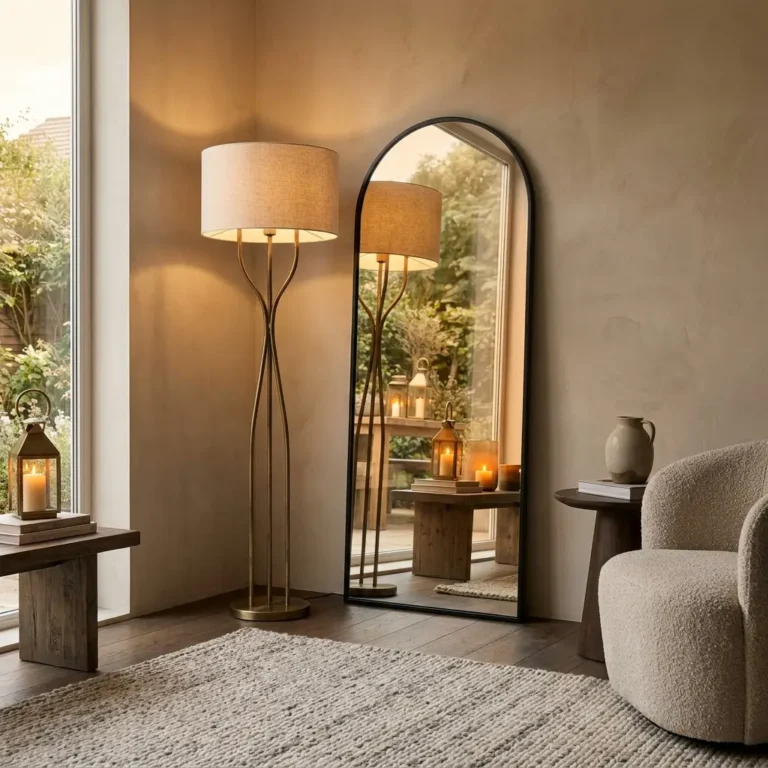
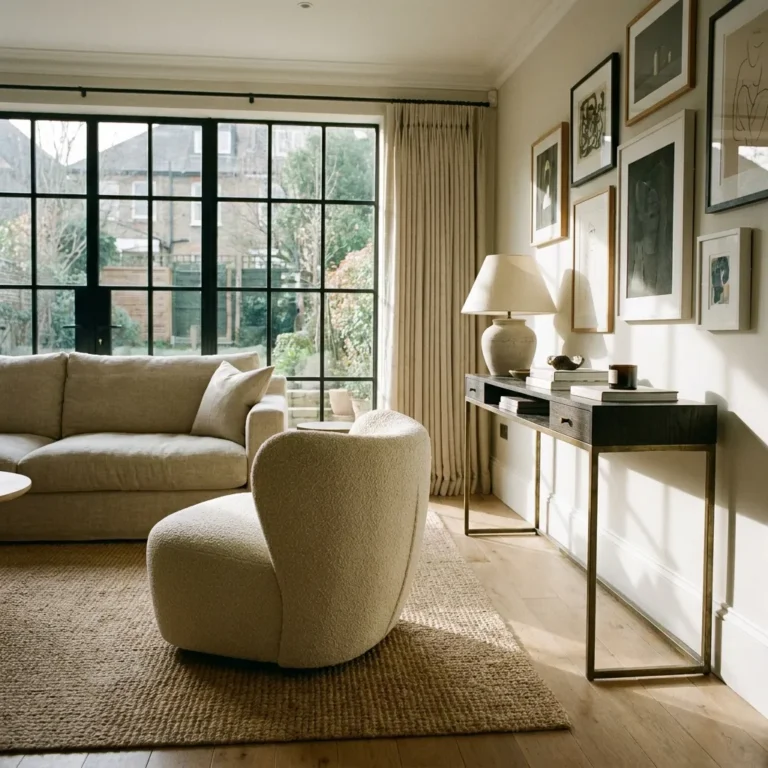
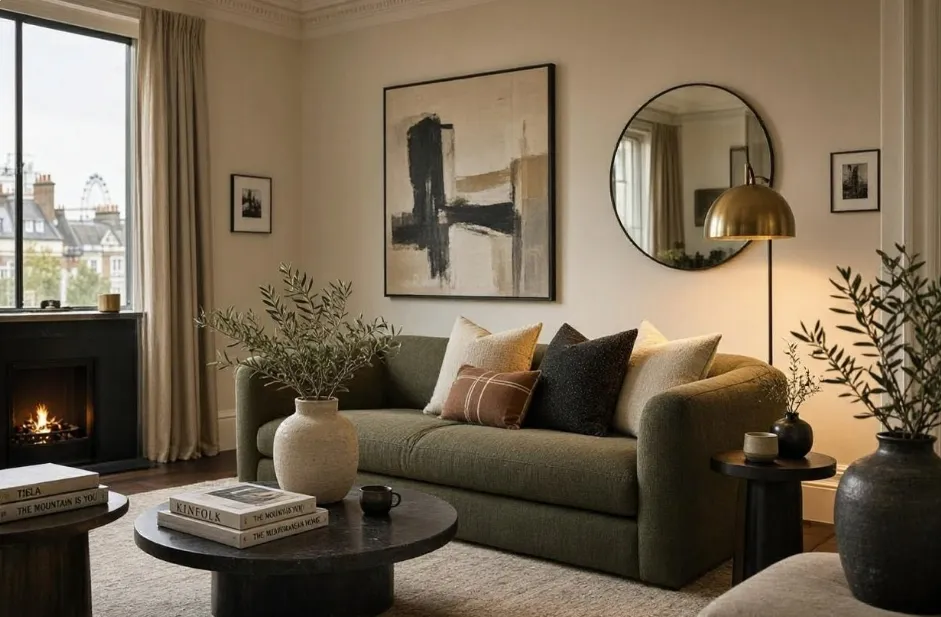
A framed piece with a linen mount, a mirror in a thin bronze or wood frame, or a branch arrangement all work well. They tend to soften hard lines, especially on a wall or around a mantel. For more wall-focused inspiration, Mirror Styling Ideas UK for Elegant Rooms explores ways to keep reflective pieces feeling warm rather than overly formal.
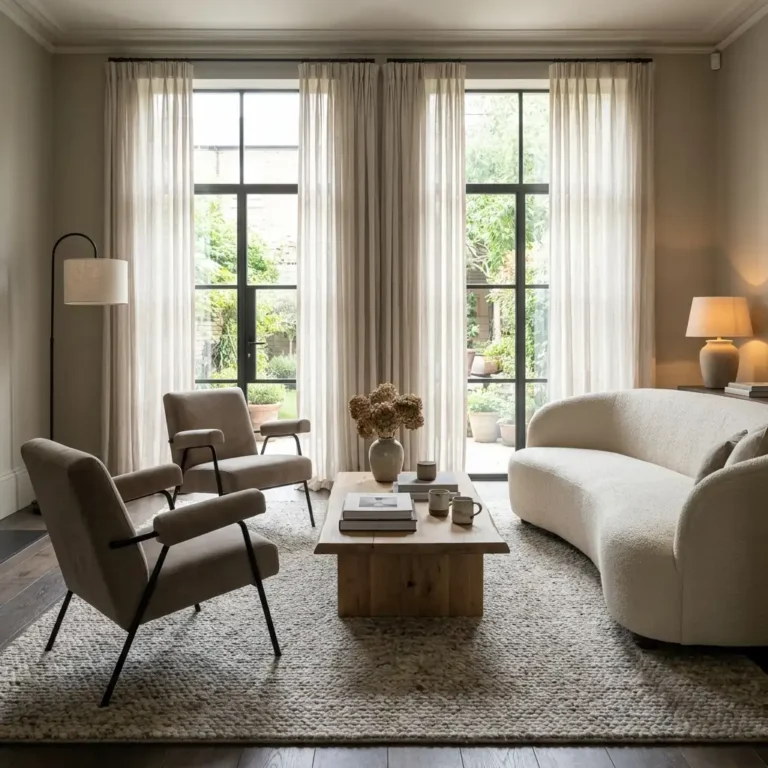
You can usually see the difference right away. A room with cream walls, a beige sofa, and a single plain vase often looks unfinished. Add a stone bowl, a smoked glass lamp, a textured throw, and an aged brass tray, and that same room starts to feel more deliberate and probably more balanced. That’s the change here: going from neutral to layered neutral.
Which neutral home accessories UK interiors benefit from most room by room
When you’re working with neutral home decor in the UK, it’s usually better to aim for impact instead of simply adding more. In most rooms, you don’t need extra objects, just a better balance of shapes, varied heights, and finishes, which tends to give a stronger result.
Living room
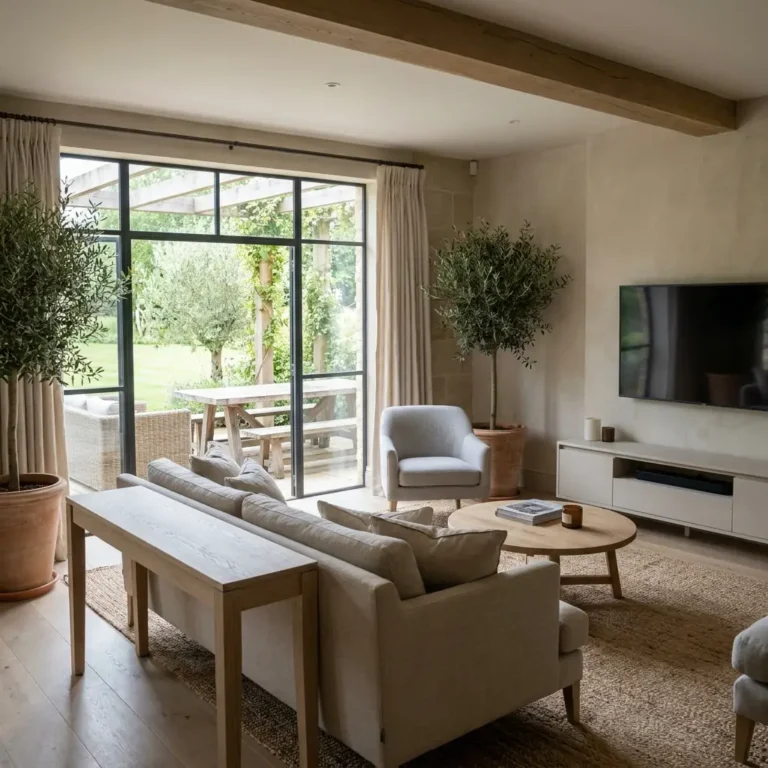
When a living room has a lot of upholstery, a few sculptural pieces can help break it up: ceramic vases, low bowls, trays, candles, lanterns, and natural-fibre baskets. They’re simple, but they often work really well. If the sofa feels big and takes over visually, try curved accessories. They can soften the furniture lines and make the room feel more relaxed. One oversized vase often works better than several small ornaments scattered around, because it usually gives the room a calmer look. Modern Living Room Furniture UK: Complete Buying Guide also goes into how larger furniture pieces can support softer accessory schemes.
Dining area
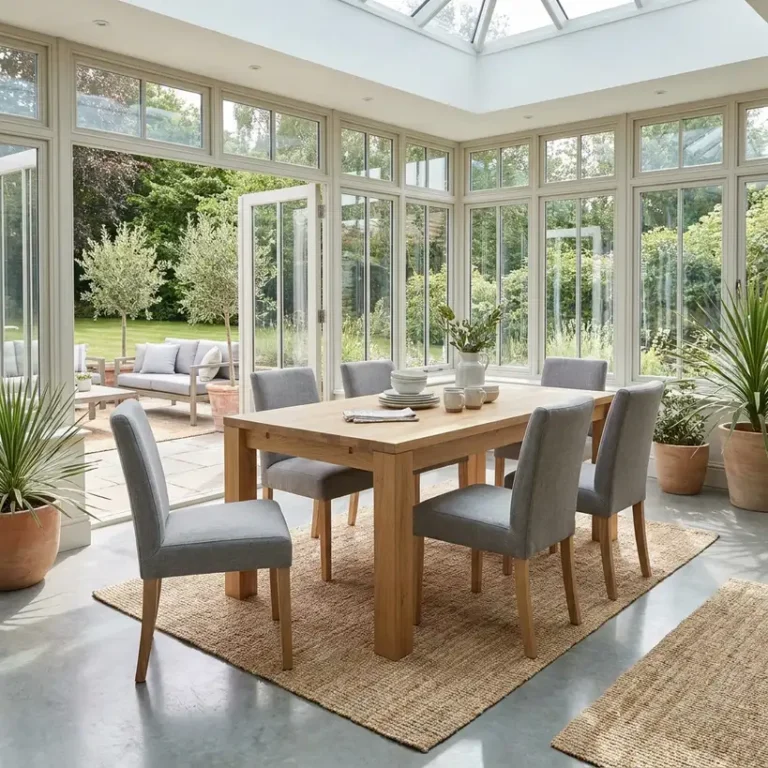
In the dining area, put the focus on the centre of the table and the space behind it. Try a linen runner with stone-effect candle holders and a wood or marble bowl; it looks polished without seeming too formal, which often works well. Keep things simple and balanced. If the furniture already has a strong material presence, quieter, softer accessories in similar tones are usually enough.
Hallway
This is one of those spots where contemporary home styling in the UK tends to look better when it’s kept restrained. By the door, a bowl for keys, a table lamp on a console, a mirror, and one natural touch like branches or dried stems are usually all you need. It’s simple, it works, and it feels genuinely welcoming. Hallways are transitional spaces, so accessories should feel inviting, not cluttered, and that usually means keeping the look simple.
Bedroom
In bedrooms, neutral accessories tend to work best when they feel a bit softer: pleated lampshades, textured bedside ceramics, warm-toned glass, plus small trays and tactile textiles. It’s often those smaller details that set the tone. Claudia Kampmann says interiors feel more flexible now, with calming neutrals often sitting alongside earthy tones and pattern (Ideal Home). That works especially well in bedrooms, where the room should still feel restful, even with some personality, without starting to feel busy. If you’re refining a calmer sleep space, Modern Bedside Tables for Minimalist UK Bedrooms offers ideas that pair naturally with softer neutral styling.
Bathroom
Keep it useful but still polished: choose ribbed soap dispensers, trays, lidded storage jars, and folded textiles in sand, putty, or stone tones. In this space, simple and calming usually works best, giving it a spa-like feel without looking fussy.
How to create a soft-modern look with neutral home accessories UK homeowners actually use
A lot of people in the UK hold back from minimalist home accessories because they worry the room will feel safe but a bit forgettable, and that’s fair. It’s not about adding more colour to the walls, shelves, and sofa. More often, it comes down to building in extra variation within the neutral scheme.
In a soft-modern room, you’ll often see several things working together:
Gentle shapes
You’ll see rounded edges, curved shapes, and softer corners, sometimes in small details. As a result, modern spaces tend to feel more comfortable, less harsh and a bit more inviting.
A restrained palette
Keep the tones in the same family, and change up the finish, it usually helps. For example, matte cream beside glossy ivory often looks richer than using the same flat tone again.
Natural-looking materials
Wood grain, linen slub, ceramic speckle, and stone veining all add texture. That reads as natural detail.
Negative space
You don’t need to style every surface, and leaving some open space often helps your chosen pieces stand out. Most of the time, it just looks better.
One element of contrast
This could be dark wood, black metal, antique brass, or a softer accent such as olive or dusty terracotta, which tends to sit well in the space.
Search interest points to a wider split in the market, with some people leaning towards calmer schemes and others towards bolder colour. Houzz reported that UK searches for ‘pink’ were 2.5 times higher from January to March 2025 than they were in the same period in 2024. Searches for ‘pink bathroom’ also rose 114% year over year (Houzz). That’s a pretty clear shift. Even so, neutral accessories still make sense. In fact, it strengthens the case, because warm neutral foundations usually make it easier to bring in changing accent colours without having to redo the whole room, which can be a hassle.
Choosing neutral home accessories UK shoppers feel are luxurious rather than over-styled
Luxury home accessories in the UK get misread quite a lot. A lot of people take luxury to mean shiny, ornate, or plainly expensive-looking. In modern British interiors, though, it’s usually more understated: better materials, cleaner lines, a bit more weight, and a finish that feels thought through, that’s often where the real difference shows.
A handy way to judge things when you’re shopping is this:
Check the material first
When you see them in person, the material itself usually matters more than decorative detail, and that comes through pretty clearly. Ceramic pieces should have some weight to them. Glass should be clear or deliberately smoked, not look thin or flimsy. With woven items, the texture should be even and the structure solid, so it’s easier to spot quality at a glance.
Look for visual weight
A tray, bowl, or vase should have some weight on a surface, and that’s usually easy to spot. If an accessory feels flimsy, though, it can make the whole setup look weaker. Visual balance.
Prioritise finish over novelty
A plain piece in travertine, brushed brass, dark wood, or textured linen will often feel more premium than something with a more elaborate shape and a poor finish. You notice it even more up close. Simple, but well finished.
Mix high and low thoughtfully
You don’t need every item to be the statement piece. In most rooms, one stronger element does the job better, with quieter pieces around it. For anyone decorating on a tighter budget, home accessories that look luxurious for less has more ideas on where visual impact usually matters most, often in areas like lighting, textiles, or a single focal accessory.
That’s also where retailers like RENGARD come in, especially for shoppers who want pieces that look premium without stepping into fully bespoke pricing, which can climb fast. It’s a sensible middle ground. Rather than buying everything at once, start with a few anchor accessories and let the room come together over time.
Regional and practical considerations for neutral home accessories UK homes
Modern British home decor doesn’t usually come in a one-size-fits-all formula. In a Manchester new build, a neutral accessory scheme will usually call for something different than it would in a period home in Cheshire or a family space in Shropshire, and you can often tell that the moment you see the room. What works in practice usually comes down to light, the building itself, and how people use the space day to day.
Across North Wales and the West Midlands, shifting daylight can leave cool neutrals looking flatter than expected. Warmer stone tones and beige-led accessories often stay softer through grey afternoons, and in many homes that does make a real difference. In compact terraces or semis, it’s often better to use fewer, larger pieces than lots of small ones, because the room feels less cluttered. In open-plan layouts, repeating the same materials across two or three zones can help pull the kitchen, dining area, and living space together.
There’s also a practical reason to choose accessories instead of taking on a major redesign. Houzz’s 2025 UK Houzz and Home reporting found that 51% of UK homeowners renovated their homes in 2024, with median renovation spend reaching £21,440 (KBBFocus). That makes accessories a lower-commitment way to change how a space looks, especially for homeowners who want a noticeable result without signing up for a full project, which is often the more realistic option.
This is where showroom-supported retailers can be especially useful. Seeing scale, finish, and tone in person can be the difference between buying with confidence and ending up with pieces that looked warmer online than they do at home, whether that’s comparing finishes in daylight or checking if a larger item will fit comfortably in the room.
Common mistakes that stop neutral home accessories UK styling from working
Neutral rooms usually fall flat for pretty obvious reasons, but most of those problems are easy enough to fix. In most cases, the changes are easy.
Using one flat colour everywhere
When everything in a room is the same beige, from the walls to the accessories, it can start to look dull and a little flat. A bit more depth, or even just a different finish, usually helps a lot.
Ignoring undertones
Pink-beige, yellow-beige, and grey-beige often clash, that’s usually the issue, so if possible, compare the pieces in daylight.
Styling every surface
A neutral scheme usually needs a bit of tweaking. Pile on too many accessories, though, and the room can feel busy rather than calm.
Choosing pieces that are too small
Small accessories can get lost, and you may not even notice. A bigger vase, bowl, or lamp usually stands out more than five tiny objects. Small details.
Forgetting contrast
Even the calmest scheme still needs a little tension. Dark wood on shelves or tables, aged metal in frames or fixtures, smoked glass, and details like that help stop a room from looking washed out, which happens pretty easily. With that contrast, the space usually has a clearer focal point, and the quieter elements feel more deliberate.
There’s another market signal here too. House Beautiful, citing Media Vision reporting in its 2025 Christmas trends coverage, said search demand for ‘neutral decor’ fell 33%, while searches for ‘multicoloured Christmas lights’ climbed 50% (House Beautiful). That doesn’t mean neutral styling is finished. It more likely means plain neutral styling is easier to overlook. Texture, contrast, and warmth help it stay relevant and, often, easier to notice.
Frequently Asked Questions
What are the best colours for neutral home accessories in UK homes?
Warm neutrals tend to be the easiest to use, stone, oatmeal, mushroom, sand, taupe, and soft beige. They go with oak and walnut, sit well with black accents, and fit most modern British paint palettes. They also come across as softer and gentler than cooler schemes with lots of grey.
How do I make neutral home decor feel interesting rather than boring?
Pay attention to texture, shape, and scale. Use ceramics, glass, wood, linen, and metal in similar tones, and go with rounded forms. To keep contrast in the room, add one or two darker grounding pieces.
Which neutral accessories make the biggest difference in a living room?
The pieces that usually work best are a statement vase, a tray, candle holders, a textured throw, a basket, and one or two sculptural decorative objects. Don’t overcomplicate the selection. If the room already has strong furniture, use fewer accessories so they support the overall look instead of competing with it.
Are minimalist home accessories suitable for family homes?
Yes, provided minimalist doesn’t end up meaning fragile or impractical. Go for fewer, sturdier pieces, and make sure they’re substantial enough to hold their own. Put easy-to-wipe, easy-to-move, easy-to-restyle surfaces and materials first.
Where can I find modern home accessories in the UK that suit a soft-modern interior?
Look for retailers that put material quality, warm neutral colours, and contemporary shapes ahead of trend-led novelty; that’s usually the clearest way to judge them. RENGARD is worth considering if you want modern British styling, a premium-but-accessible feel, and the added reassurance of showroom-supported shopping.
How can I test whether an accessory will work before buying several pieces?
Begin with one key piece in the room’s main neutral shade. Then bring in a second piece with a different texture. If they both sit well with your furniture, flooring, and wall colour in daylight, it’s easier to build out the scheme with more confidence. It’s also a practical way to shop, especially when you’re browsing curated collections from a modern furniture and decor retailer such as RENGARD.
Bringing calm, elegance and cohesion into the whole home with neutral home accessories UK buyers love
The best neutral home accessories in the UK aren’t just there to fill shelves or sit on a table. They make a room feel calmer, warmer, and more finished, which is usually the real aim. That’s why they still work in modern British homes, even when colour trends shift around them. A good neutral scheme isn’t really about playing it safe. It’s about setting up a flexible base, so texture, craftsmanship, and careful contrast can define the space more clearly. Most of the time, that gives you a calmer backdrop.
If there is one idea to take from this guide, it is to choose warmth over starkness and texture over clutter. Neutral rooms often work or fall flat on that balance. It also helps to choose a few better pieces instead of lots of forgettable ones. Start with the room’s existing undertones, repeat materials with purpose, and leave enough space for each accessory to stand out. Simple, but usually effective. Whether you’re styling a new-build living room in Birmingham, updating a townhouse in Manchester, or softening a family home in Shropshire, this approach often leads to a calmer result.
Modern home accessories in the UK usually work best when they fit the way people actually live: relaxed, layered, practical, and easy on the eye. Get that balance right and neutral decor feels less generic, with more of a timeless quality. It doesn’t rely on colour alone for impact; instead, it often feels settled, considered, and easier to live with day to day. That’s arguably why it lasts, and why its appeal stays quiet rather than shouting for attention.