
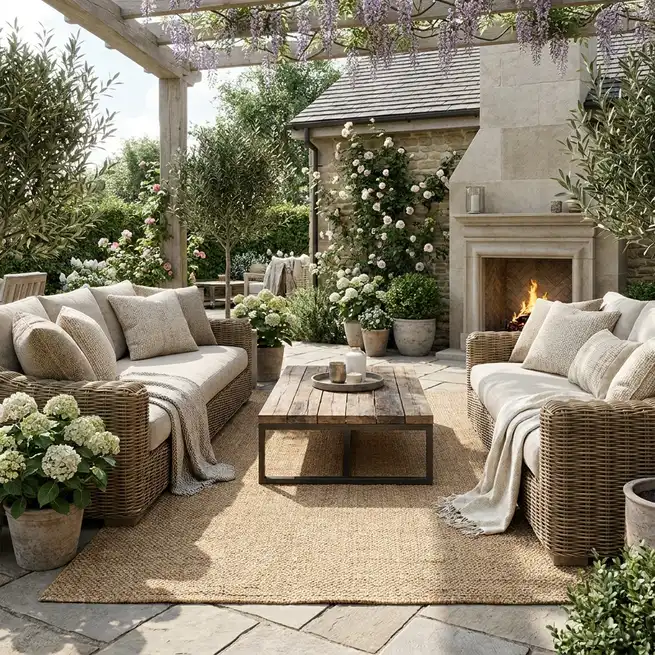
Creating Cozy Living Rooms with Stylish Furniture
A cozy living room is no longer just an indoor idea. Today, many homeowners want that same feeling of warmth, comfort, and easy style in patios, balconies, and garden areas too. Outdoor spaces are no longer seen as simple extra spots with only a few chairs, and that is probably for the best. They have become real living spaces where people can sit, relax, and spend time comfortably.
That shift is also why stylish furniture matters so much. It needs to look good, feel welcoming, and hold up in real weather. For homeowners who care about design, the goal is not only beauty or only function. In most cases, it needs to bring both together. A strong outdoor setup should feel soft and lived in, while still using durable frames, sturdy fabrics, smart layouts, and details that work well day after day. In that sense, this is often what makes a space feel truly usable instead of simply well arranged.
This guide examines how to create cozy living rooms with stylish furniture, with a close focus on outdoor spaces designed to feel more like indoor lounges. It explains how to choose the right seating, coffee tables, side tables, rugs, lighting, and accessories. It also covers small-space ideas, material choices, colour planning, and common mistakes to avoid. The approach is practical and useful, and often that is exactly what is needed. Along the way, it explains how trends, expert advice, and clear design steps can help shape a space that feels calm, polished, and comfortable.
If a patio, balcony, or garden should feel more like home, this article can help with more confident furniture choices. The result is a space that feels right for everyday living, whether that means morning coffee, quiet evenings, or time with others.
Why cozy outdoor living rooms are growing fast
Outdoor spaces now matter more in home design because people want practical, comfortable areas without needing to move, which says a lot. Recent market data backs up that change. Fortune Business Insights says the global outdoor furniture market is expected to reach USD 56.00 billion in 2025 and USD 58.91 billion in 2026, with a projected 5.74% annual growth rate through 2034 (Fortune Business Insights). That seems to show homeowners are spending more on better outdoor living, and it usually reflects a wider change in how these spaces are being used.
HBS Dealer also reports that some homeowners are putting up to 25% of their home improvement budgets into outdoor living spaces (HBS Dealer). So outdoor furniture is no longer seen as an afterthought. People are planning these areas with much the same care they give their living rooms, often because they want a comfortable place to sit, relax, and host people outside. In that context, the change is hard to ignore.
| Metric | Value | Why it matters |
|---|---|---|
| Global outdoor furniture market, 2025 | USD 56.00B | Shows strong worldwide demand for better outdoor living |
| Global outdoor furniture market, 2026 | USD 58.91B | Confirms continued growth in this category |
| Outdoor living share of some home budgets | Up to 25% | Proves homeowners see these spaces as a major priority |
That also helps explain why stylish furniture has become such an important buying factor, rather than just a nice extra. People want outdoor sectionals and armchairs, along with coffee tables and accessories, that feel as polished as indoor pieces in shape, materials, and finish. We covered this move toward indoor-inspired design here: Introducing RENGARD Home: Modern Indoor Furniture for Contemporary British Living, which gives useful context for how modern furniture choices often shape the home as a whole.
Start with the right layout and anchor pieces
A cozy room usually starts with the layout, even before decor is added. That applies indoors and outdoors too. The first step is deciding how the space will actually be used, because that often shapes the whole setup more than people expect. Is it meant for quiet reading, a family lounge, or relaxed drinks and conversation? Once that is clear, it becomes much easier to choose stylish furniture that supports the room’s main use.
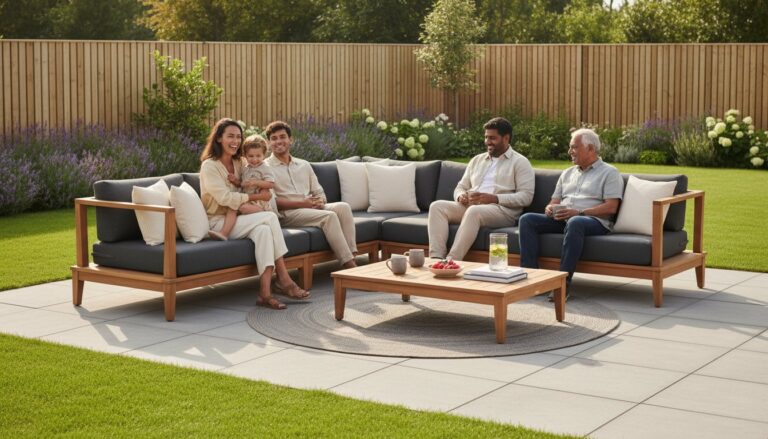
In most outdoor living rooms, seating is the main anchor piece. It usually sets the tone for everything else. On larger patios, a modular sofa set works well because it defines the gathering area in one clear section. Smaller terraces often work better with a compact sofa and two deep armchairs instead. On balconies, a slim loveseat or a simple bistro-style lounge setup with soft cushions is often the easiest option, especially when space is limited.
A table helps ground the arrangement and makes the setup feel more finished. A coffee table can make the area feel like a real room rather than just a place to sit. Side tables are useful too, since they hold drinks, books, lanterns, planters, and the smaller things that make the space feel lived in. If the layout is narrow or awkward, multifunctional pieces can help a lot. Storage benches, nesting tables, and lightweight stools are easy to move and can be used in different ways.
It also helps to leave enough room to walk through the area comfortably. Even stylish furniture can feel cramped when every inch is full. A good layout often adds comfort, and in this setting it can also make the whole space look calmer and, in many cases, a little more expensive.
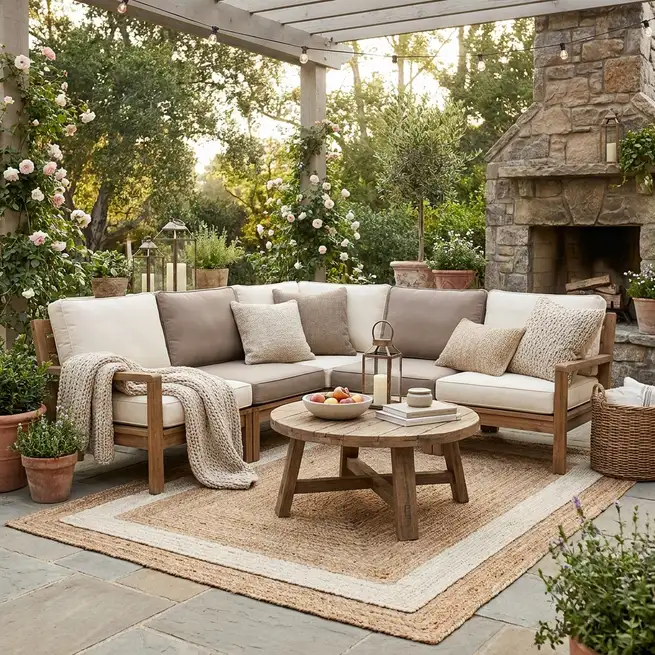
Choose materials that balance beauty and durability
Stylish outdoor furniture still needs to look good long after it arrives. It has to handle sun, rain, dust, and everyday use without losing its look, which is a lot to ask. That is usually why material choice matters so much when creating a cozy outdoor living room.
Wood remains popular because it brings warmth and a natural look. Grand View Research found that wood held 65.70% of market share in one 2024 market analysis (Grand View Research). Teak stands out in particular because it often lasts well and tends to age nicely over time. That is likely a big reason it stays in demand. Still, some homeowners prefer materials that need less maintenance, and that makes sense.
For modern homes, powder-coated aluminum is often a good option. It is lighter than wood and resists rust, so it works well for clean designs and outdoor areas with damp conditions nearby. All-weather wicker adds texture and a softer feel, giving patios and covered decks a more relaxed look. Recycled poly lumber is another option worth considering for buyers who want durability with easier upkeep.
Cushion and fabric quality matter just as much as the frame. You will want UV-resistant and fade-resistant fabrics that dry quickly. These are not really luxury extras anymore. In most climates, they are basic requirements if the furniture needs to stay attractive through hot afternoons, surprise rain, and regular use.
Homeowners are no longer ‘relegating our patios, rooftops, yards and decks to only recreational spaces.’ As they become more like extensions of indoor living rooms, people want ‘higher quality furniture comfortable enough to spend extended time on and made of durable, performance fabrics.’
The space should feel soft and comfortable. But that comfort usually lasts longer when the materials underneath are chosen with care, so pieces do not need to be replaced sooner than expected.
Use colour, texture, and shape to create warmth
Cozy design is not just about adding more cushions. It is more about creating a layered look that makes people want to stay longer, and one of the easiest ways to do that is by using colour, texture, and shape in the right way.
Warm neutrals create a strong base. Soft beige, sand, taupe, warm grey, and off-white usually work in almost any setting. These shades feel calm and timeless, and they make it easier to add richer accent colours like terracotta, olive green, muted mustard, ocean blue, or black. Living Spaces reported that searches for black cushions increased by 20%, while searches for rattan pieces rose by 64% over the last 12 months (Living Spaces). That often suggests buyers want stronger contrast, more texture, and spaces with a bit more character.
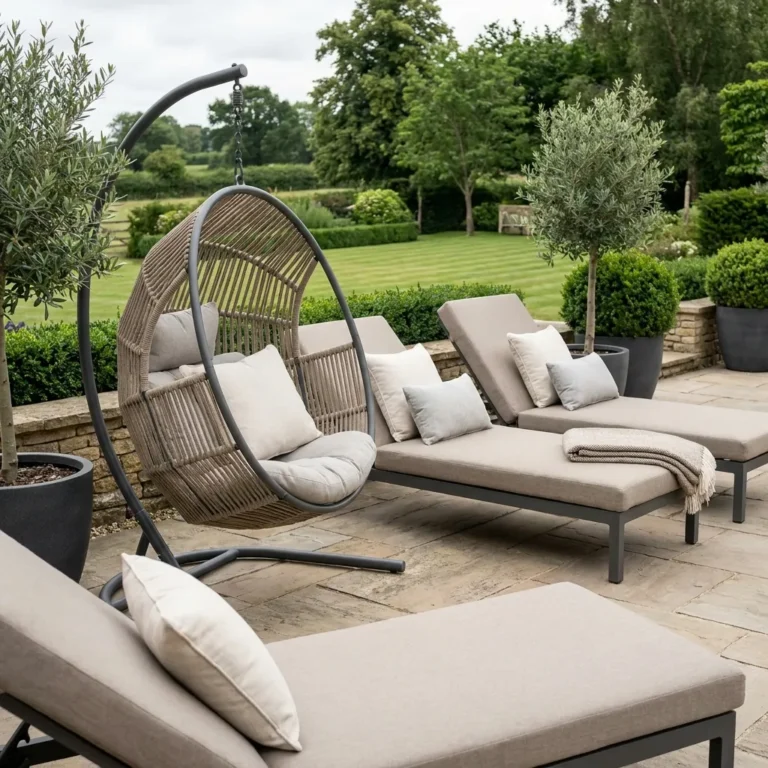
Shape also has a big effect on how inviting a space feels. Rounded armchairs, soft-edged coffee tables, and woven details can break up harder lines and help the area feel less formal, which is often especially useful outdoors. Even a small change in shape can shift the mood of the whole setup. This works particularly well when you want to soften stone patios, brick walls, or decking.
The difference can be easy to see. A simple patio with metal chairs may look cold or unfinished, but adding a deep sofa, a textured rug, a woven side table, throw cushions, and a warm lamp can make it feel much more like an outdoor living room. Sometimes even one update, such as replacing thin seat pads with full cushions, is enough to make the space feel more comfortable and a little more luxurious.
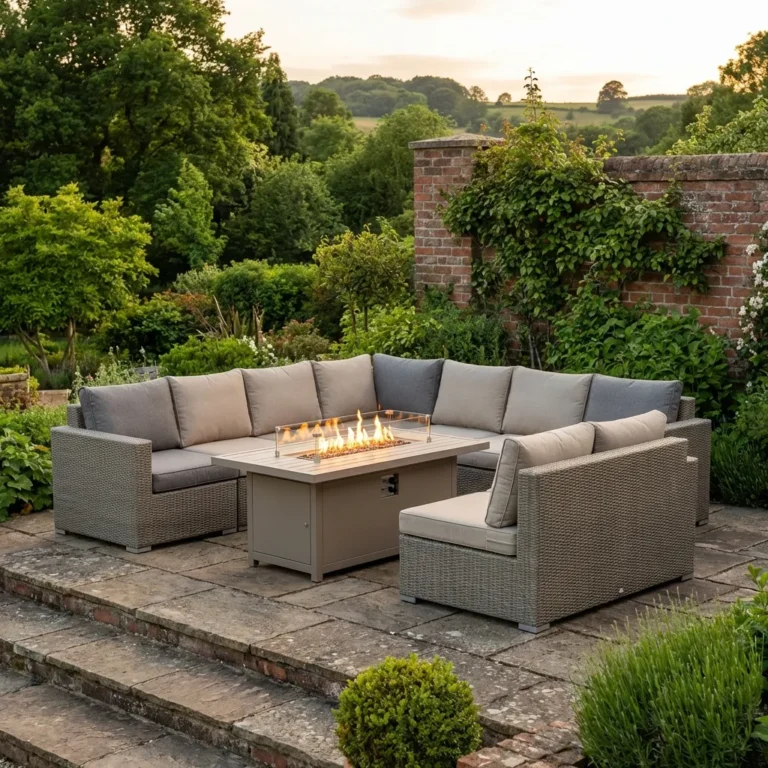
And if you like bold design and outdoor comfort, we covered that here: Outdoor Furniture with Fire Pit: Stylish Garden Ideas.
Pick furniture types that make the room feel complete
Many homeowners focus only on sofas and chairs, which makes sense. Those pieces probably matter most. But a truly cozy room needs more than that, because the most inviting spaces often feel best when they include several layers of furniture, similar to indoor rooms.
Seating that invites people to stay
Sectionals, 3 seater sofas, 2 seater sofas, and recliner-style lounge chairs are all made for longer use, which probably is not much of a surprise. For sitting longer, deep seats usually make a real difference. Supportive backs matter too. According to Future Market Insights, outdoor seating is projected to make up 32.4% of market share in 2026. That shows how central seating often is in this category (Future Market Insights).
Tables that add function and flow
Coffee tables often sit at the centre of the layout, which usually makes sense. Side tables work well in almost any setup, especially in smaller rooms where flexibility likely matters most. Against a wall or fence, console tables can work well too, with space for lanterns, trays, and potted plants.
Storage and display pieces
In covered outdoor areas, sideboards or storage benches keep throws, candles, outdoor games, and other essentials close at hand, which is useful. They’re practical and usually help the space stay tidy while supporting a calm, cozy feel.
Soft accessories that finish the space
Rugs, throws, cushions, lamps, and decorative accessories help a room feel personal (which, I think, is the point). A rug grounds the furniture in the seating area, while cushions add colour and comfort. Small details often make more of a difference here than you may expect.
Lighting sets the mood, especially in the evening. Vases, mirrors on sheltered walls, and simple wall art can also bring the look together without adding clutter (in most cases, anyway).
When each piece has a clear purpose, the room feels styled while still being easy to live with.
Make small patios and balconies feel bigger and softer
Small outdoor spaces can still feel like real living rooms. They often become the coziest spots, because the enclosed, intimate feel usually works in their favor. What matters here is choosing attractive furniture that fits the size of the area, so the setup feels comfortable instead of cramped.
Compact seating is a good place to start. A loveseat, two slim armchairs, a modular corner piece, or folding chairs can shape the space without blocking movement. If the layout is especially tight, stackable stools and nesting side tables give a little more flexibility. Matthew Bruce of Oldcastle APG has also pointed to the growing focus on small-space efficiency, modular features, privacy, wellness, and smoother indoor-outdoor flow in current outdoor design trends (HBS Dealer).
Keeping the space open usually comes down to restraint. A simple palette and furniture that is not too large will often help more than adding extra pieces. One coffee table is generally enough, and on a narrow balcony, a side table will likely make more sense than putting a table in the middle. Softness can come from an outdoor rug, a few cushions, and warm lighting rather than more decor. That is often what makes a small space feel comfortable instead of crowded: less clutter and more comfort.
Vertical styling can help too. Planters, wall-mounted lights, slim shelving, and tall plants draw the eye upward, which often makes the area feel taller and more finished. Privacy screens or outdoor curtains can also create the enclosed feeling people usually enjoy in cozy rooms.
If more inspiration for compact layouts would be helpful, this was covered here: Bistro Sets for Small Outdoor Spaces: Stylish Solutions.
Blend indoor and outdoor style for a seamless home look
The best outdoor living rooms should not feel separate from the rest of the home. They work better when they feel connected. That sense of flow usually makes a property feel more thoughtfully designed, and it can also make it seem larger, especially between the living room and patio, where the visual break often happens.
One simple way to create that connection is to repeat materials, colours, or shapes already used indoors. If the living room includes warm woods, soft neutrals, and black accents, those same details can carry outside. If the home features curved furniture, woven textures, or modern metal finishes, reflecting that style on the patio helps keep everything consistent. They are small choices, but they often have a noticeable effect.
Stylish furniture can help link the two spaces. An outdoor sofa with clean lines can relate closely to indoor seating, while a coffee table in a similar tone, or even a lamp with the same feel, helps both areas seem connected. Accessories such as throws, vases, rugs, and other small details can bring the look together, and that is often the point where the design starts to work.
According to Forbes, designers are now planning outdoor spaces more like interior rooms, using sectionals, accent chairs, coffee tables, and familiar lounge layouts (Forbes). That shift is visual, but also practical. It can help homeowners use these areas more often and with less effort, because the setup tends to feel more natural and easy to use.
For readers exploring full-home style direction, RENGARD shows how indoor and outdoor furniture can sit within one modern design approach without feeling disconnected, which helps the whole home feel more consistent.
Common mistakes that stop a space from feeling cozy
Many outdoor rooms have nice-looking furniture and still do not feel inviting. Usually, it is not because of one big mistake. More often, a few small choices reduce comfort at the same time, and that can be easy to miss.
One common issue is furniture that looks beautiful but feels hard or too shallow for everyday use. A space rarely feels cozy when no one wants to sit there for long. Before buying, it helps to look at seat depth, cushion thickness, back support, and the overall feel. Those details often matter more in real use than they seem to at first.
Poor scale is another common problem. Oversized furniture can make a balcony feel crowded, while pieces that are too small can leave a large patio looking empty and unfinished. Measuring first usually avoids that. A quick layout sketch can also help show what fits where before anything is bought.
Too many cold surfaces can create the same result. Stone, metal, and glass often need something softer to balance them. Rugs, cushions, woven textures, and warm lighting usually make the space feel calmer and more comfortable.
Practical needs are also easy to overlook. Without a side table, there is nowhere to set a drink. Without storage, blankets and cushions quickly turn into clutter. If lighting is missing, the room often stops being useful in the evening, especially after sunset.
Weather performance matters too. A stylish setup will not last if fabrics fade quickly or frames start to rust. For material-specific guidance, comparing options before buying can help, especially when looking at weather resistance, upkeep, and long-term performance.
Frequently Asked Questions
What furniture makes an outdoor space feel like a cozy living room?
Start with comfortable seating, such as a sofa, sectional, or deep armchairs. Then add a coffee table, one or two side tables, soft cushions, a rug, and warm lighting. These layers make the area feel more like a real room and less like a basic patio setup.
What is the best material for stylish furniture outdoors?
There is no single best material for every home, but teak, powder-coated aluminum, all-weather wicker, and recycled poly lumber are strong choices. The right option depends on your style, local weather, and how much maintenance you want to do.
How can I make a small balcony feel cozy without overcrowding it?
Choose compact furniture with slim frames and clear function. A loveseat or two chairs, a small side table, and a few soft accessories are often enough. Keep the palette simple and use vertical space with plants or wall lighting.
How do I match my indoor living room with my outdoor seating area?
Repeat key design details such as colours, wood tones, textures, or furniture shapes. This creates a smooth indoor-outdoor flow. If you are comparing coordinated looks, collections from brands such as RENGARD can help you see how similar styles work across different rooms.
Are cushions and rugs really important for a cozy look?
Yes. Without soft layers, even expensive furniture can feel cold. Outdoor-safe cushions, throws, and rugs add comfort, texture, and warmth, which are central to a cozy living room feel.
Where can I find ideas for stylish furniture layouts before buying?
It helps to look at room-style articles, showroom inspiration, and real-space guides before making a plan. Resources like RENGARD and design-focused home articles can give you a clearer idea of what layouts, materials, and colour combinations fit your space.
Final ideas to bring your space together
Creating cozy living rooms with stylish furniture usually comes down to balance. Comfort and durability both matter, along with beauty and everyday function. The best spaces bring these elements together in a way that feels natural, relaxed, and easy to live with, which is often the real goal. A room should feel good to use, not just good to look at.
The main ideas are fairly simple. Start with a clear layout, then build around strong anchor pieces like sofas, armchairs, coffee tables, and other essentials. Durable materials and performance fabrics are especially useful when they need to handle sun, rain, and regular wear. Practical choices often make a space more comfortable over time. Warm colours, layered textures, and soft shapes help create that easy feeling, while side tables, lighting, and storage help the room work better every day, whether someone is reading, hosting friends, or taking time to relax.
In a smaller space, it helps to pay close attention to scale and choose pieces that serve more than one purpose. In a larger one, clear zones can create a calm, inviting feel. In either case, stylish furniture should support the way people actually live, not just the overall look. It should usually do more than simply make the space photograph well.
The outdoor living category will continue to grow, and homeowners will likely expect more from these spaces. That makes this a good time to think beyond basic patio sets. Treat a patio, garden, balcony, or similar area as a true extension of the home by furnishing it for daily use, comfort, and storage, since that is often what helps it work well for years to come.

3 Comments