Is Waterproof Garden Furniture Worth It?
If you’ve ever bought a cheap patio set, you probably learned the answer the hard way. It looks great in spring. Then the rain hits, the sun follows, and it all starts to show. Cushions stay damp. Frames fade. Wicker cracks. By the next year, the set that seemed like a bargain can look tired or already need replacing.
So many homeowners ask if waterproof garden furniture is really worth the higher price. In most cases, yes. One detail matters, though. The best products aren’t completely waterproof in every single part, and they’re better described as made to handle weather, last longer, and suit real outdoor life. It’s a small difference, but it shapes what buyers should expect and what they’re actually paying for.
For buyers who want long-term value, less upkeep, and an outdoor space that still looks polished, quality outdoor furniture can be a smart investment. It works for large gardens, small balconies, poolside spaces, and city patios. It matters for waste, too. Buyers who want to replace furniture less frequently get more from better materials and stronger construction. This guide explains what ‘waterproof’ really means, which materials are worth paying for, where people overspend, and how to choose pieces that stay beautiful for years.
What ‘waterproof’ really means for waterproof garden furniture outdoors
When people search for waterproof garden furniture, they generally mean furniture that can stay outside in British weather without turning into a nuisance. Fair enough. In practice, though, the term can be a bit misleading.
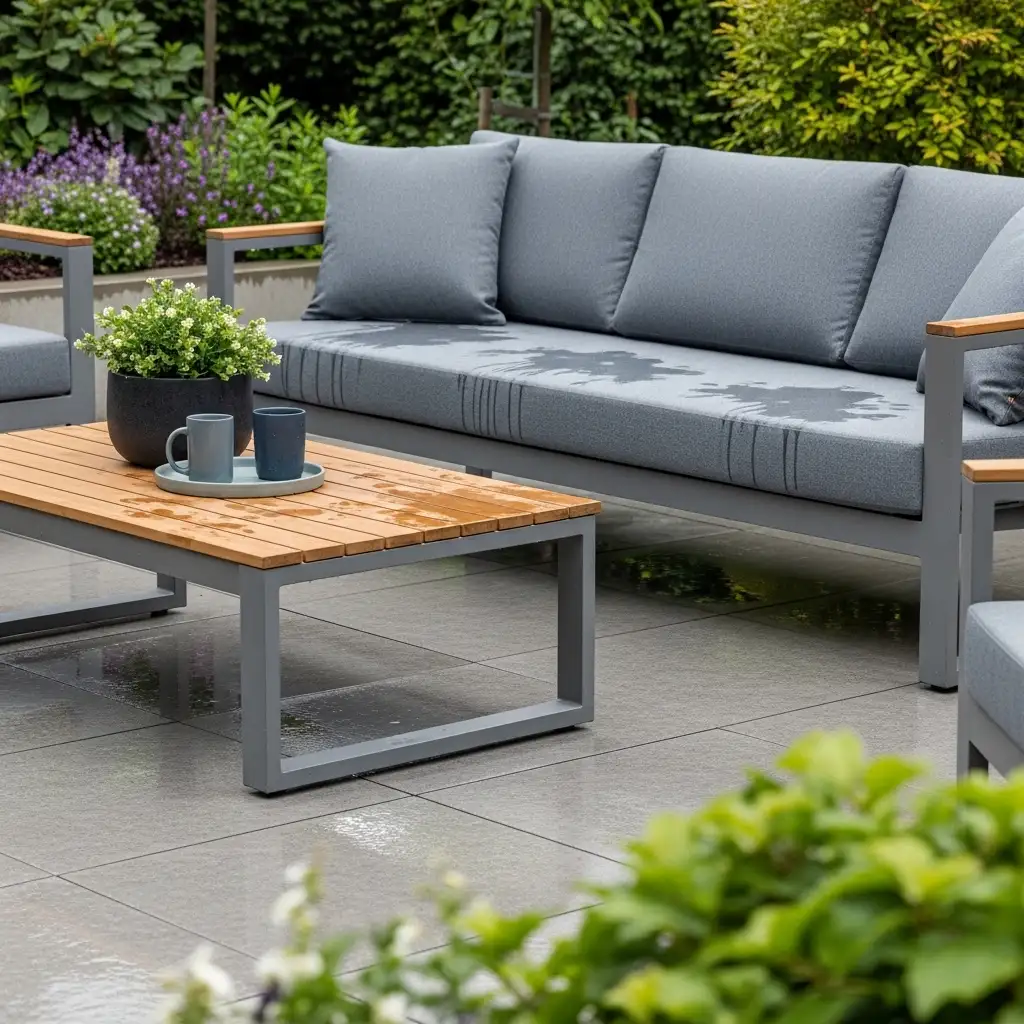
Most premium outdoor furniture isn’t made like a sealed plastic box. Weather-resistant is generally the better phrase. Good outdoor frames can handle rain, moisture and sun, while cushions may use quick-dry foam and breathable covers, with fabrics that resist mildew or fading. Hardware matters too. Each part of the set needs to do its job.
Recent forecasts put the global outdoor furniture market at USD 17.68 billion in 2026, with expected growth to USD 27.72 billion by 2036. Buyers are driving that demand because they want furniture that lasts longer, stands up to the weather and helps outdoor spaces feel more like real living rooms.
| Metric | Figure | Why it matters |
|---|---|---|
| Global outdoor furniture market | USD 17.68 billion in 2026 | Shows strong demand for long-lasting outdoor living |
| Forecast market size | USD 27.72 billion by 2036 | More buyers are investing in better materials |
| Outdoor seating share | 32.4% in 2026 | Seating is a major category where durability matters most |
Outdoor furniture isn’t seen as temporary anymore. People want pieces that look refined, last well and need less from them over time. Waterproof garden furniture, or more accurately high-quality weather-resistant furniture, begins to show its value here.
Teak is a dense hardwood that has natural oils that protect it from moisture, insects and decay, meaning it will survive for years without much maintenance.
Which materials are actually worth your money in waterproof garden furniture
Not all weather-resistant materials hold up equally well. For good outdoor furniture, focus on the frame, the surface, and the cushion system.
Teak
Teak has its premium reputation for good reason. Its natural oils help it resist moisture and decay, and high-grade teak can last 50 years or more, with some experts saying well-kept teak lasts 50 to 75 years. Not cheap furniture value, but real long-term investment value.
Powder-coated aluminium
Clean lines and lower maintenance make aluminium a strong choice. Unlike untreated steel, it doesn’t rust, and it stays light enough for balconies and terraces where heavier pieces can feel like too much. It’s practical.
In well-made furniture, powder coating adds extra protection and gives aluminium a smart finish that suits modern outdoor spaces. For example, Rengard’s own sun loungers use aluminium frames with weather-ready fabric, adjustable backs and optional wheels. Comfort, style and simple upkeep. Many buyers want all three in one product now, and those details fit that shift well.
Synthetic rattan and composites
Synthetic rattan can work really well, but quality matters a lot. Cheap woven sets may crack and weaken fast in strong sun or wet weather. Better ones are stronger, more stable, and made with durable frames.
Performance fabrics and quick-dry systems
Cushions do a lot of the practical work in outdoor furniture. Olefin and other high-performance fabrics handle sun and moisture far better than standard indoor fabrics, and that matters fast with outdoor use, changing weather and everyday wear.
Quick-dry foam helps as well. It lets water pass through instead of trapping it inside.
When comparing styles, this guide to rattan garden furniture shows where woven designs fit in a durable outdoor plan.
Why better waterproof garden furniture often costs less over time
For waterproof garden furniture, the clearest benefit is convenience and long-term value.
A cheaper set can look like a saving at checkout, then end up costing more later. If it needs replacing after one to three seasons, the total spend rises quickly. Premium materials can last far longer, hold their shape and need fewer fixes. They also help an outdoor space look looked after rather than worn out.
One expert warning is especially helpful here.
Keep in mind that there are many quality levels that exist. If you purchase low-cost wicker, it will not last long. In high-sun areas, the sun can cause the low-cost woven furniture to fail in as little as one year.
That quote points straight to the false economy many buyers run into. The label may say outdoor. It might even say water-resistant. Poor build quality still won’t give buyers real value.
Premium options can also save money in smaller, practical ways. They dry faster and are simple to wipe clean. They resist fading, don’t start wobbling after a short time and keep looking good instead of making the whole space feel tired.
For urban buyers, value matters even more. On a small balcony, every piece needs to earn its place, so a lightweight but strong dining chair or a compact bistro set can turn the area into usable daily living space instead of occasional seating. If the layout is tight, useful ideas are in this article on modular outdoor furniture for small gardens. Additionally, readers can explore Staffordshire Gardens with Durable Outdoor Furniture for more regional inspiration.
The sustainability side of the decision
Quality outdoor furniture is often worth it for another reason: it can be a more responsible choice.
Buying one durable set that lasts for years is generally better than replacing low-grade furniture again and again. Fewer replacements mean less manufacturing, less packaging and less waste building up over time. For many buyers, that matters just as much as looks.
FSC-certified teak is a strong option for buyers who want natural beauty and responsible sourcing. Recycled HDPE and recycled aluminium also stand out. In research summaries, FSC-certified teak ranks very highly for eco performance, with recycled HDPE close behind. Some recycled outdoor products now use 90% to 95% post-consumer recycled content. That shows real material recovery.
Good-quality poly lumber will be colored all the way through, [which] means if it gets scratched it will not need to be touched up. … Poly lumber will provide the longest life with the least amount of care.
Material choice matters because a long product life can help your budget and reduce waste at the same time. Teak costs more, but it can still be a better environmental choice when suppliers source it well and owners keep it for decades instead of only a few short seasons.
In Forbes coverage, Elise Nicpon also points to thermally modified ash as another weather-resistant wood option. Over time, it can age into a soft silver-grey tone and gives buyers another choice if they want durability with a more sustainable story. For more ways to maintain eco-friendly spaces, see Outdoor Furniture Accessories to Elevate Any Garden.
Common mistakes buyers make
A few common mistakes stop people getting real value from waterproof garden furniture. They’re easy to miss.
Believing every ‘waterproof’ label
A rainproof surface isn’t the same as real durability. Check the frame material, what’s inside the cushions, and whether the hardware can really handle moisture.
Ignoring the cushion system
Even a strong frame can still feel annoying with bad cushions. Choose quick-dry foam, removable covers, and fabrics made for outdoor use.
Buying for one season only
Trends change. Classic shapes last: clean lines, solid materials, and neutral tones often age better than very fashionable colours or flimsy designs. They also last longer.
Forgetting about your climate and space
Coastal homes need stronger corrosion resistance, while exposed balconies suit lighter, more stable pieces that handle wind and weather without becoming a hassle. Family gardens may need easy-clean finishes and tougher dining surfaces.
For more practical advice on harsh weather, this guide to best weather-resistant outdoor furniture for UK gardens is a helpful next step. You can also explore seasonal savings in the Garden Furniture Sale UK: Seasonal Outdoor Deals for Every Budget article.
How to tell if a piece is truly high quality
A few checks can help you avoid expensive disappointment.
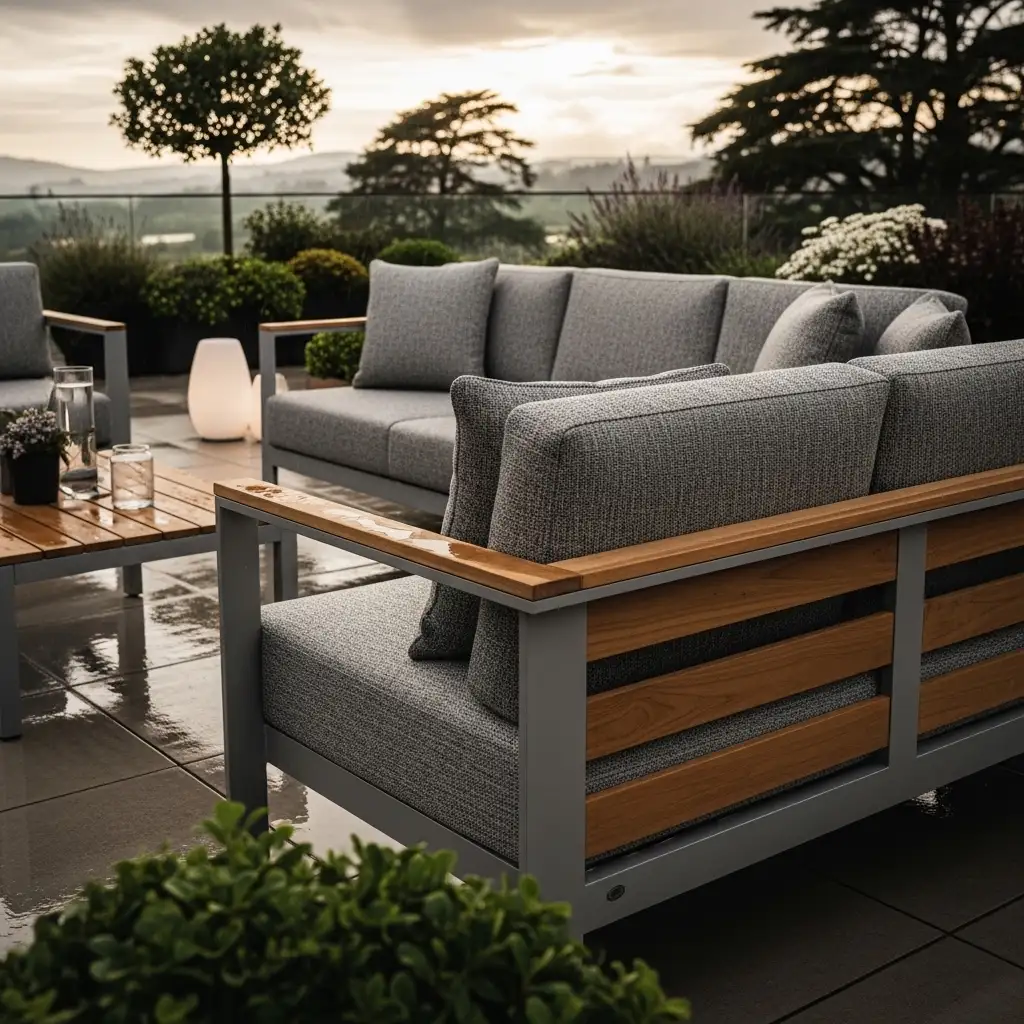
Start with the frame. Powder-coated aluminium, strong teak and well-made composite materials are safer choices than thin steel or weak plastic, especially for furniture that stays outside through changing weather. Then check the joints and hardware. Good furniture should feel solid. It shouldn’t wobble, bend or creak. Next, look closely at the fabric. Outdoor fabrics should feel durable, not like indoor material that’s simply been moved outside. That difference matters.
It also helps to think about how the furniture will actually be used. A dining set for weekend meals needs something quite different from a deep seating sofa used most evenings, and that difference matters more than many people expect. Sun loungers should offer support and move easily, with surfaces that dry fast. Many premium designs include adjustable backs, textilene-style support fabrics and teak details. Features that add comfort and make maintenance easier.
Choose a brand that treats outdoor living as a long-term investment rather than a quick seasonal sale. A showroom visit can tell buyers a lot. So can a clear delivery process and thoughtful material choices. Those are signs a brand takes care seriously. That’s one reason many buyers interested in premium garden design look at Rengard trendy outdoor furniture when comparing craftsmanship, style and weather-ready construction.
The bottom line for your outdoor space
For most homeowners, waterproof garden furniture is worth it. The answer is simple: good weather-resistant furniture is worth buying when it uses the right materials and is made to last.
Teak looks great and can last a very long time. Powder-coated aluminium gives you a clean, modern look and stays easy to care for. Good synthetic materials and composite options can work very well too, as long as the quality is there. The frame matters just as much. Performance fabrics and quick-dry cushions matter as well. Buyers who care about sustainability may also find that needing fewer replacements makes premium furniture the smarter option.
If your outdoor area is part of daily life, not just a summer extra, it makes sense to invest in furniture that stays attractive, comfortable and easy to live with. Start with your climate, your space and the amount of maintenance you actually want. Then choose quality outdoor furniture that suits those needs.
A well-made set may cost more at first, but over the years it can save money, time and hassle. It really is that simple. And that value lasts well beyond the first season.