Is Recycled Plastic Furniture Worth Buying?
Recycled plastic furniture is well worth buying for many outdoor spaces, but only if you judge it as it is today rather than by old ideas. A lot of people still picture flimsy chairs, shiny surfaces, and that cheap-looking style that can ruin a lovely garden, and that used to be a fair complaint. That image is out of date now. Today’s recycled plastic furniture, especially HDPE recycled furniture, can be strong, attractive, and far more polished than many people expect. In the UK, where rain, frost, and damp air slowly wear down outdoor furniture year after year, that often matters more than whatever the marketing says.
The view here is simple: for anyone who wants eco friendly outdoor furniture that is low maintenance, built for British weather, and durable enough to justify its price, recycled plastic deserves a proper place on the shortlist. It will not suit every taste or every budget, and that is completely fair. Even so, it is often far better than buyers expect. In some settings, it is probably the most sensible long-term choice, especially for people who do not want to deal with upkeep every year.
This piece explains where recycled plastic furniture works especially well, where its limits are, and how it compares with the wider luxury outdoor market in areas such as style, durability, comfort, and value. For anyone researching sustainable patio furniture, recycled plastic benches UK buyers often choose, or broader eco friendly patio ideas, this is the honest answer worth reading before spending real money, and usually the practical one too.
Durability is the strongest case for recycled plastic furniture
If there’s one really strong argument for recycled plastic furniture, it’s that it usually handles being ignored pretty well. That may not sound very exciting, but for busy homeowners it’s a genuine plus. Lower-grade wood can begin to rot, some metals rust over time, and cheaper woven pieces often fray or split after a few wet winters outside, which in the UK is pretty normal.
Many of the better products in this category are made from high-density polyethylene, or HDPE. That probably helps explain why searches for HDPE outdoor furniture UK and HDPE recycled furniture keep rising. HDPE is dense, resists moisture, and stays stable in tough weather. WRAP has pointed to major progress in plastic recycling in the UK, so there is now more supply for durable second-life materials. The Environment Agency also keeps pointing to the need to cut plastic waste and reuse more of it as part of the wider move toward a circular economy, which here also feels like the practical choice.
| Material | Typical Strength | Weather Resistance | Maintenance Level |
|---|---|---|---|
| HDPE recycled plastic | High | High | Low |
| Softwood | Medium | Low to medium | High |
| Steel without strong coating | High | Medium | Medium to high |
| Cheap resin | Low to medium | Medium | Low |
What stands out most is how simple this kind of furniture feels. It rarely asks for much. A quick wash now and then is usually enough. If it needs it, wipe it down, then keep using it. That may be one reason recycled plastic benches UK councils, schools, and public spaces choose appear so often. Public buyers usually care less about short-term trends and spend more time thinking about what will keep working under regular use in parks, playgrounds, and shared outdoor spaces.
For a wider look at responsible materials, that was covered here: Sustainable Outdoor Furniture Guide: Ethical Sourcing & Materials. Additionally, readers interested in seasonal styling can explore Spring Garden Styling: Seasonal Outdoor Decor UK Ideas for complementary design inspiration.
The environmental case for recycled plastic furniture is real, but not perfect
To be clear, buying recycled plastic furniture does not magically fix the plastic problem. In some cases, brands push that message a bit too hard, and that usually shows. Even so, it still seems like a worthwhile step up from buying new plastic made from virgin fossil fuels, especially when the furniture is built to last for years. It is not perfect, but it is probably the better choice.
The main strength of recycled plastic is not that it is clean or flawless. It is that it keeps useful material in use for longer. The OECD has reported that global plastic waste is rising quickly, while only a small share is actually recycled properly. In that situation, products that keep recycled content locked into durable, long-life items do have real value. A bench or dining chair that stays in use for ten or fifteen years is arguably a much better outcome than disposable or single-use plastic, especially when so much plastic is thrown away so fast.
Still, buyers should stay practical about it. Not all recycled plastic furniture UK options are made to the same standard. Some use mixed materials with fillers, others rely on lower-grade manufacturing, and some may be recyclable in theory while still being hard to process again at the end of their life. Because of that, the word ‘recycled’ on its own is not enough. Build quality, product weight, frame design, fasteners, and how open a brand is about the materials it uses are all worth checking. It is fairly basic, but it matters.
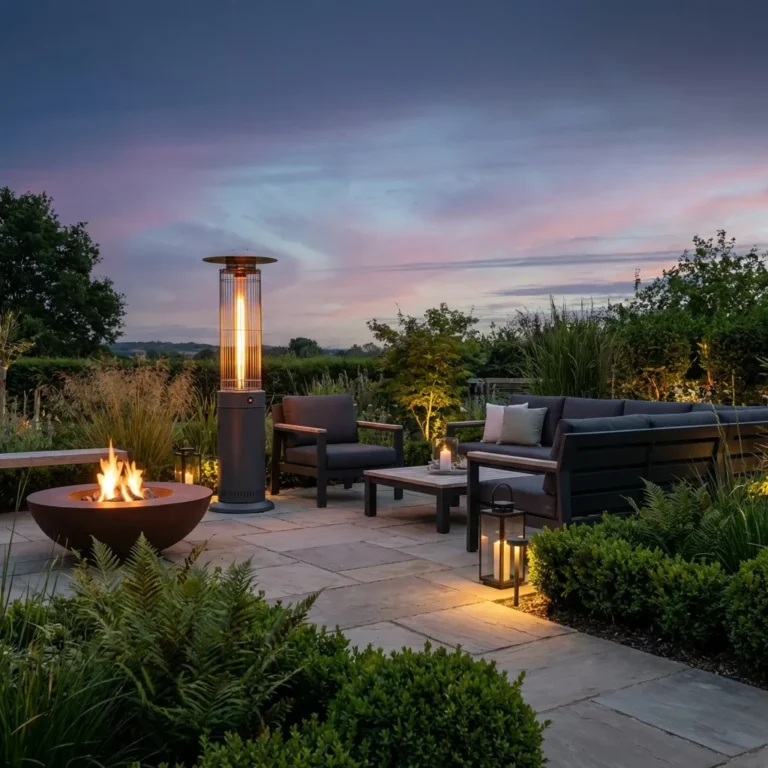
This is where the wider outdoor design conversation starts to matter. Premium outdoor brands have taught buyers to expect solid craftsmanship, weather resistance, and comfort, rather than green claims alone, which honestly are not enough. Brands like Rengard trendy outdoor furniture have built that expectation around durable materials such as aluminium, teak, rope, rattan, and composite finishes suited to British conditions. In that sense, recycled plastic only really belongs in the same premium discussion if it can meet that same standard for durability and finish.
Style used to be the weakness, but that is changing fast
It’s easy to see why people still pause when it comes to the look. For years, recycled plastic furniture had that blunt, chunky feel and, honestly, could seem a bit basic. It was useful, yes, but not often the kind of thing people wanted beside a luxury outdoor dining table, a clean-lined sofa set, or on a carefully planned balcony. That older image still seems to shape how a lot of people view the category today.
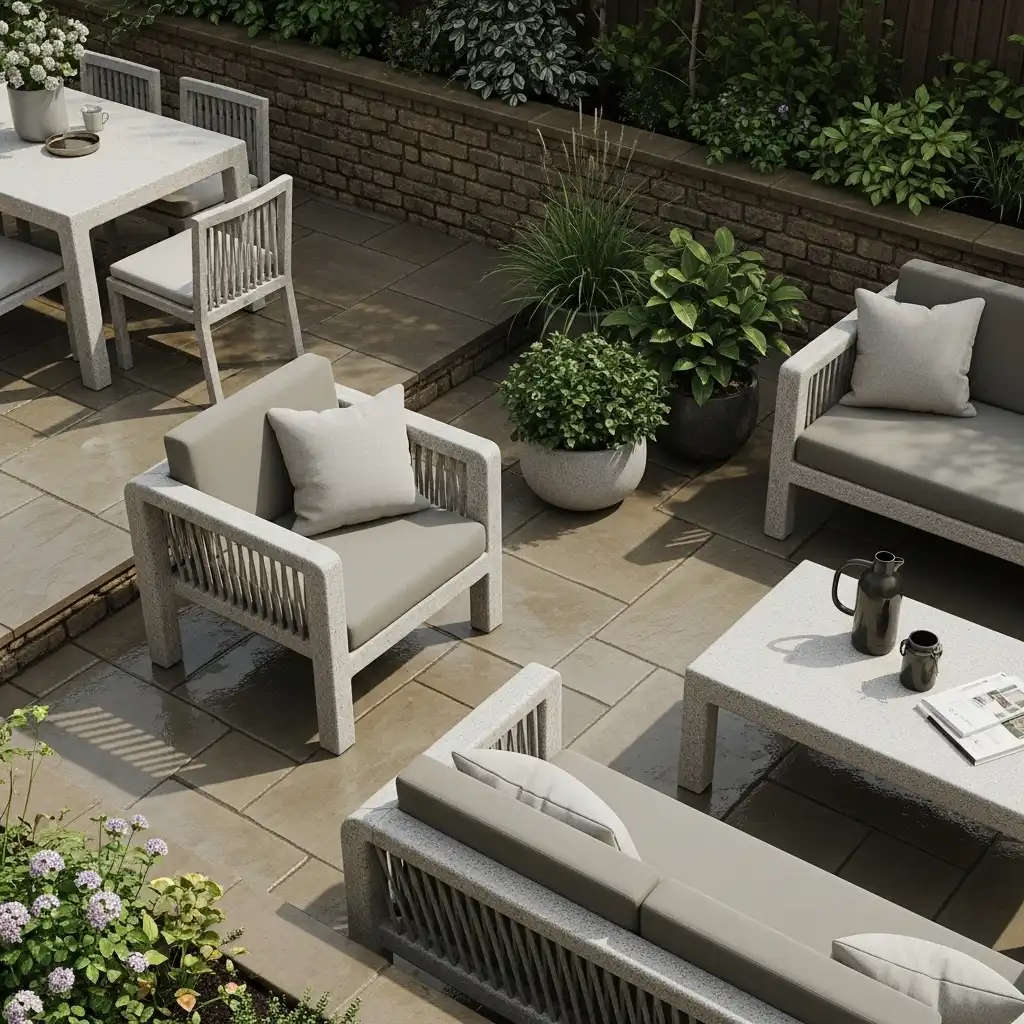
But the design side has moved on quickly. With better moulding, more refined colour choices, and nicer surface finishes, UK shoppers can now find modern outdoor furniture in recycled plastic that feels well designed rather than just practical. Deep charcoal, warm neutrals, muted greens, and matte finishes feel far removed from the bright, clearly plastic colours many people still remember. That change is hard to miss.
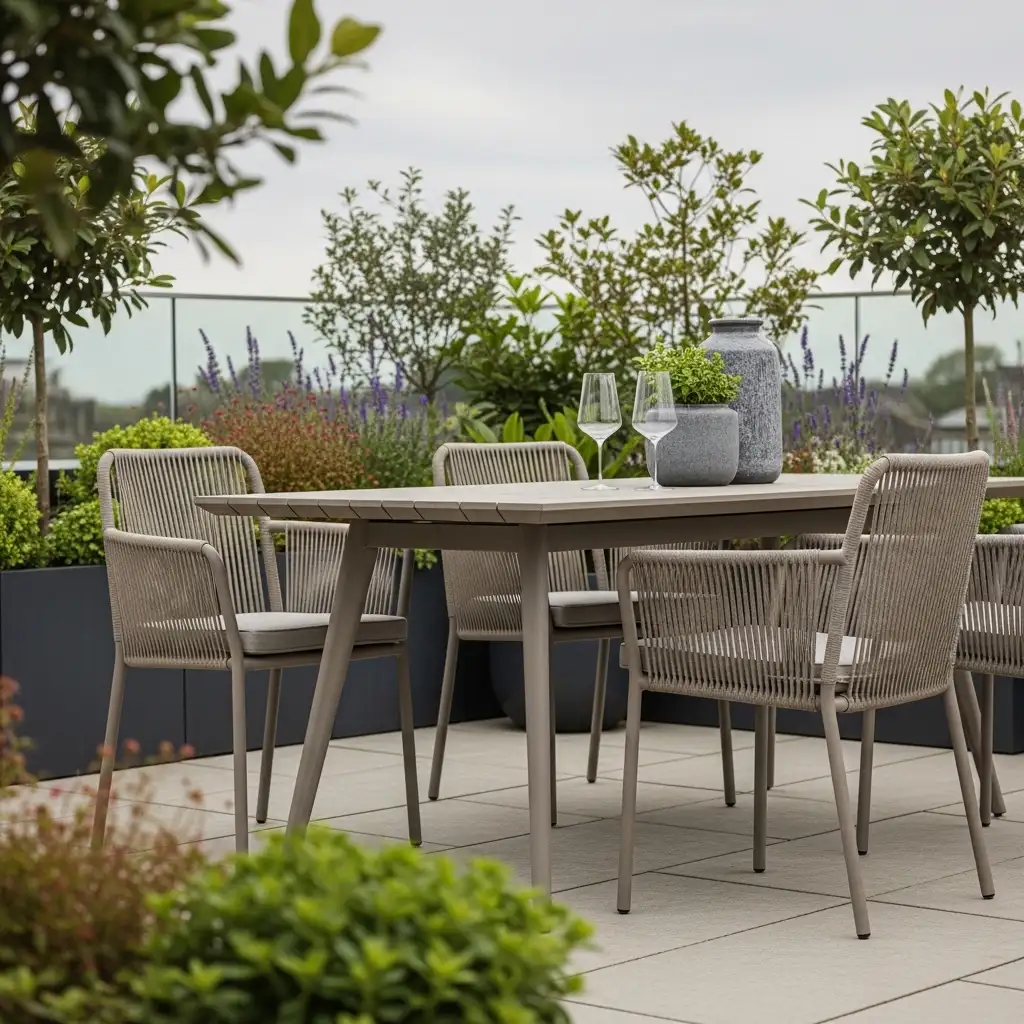
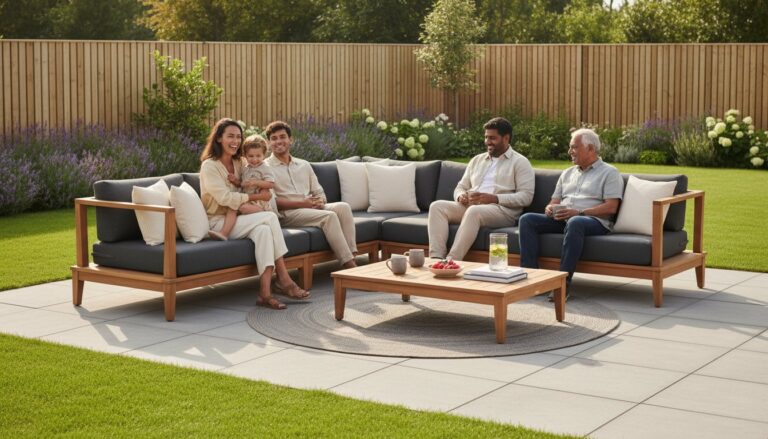
That said, not every piece looks luxurious. Some absolutely do, and some really don’t. If the aim is a high-end layered garden with rich textures, natural teak, thick cushions, and those sculpted aluminium lines, recycled plastic usually works best as part of the overall setup rather than the whole scheme. That is often where it fits most naturally. Benches, side tables, dining chairs, and smaller balcony sets tend to work especially well.
This is also worth considering for urban buyers. On a smaller terrace or balcony, visual weight often matters a lot. Furniture that looks heavy can make a compact space feel crowded very quickly. In that kind of setting, clean recycled pieces with softer styling usually work well, especially with planters and a few textiles around them, without making things feel fussy. If you want ideas for compact spaces, we covered this here: Small Space Garden Furniture UK: Balcony & Patio Ideas 2026. Furthermore, readers can explore Garden Chair Ideas for Chester Outdoor Spaces for additional UK-specific inspiration.
The real test is value over time, not price on day one
This is where a lot of buyers seem to get it wrong. They see the price of recycled plastic furniture, compare it with cheaper garden sets, and decide it costs too much. On day one, that can be true. Over a longer period, it often is not.
A well-made recycled plastic chair or bench can last through several rounds of cheaper furniture, and that is usually the part people miss. There is no need to stain it every year, seal it, or keep repainting it. That means less upkeep. It also usually means fewer issues with rot, insect damage, or swelling caused by water. In the UK climate, those savings can add up across the budget, spare time, and the amount of general hassle avoided, which makes a real difference in daily life.
The counter-argument is still fair, though. Some buyers say premium wood or aluminium gives better value because it looks more refined and can often be easier to repair. There is some truth in that. High-quality teak, for example, can age beautifully over time. Powder-coated aluminium is also a strong choice for a more modern outdoor space. The wider knowledge around premium garden furniture points to the same things: buyers tend to care about weatherproof performance, careful material choice, comfort details like thicker cushions, and ergonomic seating, because those features improve everyday use rather than just changing how the furniture looks.
The basic point is that value depends on how someone lives. If looking after natural materials is part of the appeal, wood may feel more rewarding. If the goal is a polished garden lounge with a more design-led feel, teak or aluminium may be a better fit. But if eco-conscious garden furniture that asks very little in return and still handles damp weather well sounds more useful, recycled plastic is often the smarter buy.
According to the Energy Saving Trust and wider UK sustainability guidance, keeping products in use for longer is one of the most effective ways to cut environmental impact. That is why durable, low-maintenance furniture often starts to look much more attractive over time, and probably more practical too.
What I would buy, and what I would skip
I don’t think every recycled plastic product is worth buying. I’d choose it in categories where the benefits are easy to notice. Benches are probably the clearest example. The same applies to dining sets on exposed patios, side tables that stay outside all year, and simple seating in coastal or damp areas.
Those are practical uses, where weather resistance and easy care usually matter more than the look of warm, natural wood grain. Outside, at least to me, that trade-off matters less.
I’d be more selective with large lounge collections, though. If comfort is the main priority, I’d check seat depth, back angle, and especially cushion quality. The material alone doesn’t promise a good experience. Design still matters, and you usually notice that pretty quickly.
So here’s my quick rule set:
Worth buying when
- Easy-care, sustainable patio furniture would honestly make life simpler.
- The garden gets heavy rain, frost, strong sun, or maybe even all three, and that is not a problem.
- Furniture is needed for exposed spaces like open patios or decks that get a lot of regular use.
- Recycled content, a long lifespan, and clean, simple, modern shapes also matter.
Think twice when
- You want the warmth and character that real teak often brings
- You’re going for a softer, more luxurious lounge-style look
- The piece feels too light, hollow, or too glossy in person
- The brand isn’t clear about material quality or how the piece is made
If you’re also thinking about the bigger style direction, which you probably are, Outdoor Furniture Trends 2025: Sustainable & Stylish Ideas links this choice to the wider move toward more durable, responsible outdoor living. It’s probably worth a look, especially if the bigger picture matters.
The bottom line for eco conscious buyers in the UK
Yes, recycled plastic furniture is worth buying, and in the recycled plastic furniture UK market, it still probably doesn’t get the credit it should. Not because it’s perfect, and not because every piece looks beautiful, because that’s obviously not true. It’s also not the case that “recycled” automatically means high quality. It’s worth thinking about because the better-made options fix real problems. They usually handle British weather well, need less maintenance, stay useful for years, and make better use of materials, which matters here as well.
Recycled plastic will probably keep moving further upmarket. Design is improving, and more homeowners want eco friendly outdoor furniture without the upkeep that often comes with timber, so demand will likely keep growing. It also seems likely that stronger hybrid collections will become more common, with recycled materials used alongside aluminium and teak accents, plus more refined upholstery, instead of trying to replace everything completely, which in most cases makes more sense.
If someone is comparing sustainable patio furniture for a garden, balcony, or compact terrace, a useful approach is not to dismiss recycled plastic as the ugly but practical option. It makes more sense to judge it on build quality, finish, comfort, and lifespan. When those are strong, it could easily turn out to be one of the smartest outdoor buys, especially for anyone who wants something low-fuss.